Eventually I had to leave the river, and as I neared the campground where the landing was, I was brought back to reality. One camper at a site right on the river was busy hanging his oversized American flag on a pop-up tent, right next to his oversized "Make America Great Again" flag so, all the other campers and everyone on the water would have no doubt as to where he stood. Who does this on a camping trip? My gut response was to yell adjectives, but that would have been just as bad as waving oversized flags in other people's faces, and I didn't want to find out if he was exercising robust second amendment rights as well. I feel like we are living in a land of multiple realities these days, with collisions an ever present danger. I think I prefer a reality full of birds, paddling on mixed waters under bald cypress.
Showing posts with label Williamsburg. Show all posts
October 9, 2017
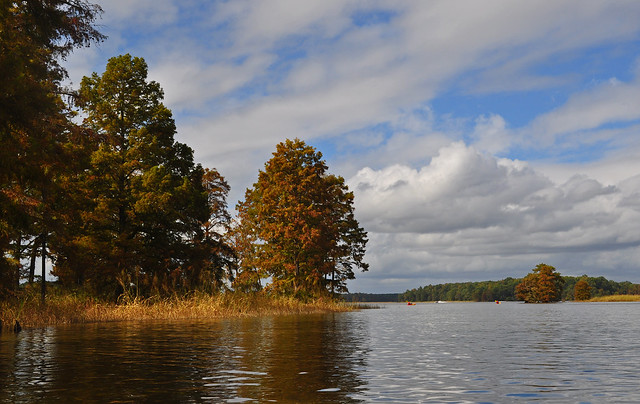
Early Fall on the Lower Chickahominy
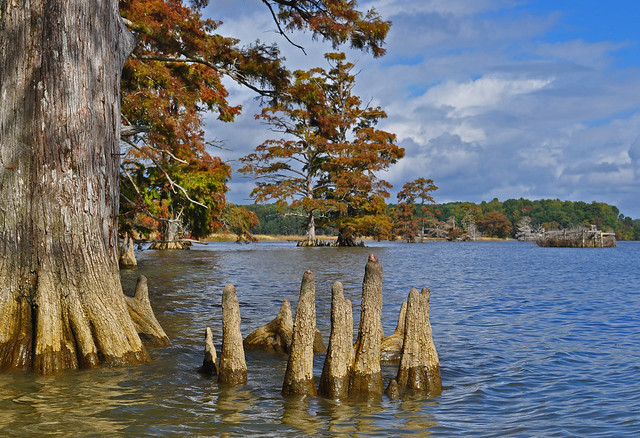
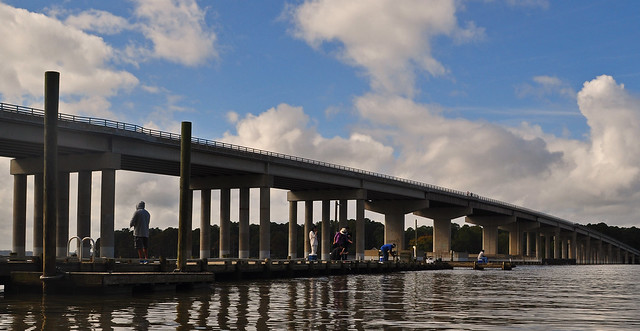
This past Saturday I took my kayak to the Chickahominy River, close to where it meets the James. This was not my first time here. When I was a child my father belonged to a rod and gun club with a cabin on a bluff overlooking one of the river's tributaries, and visits there are some of my fondest place memories. The water here is brackish, more fresh than salt, but still subject to the tides. This mix of different waters allows for an abundant diversity of animal and plant species, which made hunger a little less threatening to the native Americans who once called this place home. It was here that Capt. John Smith was captured, and taken to the chief of the Powhatans. As the flawed story goes, Smith's life was eventually spared by Pocahontas, the chief's daughter. Today the river and its tributaries remain relatively free from development, and save for a few houses and a bridge or two, it is easy to imagine what the Chickahominy may have looked liked centuries ago.
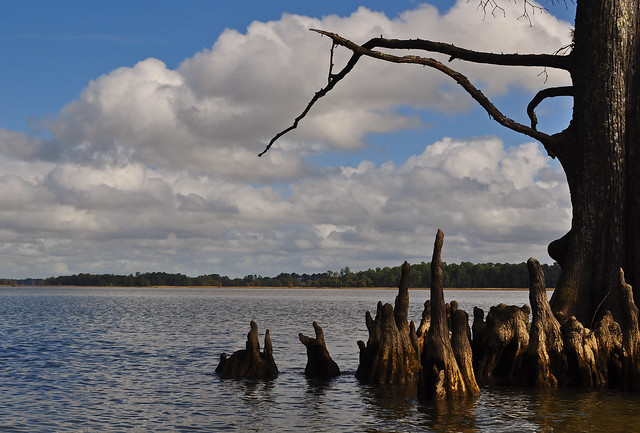
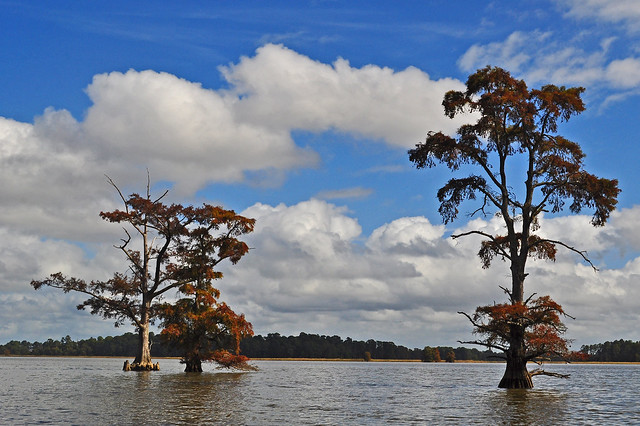
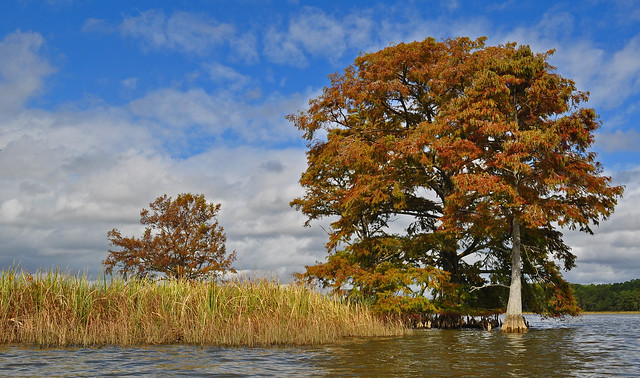
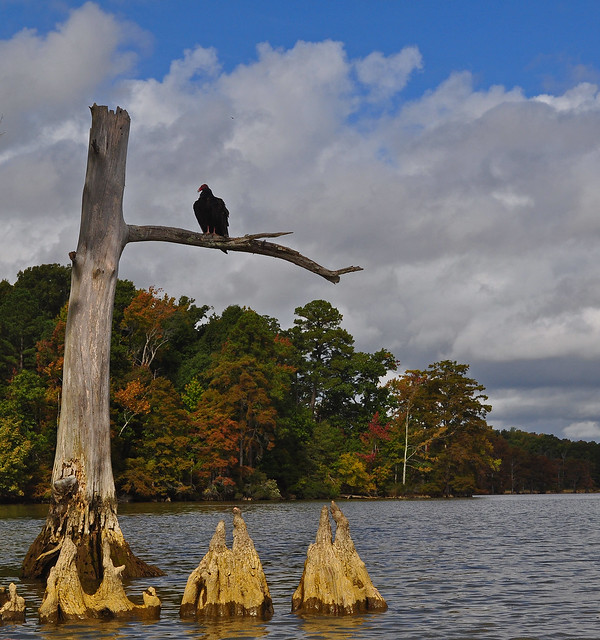
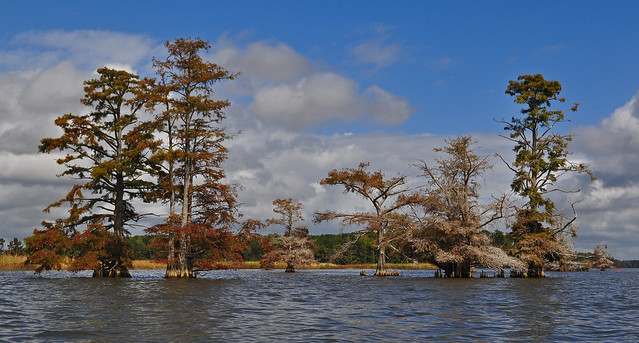
The Chickahominy has become one of my favorite places to paddle, and after any time spent there I always come away renewed. Part of the allure for me are the trees, specifically bald cypress (Taxodium distichum), and the opportunity to paddle between their knees and underneath their canopies. At the moment this species is tied for first place with live oak (Quercus virginiana) as my favorite tree. This weekend they were just beginning to sport their fall orange color. As I rounded one clump of cypress I could hear a loud commotion created by a pair of belted kingfishers, whose calls always sound like bitching to me. They were upset by a wake of vultures and a juvenile bald eagle perched in the trees along their part of the river. The kingfishers would not rest until the intruders were gone, and the presence of a lumbering middle-aged man in a bright red kayak was enough to push the raptors on their way, quieting the kingfishers. The lone eagle joined several others further down the shoreline; the place is thick with them, almost like pigeons.
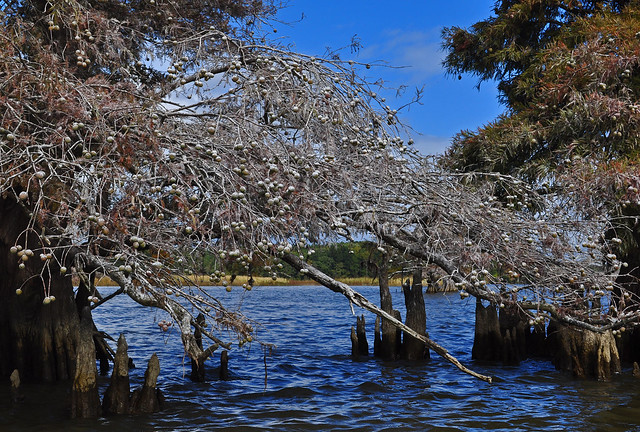
In one area of the river some of the cypresses looked as if they had been frosted. While it made for interesting photos, the "frost" was actually a coating of guano, probably from cormorants, or egrets.
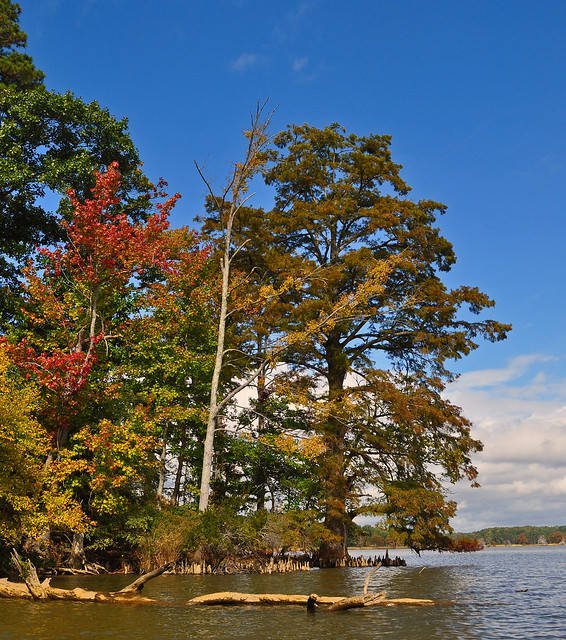
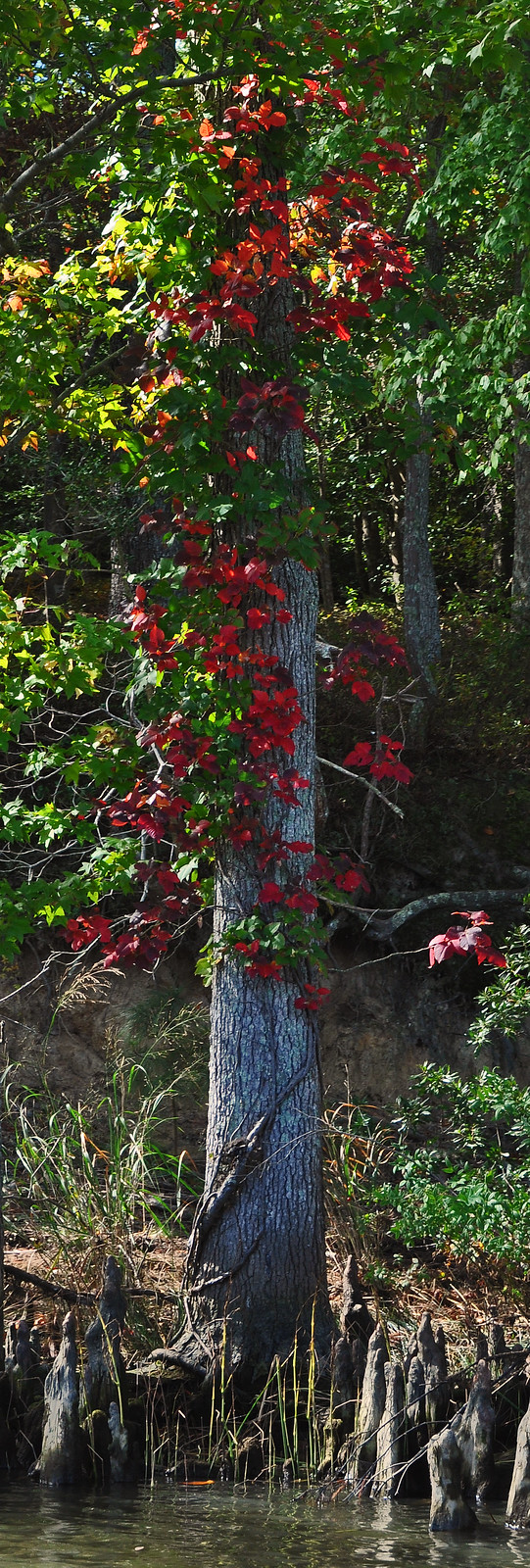
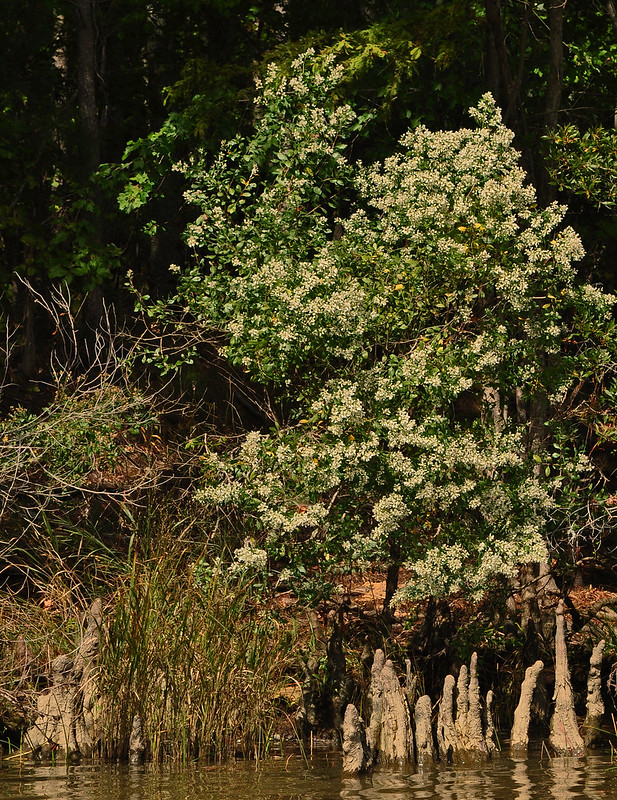
The cypress were not the only trees with fall color. A few red maples (Acer rubrum) right next to the shore were starting to turn, as were a few sweetgums (Liquidambar styraciflua), both a little further along, color-wise, then their kin on drier land. In many of the trees poison ivy (Toxicodendron radicans) climbed in shades of red, orange, and yellow, proving that even one of our most reviled plants can have its moment. All over the coast here, not just along the Chickahominy, the white blooms of saltbush let you know what time of year it is.
Eventually I had to leave the river, and as I neared the campground where the landing was, I was brought back to reality. One camper at a site right on the river was busy hanging his oversized American flag on a pop-up tent, right next to his oversized "Make America Great Again" flag so, all the other campers and everyone on the water would have no doubt as to where he stood. Who does this on a camping trip? My gut response was to yell adjectives, but that would have been just as bad as waving oversized flags in other people's faces, and I didn't want to find out if he was exercising robust second amendment rights as well. I feel like we are living in a land of multiple realities these days, with collisions an ever present danger. I think I prefer a reality full of birds, paddling on mixed waters under bald cypress.
April 19, 2015
A Weekend in Williamsbug
I spent last weekend at the Williamsburg Garden Symposium. I have always wanted to attend this event, but its timing and my money never aligned. However, I was invited to speak at this year's event, and I agreed before self-doubt had a chance to step in and sway me otherwise. While I am not adverse to public speaking, and in fact do it frequently, this talk was my highest profiled gig to date, and much of that had to do with those I shared the stage with. My subject was understory trees for mid-Atlantic gardens, and judging from the comments afterwards it went well, or at least people were just being polite to say so.
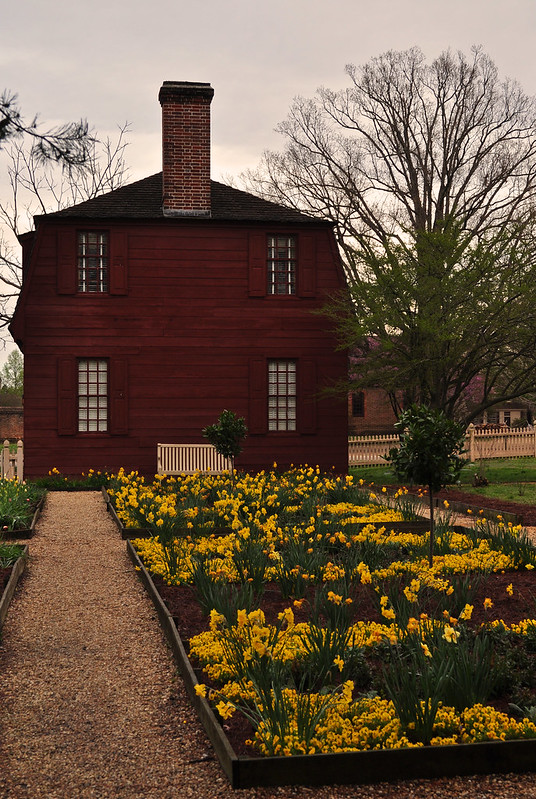
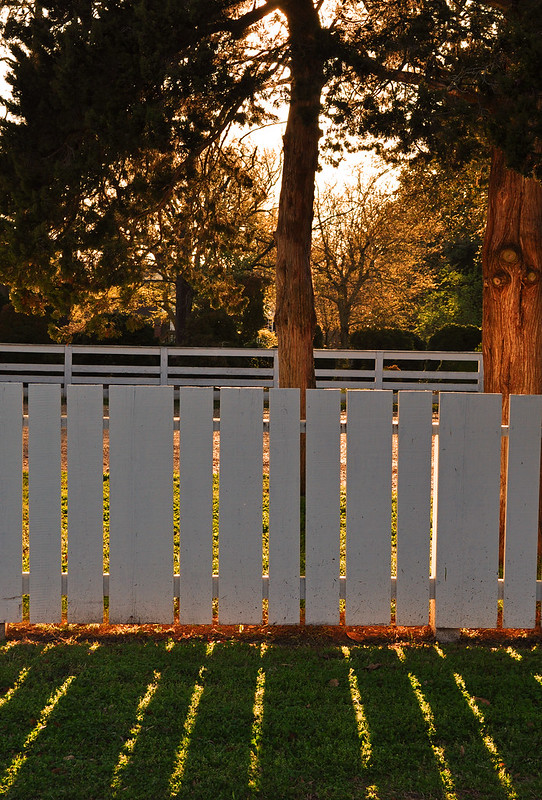
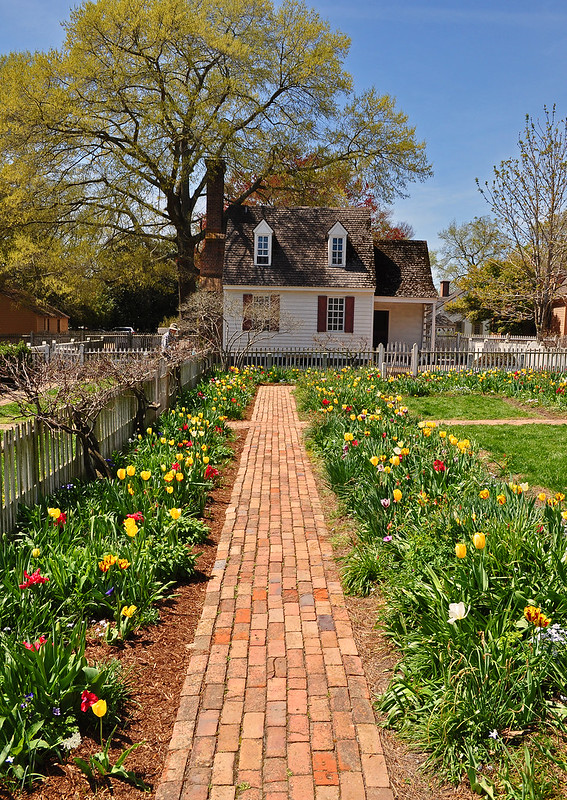
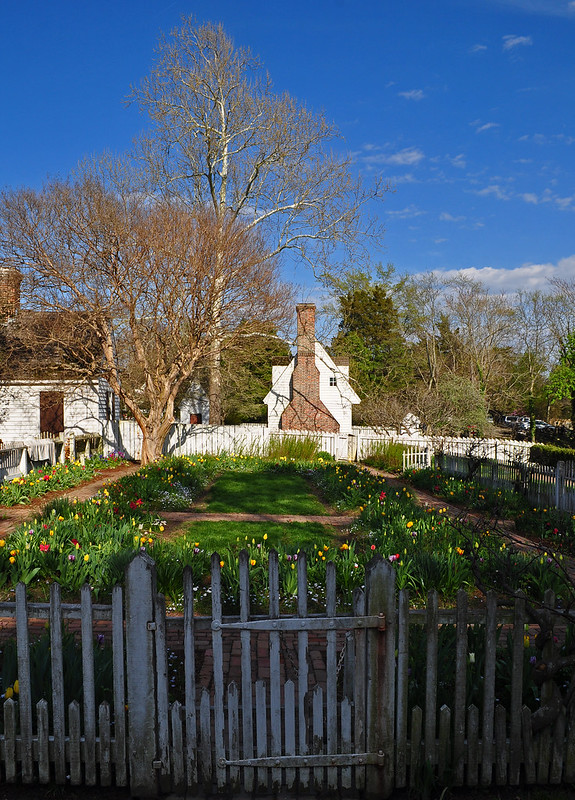
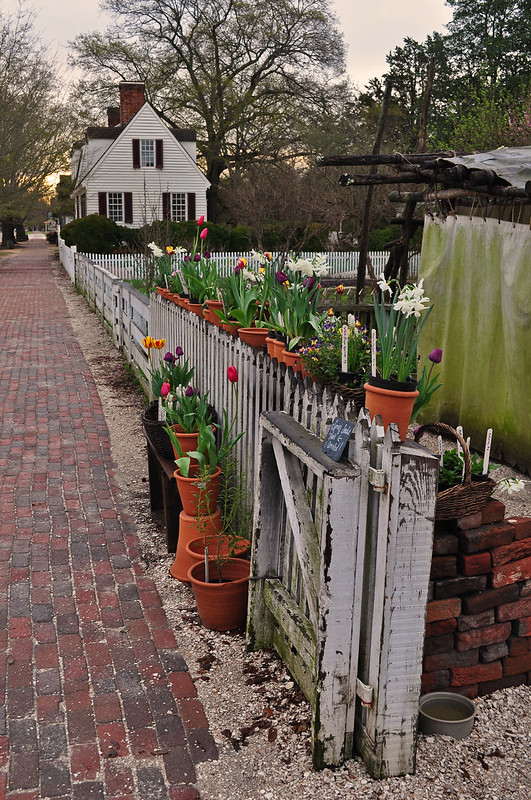
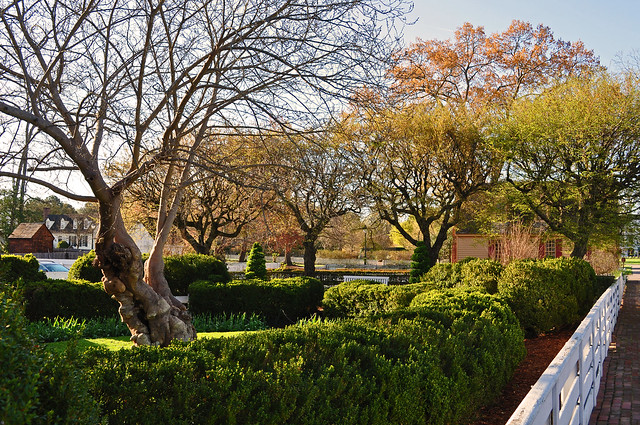
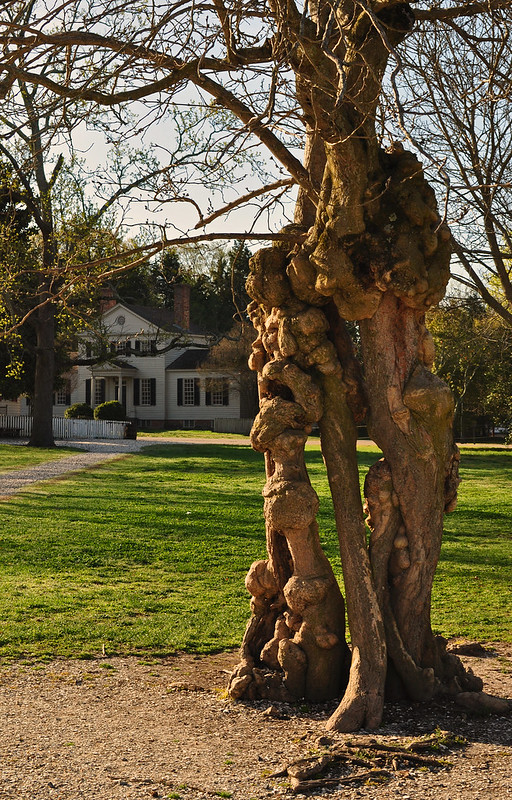
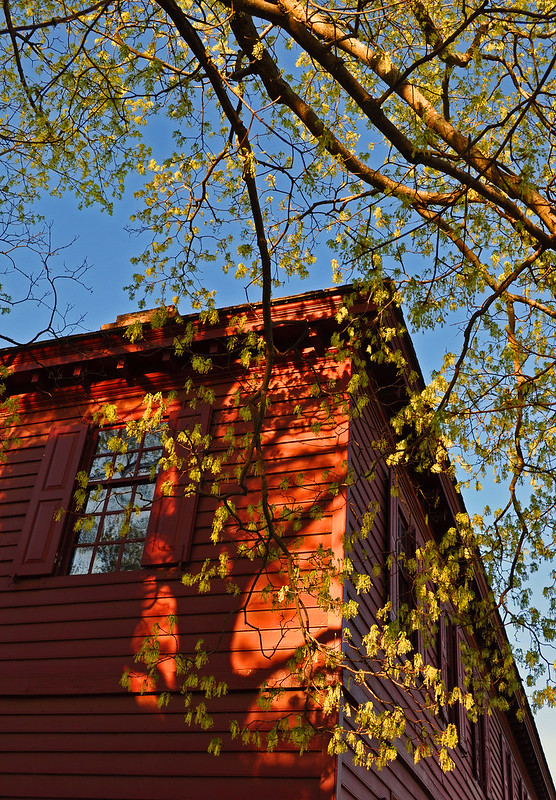
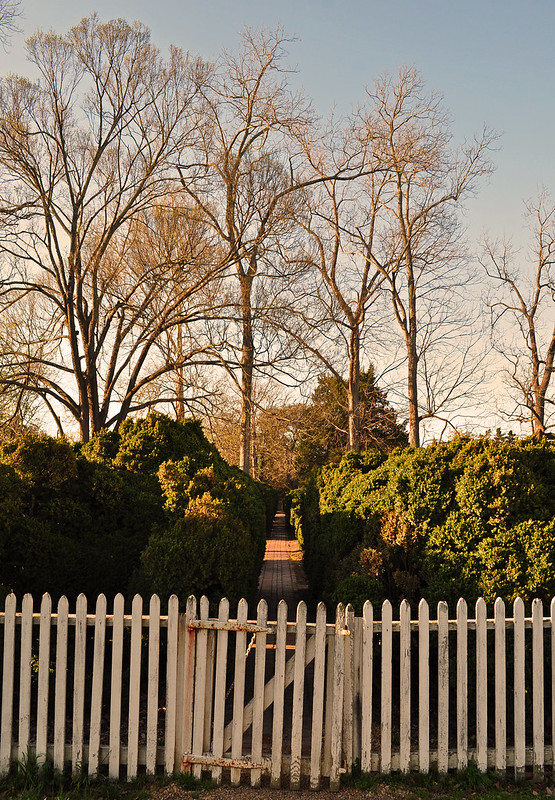
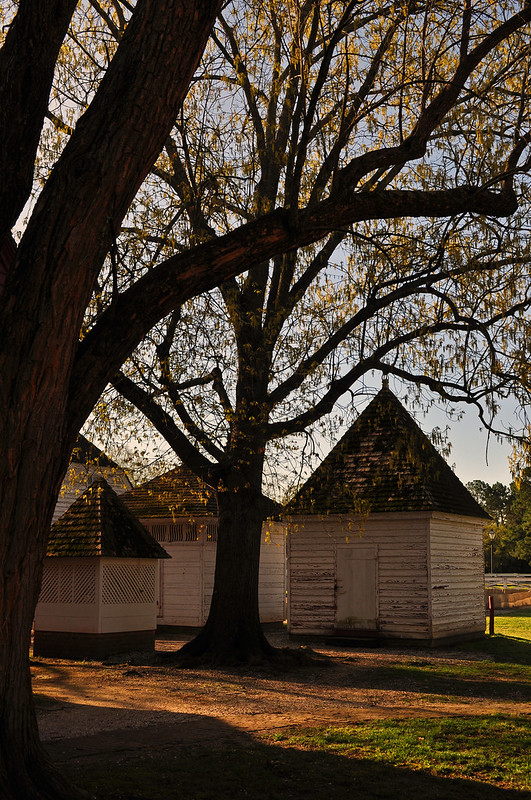
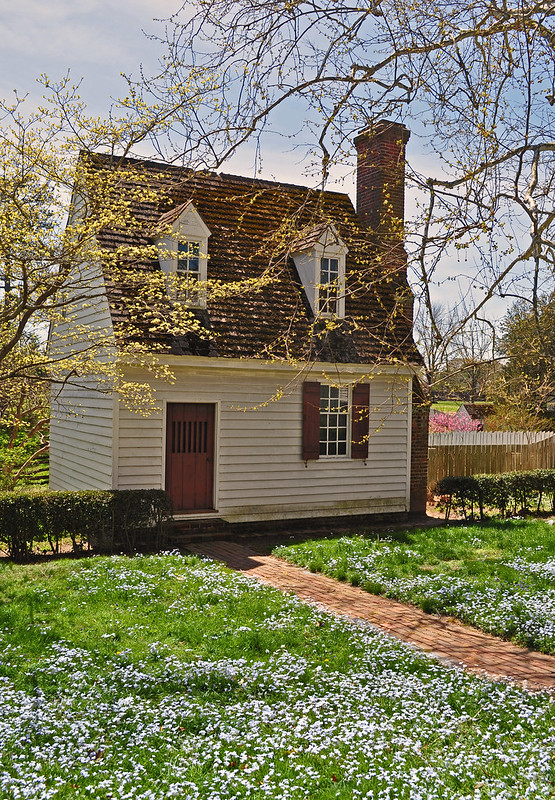
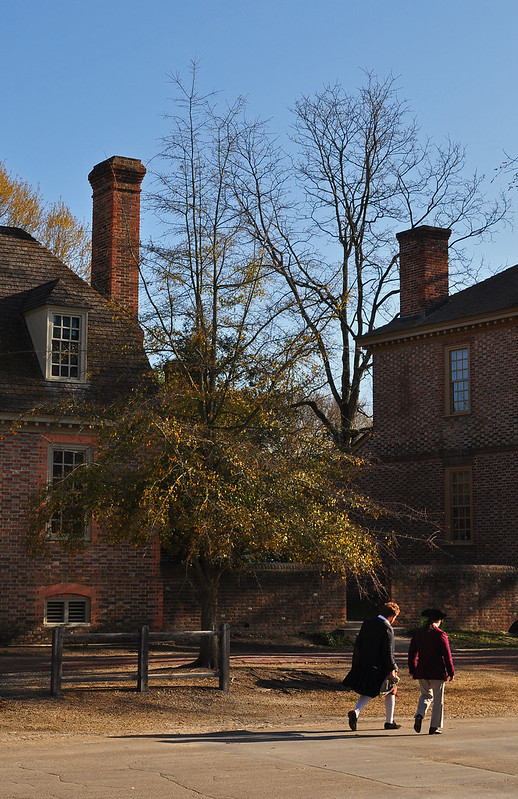
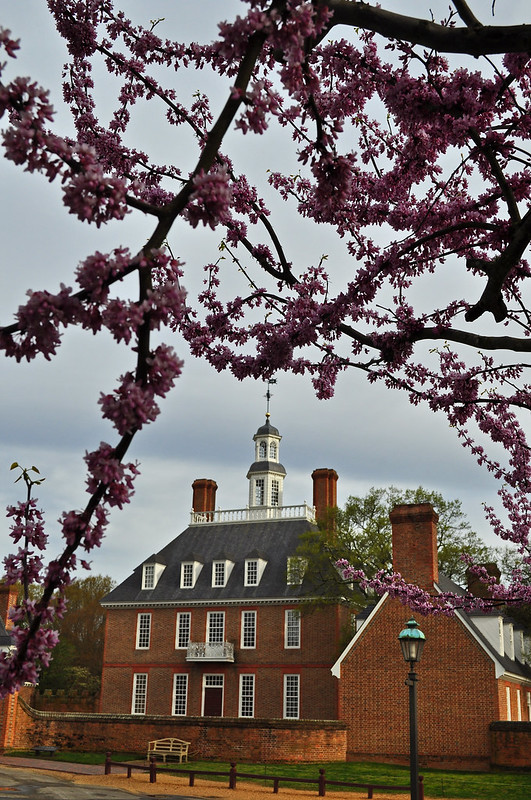
The schedule left plenty of time to explore Colonial Williamsburg, which was an easy walk from my hotel. I have always loved this place and visit several times a year, but I have never been able to see it in spring, nor early in the morning before the crowds pour in. Colonial Williamsburg has often been wrongly accused of merely being an American history stage set, but a significant number of its buildings are true restorations, and those that are true recreations have been done so fairly faithfully to what was there. This is not necessarily the case with the gardens in Colonial Williamsburg, most of which were recreated in the colonial revival style, and are a not quite accurate picture of what once was. I am OK with this though. The gardens are beautiful as they are, and most of them and the surrounding buildings have enough of a patina to convince you that you are walking back through time, even if that patina is only 80 years old and not 250.
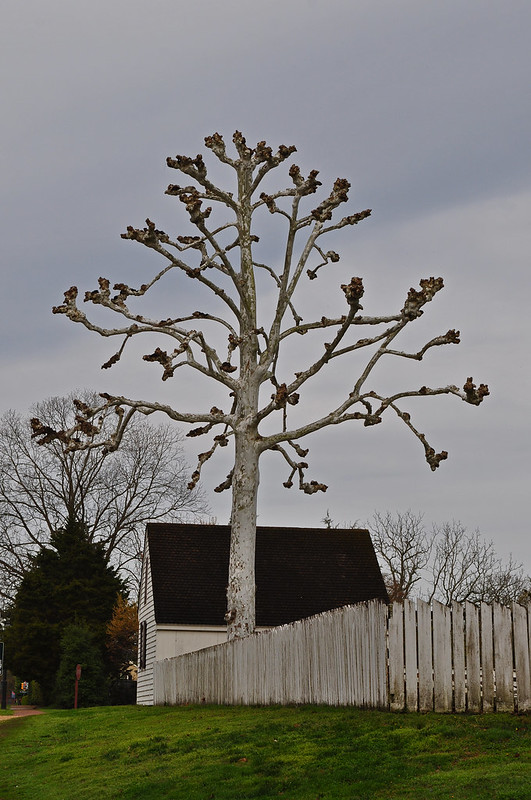
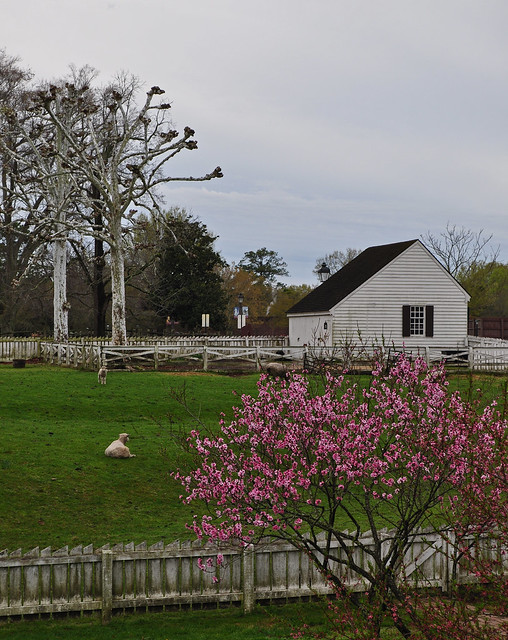
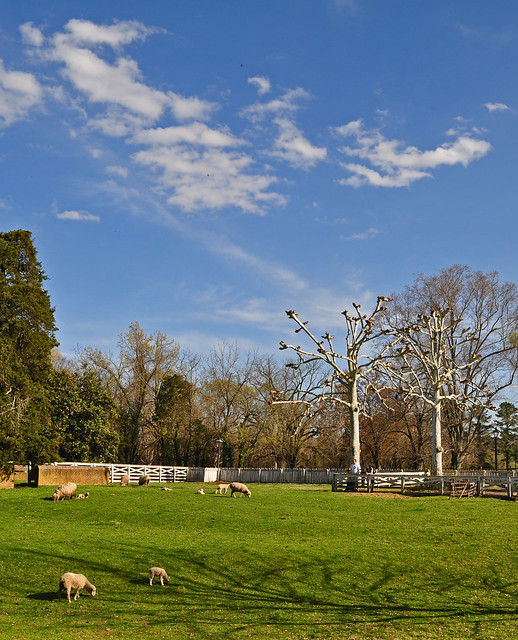
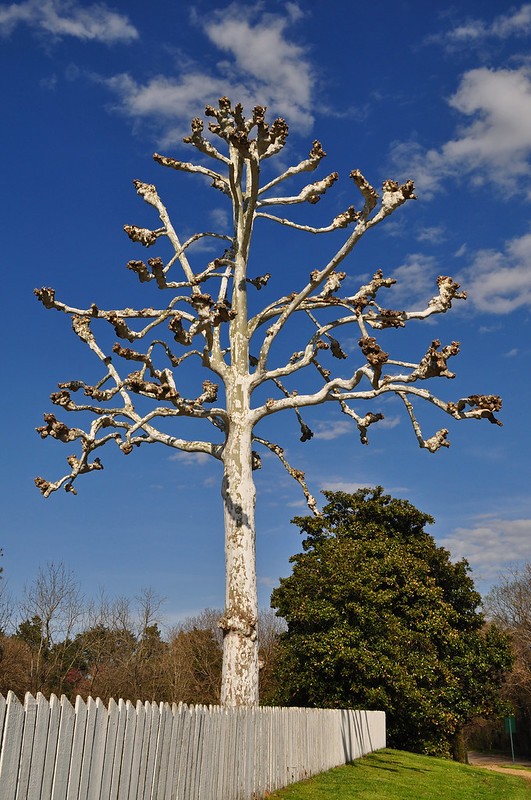
I am not a huge fan of extreme pruning, but I guess in a historic context it can be appropriate, and in the case of these pollarded sycamores, somewhat beautiful as well, even more so without foliage.
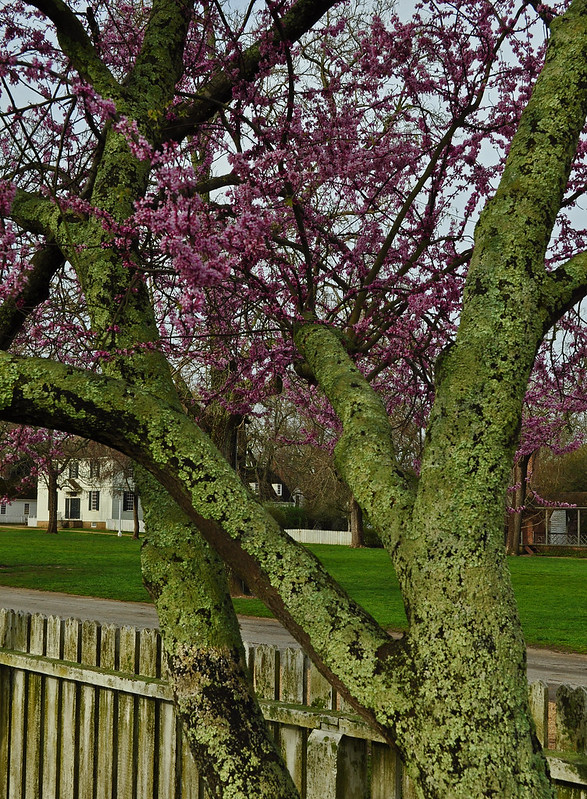
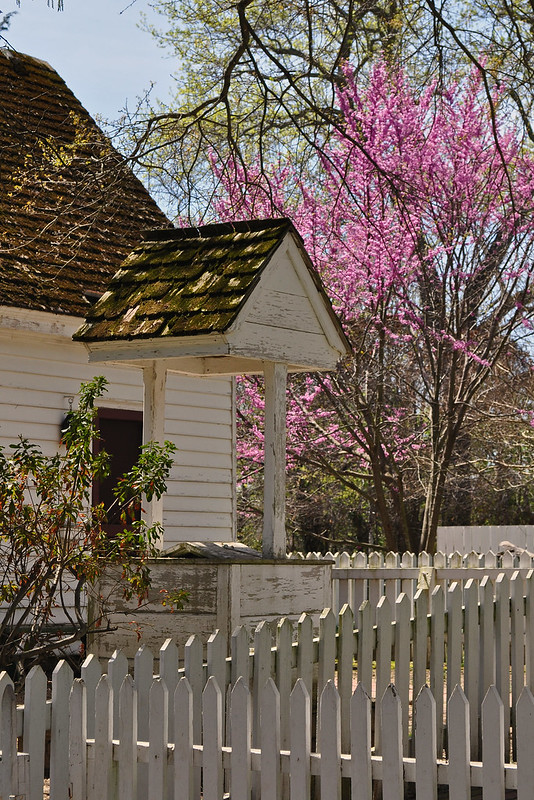
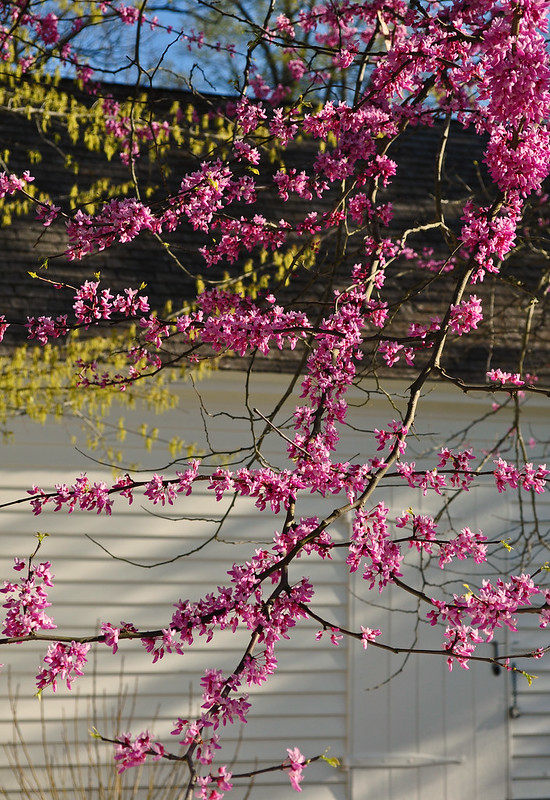
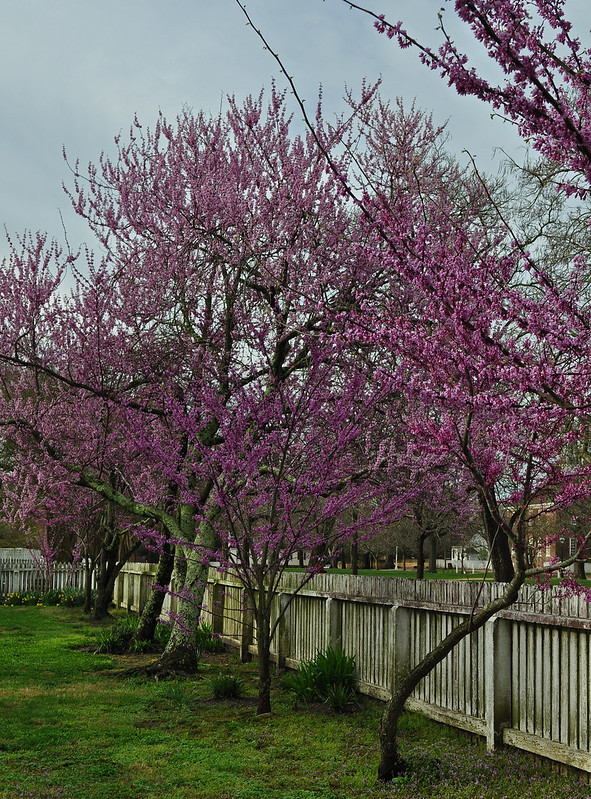
During my talk I gave more time to redbuds (Cercis canadensis) than many other trees, and fortunately the Williamsburg landscape abundantly backed me up.
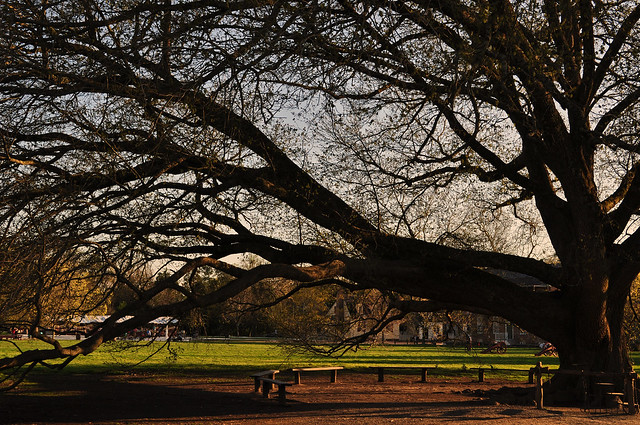
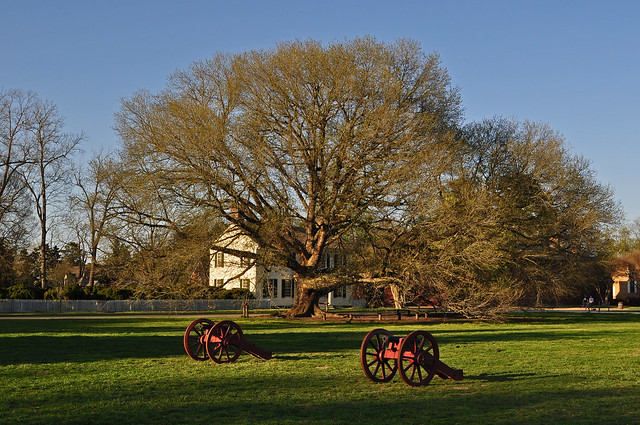
One of my favorite trees in Williamsburg is definitely not an understory tree. The Compton oak (Quercus x comptoniae) is a hybrid between live oak (Q. virginiana) and overcup oak (Q. lyrata). This particular one is huge, and sitting underneath of it is like being in a circus tent. It was planted in 1930, but you might think it was here when Jefferson and Washington walked by.
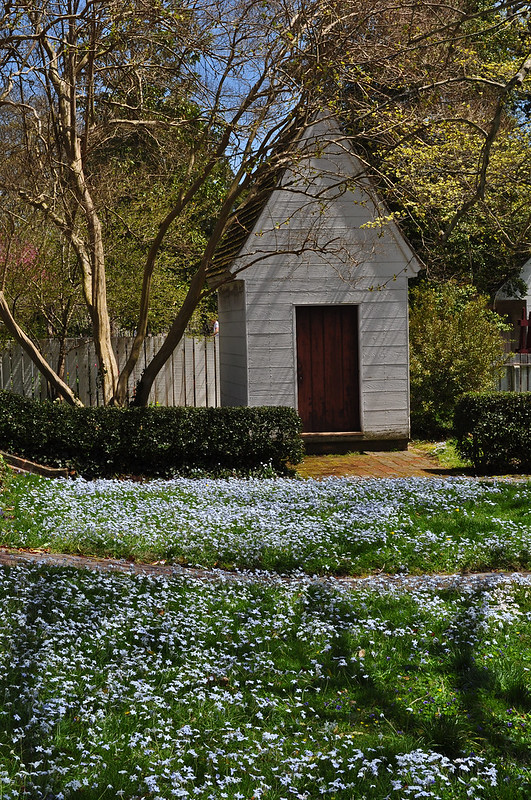
When you think of colonial gardens images of regimentation and symmetry might come to mind, as well as plants clipped with precision. However, even if the lines are tight, the plants are not so much so, and in Williamsburg many are allowed to flow and grow with some wildness, more or less as they please. After all, back in the day there were no string trimmers or power pruners, and sheep were the lawn mowers. I love the contrast between rigid designs and free flowing plants, and one plant that helped blur the lines was Ipheion, which has naturalized in many Williamsburg gardens.
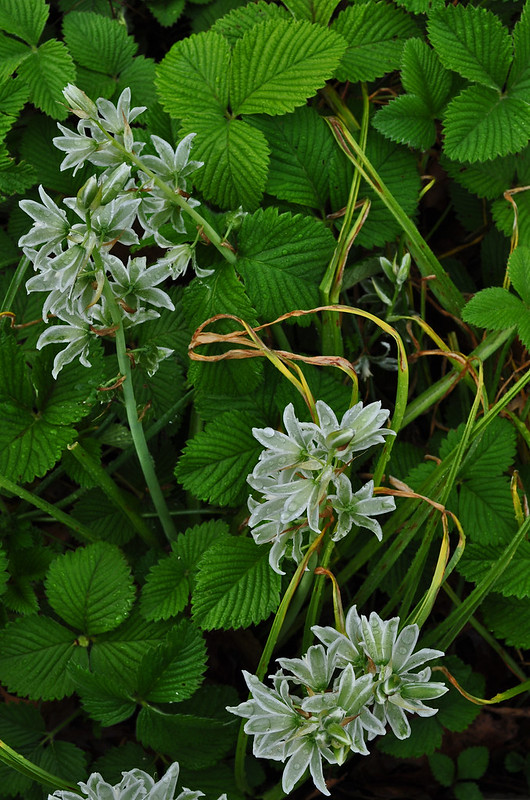
I ran across one plant totally unfamiliar to me. I was initially attracted to its ghostly silver green blooms, and thought I should find out what it was and how I could get some for my own garden. Then when I saw it coming up all over the place without regard, I thought twice. Asking around I found out it was Ornithogalum nutans (nodding or drooping star of Bethlehem). At our first house one of its cousins carpeted our backyard every spring, so I know what this genus is capable of.
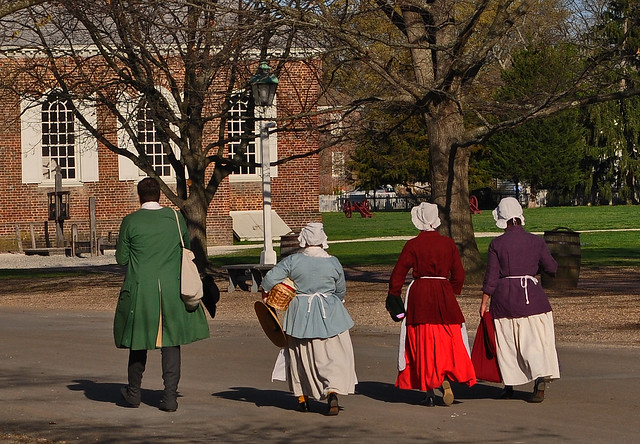
One of the benefits of getting up early was having a chance to see some of Colonial Williamsburg's interpreters begin their day. I overheard snippets of conversation as they walked by ready to assume their roles, and I could have sworn they were speaking in character with each other.
If you want to read more on Colonial Williamsburg's gardens, and the role that the colonial revival movement had in its landscape, here is a very good article on the subject.
The schedule left plenty of time to explore Colonial Williamsburg, which was an easy walk from my hotel. I have always loved this place and visit several times a year, but I have never been able to see it in spring, nor early in the morning before the crowds pour in. Colonial Williamsburg has often been wrongly accused of merely being an American history stage set, but a significant number of its buildings are true restorations, and those that are true recreations have been done so fairly faithfully to what was there. This is not necessarily the case with the gardens in Colonial Williamsburg, most of which were recreated in the colonial revival style, and are a not quite accurate picture of what once was. I am OK with this though. The gardens are beautiful as they are, and most of them and the surrounding buildings have enough of a patina to convince you that you are walking back through time, even if that patina is only 80 years old and not 250.
(Warning: this is a photo-heavy post, you may want to check how much bandwidth is in your boiler before proceeding.)
I ran across one plant totally unfamiliar to me. I was initially attracted to its ghostly silver green blooms, and thought I should find out what it was and how I could get some for my own garden. Then when I saw it coming up all over the place without regard, I thought twice. Asking around I found out it was Ornithogalum nutans (nodding or drooping star of Bethlehem). At our first house one of its cousins carpeted our backyard every spring, so I know what this genus is capable of.
One of the benefits of getting up early was having a chance to see some of Colonial Williamsburg's interpreters begin their day. I overheard snippets of conversation as they walked by ready to assume their roles, and I could have sworn they were speaking in character with each other.
Location:
Williamsburg, VA, USA
June 7, 2014
Yorktown Onion
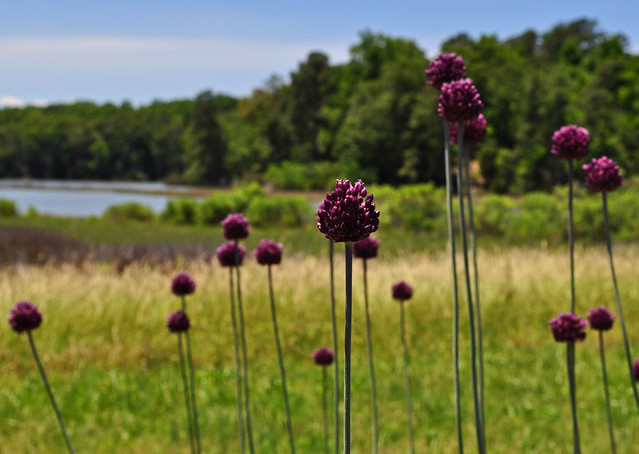
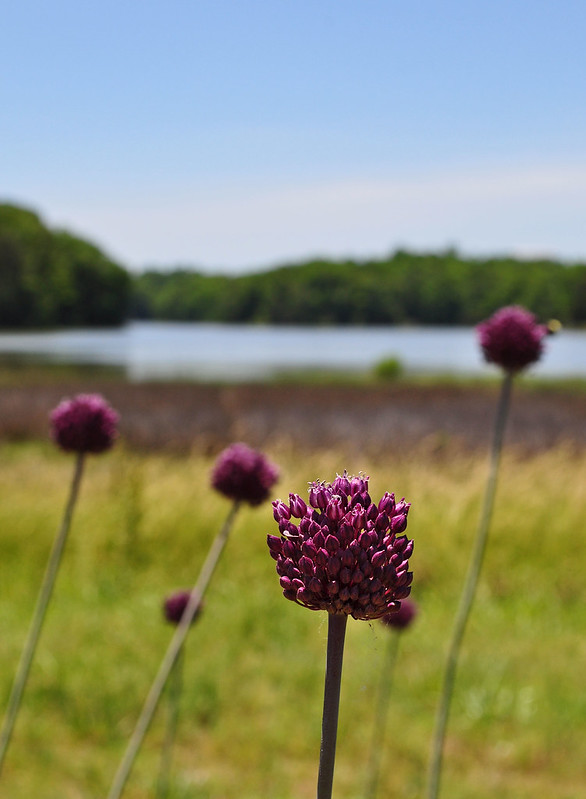
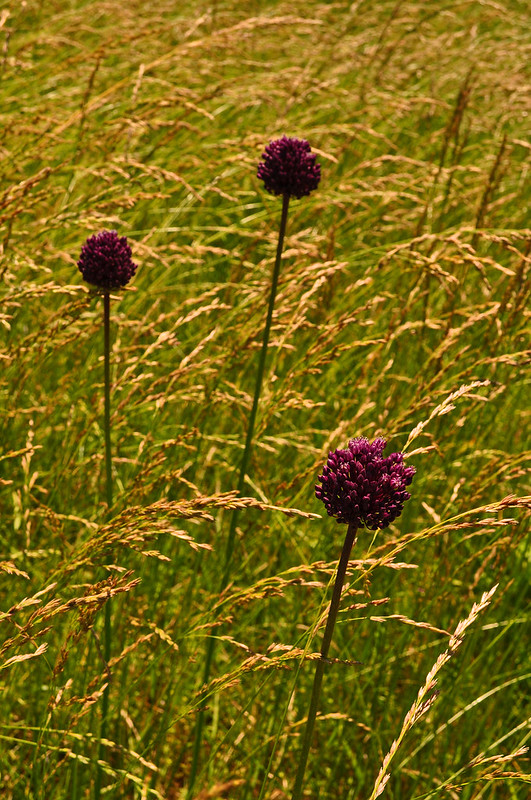
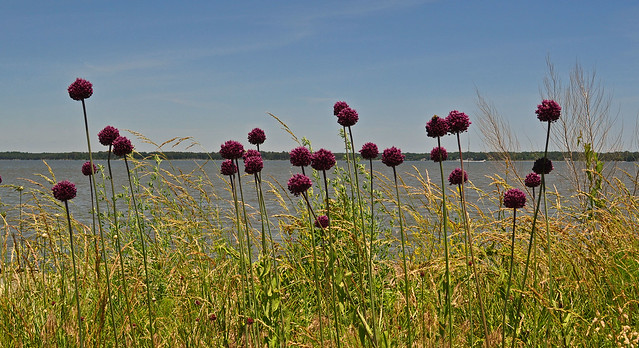
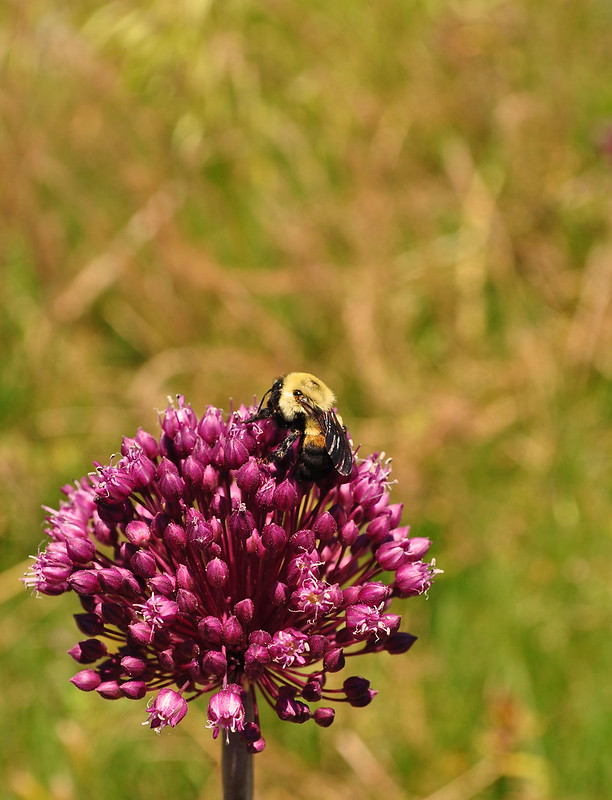
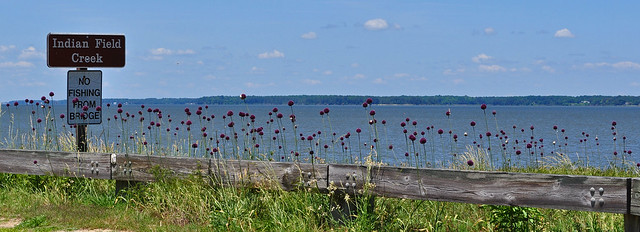
This past Sunday on the way back from kayaking, I impulsively took the Colonial Parkway home. Nearing Yorktown I quickly pulled to the side of the road when I recognized blooming fields of Yorktown onions (Allium ampeloprasum). This Eurasian native (known to the rest of the world as wild leek) made its way to England eons ago and then made its way to Yorktown during the Colonial era. It naturalized locally and is now revered by people who live in the area. It has even been given protected status by county ordinance.
Local gardeners who want to grow Yorktown onion usually get them from friends or family as a passalong plant. The only other source I know of is Brent and Becky's Bulbs, but if you live in Idaho the import of all allium species is forbidden.
(My usual disclaimer is in place, in that I have not received any compensation for the mention of anything in this post, including a bag of Muscari neglectum or Lilium henryi which would not be refused if they should happen to appear in my mailbox.)
Labels:
Day Trip,
History,
Lovely Weeds,
Williamsburg,
Yorktown
Subscribe to:
Posts (Atom)