Eventually I had to leave the river, and as I neared the campground where the landing was, I was brought back to reality. One camper at a site right on the river was busy hanging his oversized American flag on a pop-up tent, right next to his oversized "Make America Great Again" flag so, all the other campers and everyone on the water would have no doubt as to where he stood. Who does this on a camping trip? My gut response was to yell adjectives, but that would have been just as bad as waving oversized flags in other people's faces, and I didn't want to find out if he was exercising robust second amendment rights as well. I feel like we are living in a land of multiple realities these days, with collisions an ever present danger. I think I prefer a reality full of birds, paddling on mixed waters under bald cypress.
Showing posts with label Making Time for Church. Show all posts
October 9, 2017
Early Fall on the Lower Chickahominy
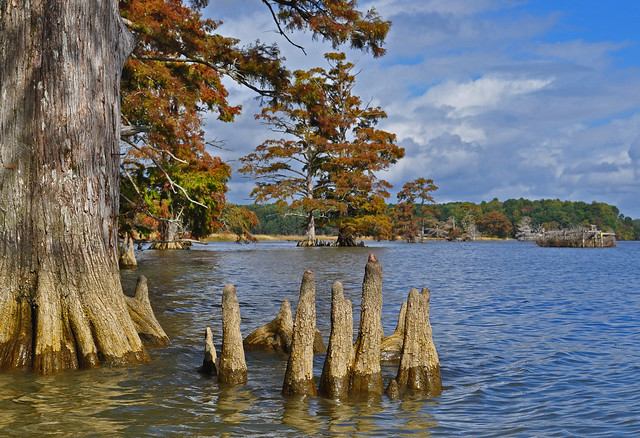
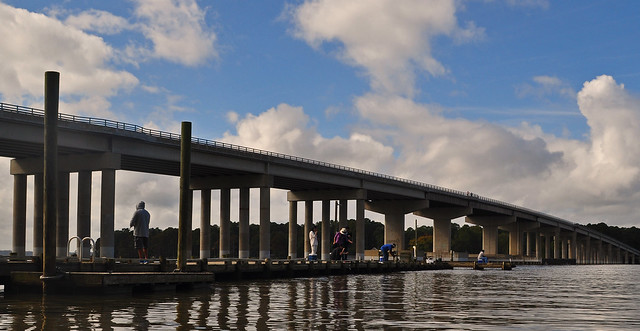
This past Saturday I took my kayak to the Chickahominy River, close to where it meets the James. This was not my first time here. When I was a child my father belonged to a rod and gun club with a cabin on a bluff overlooking one of the river's tributaries, and visits there are some of my fondest place memories. The water here is brackish, more fresh than salt, but still subject to the tides. This mix of different waters allows for an abundant diversity of animal and plant species, which made hunger a little less threatening to the native Americans who once called this place home. It was here that Capt. John Smith was captured, and taken to the chief of the Powhatans. As the flawed story goes, Smith's life was eventually spared by Pocahontas, the chief's daughter. Today the river and its tributaries remain relatively free from development, and save for a few houses and a bridge or two, it is easy to imagine what the Chickahominy may have looked liked centuries ago.
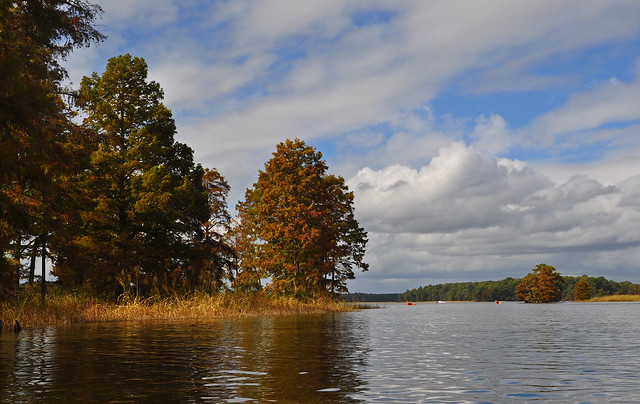
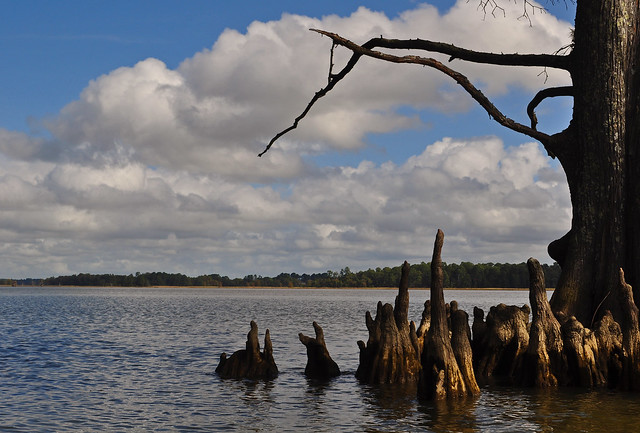
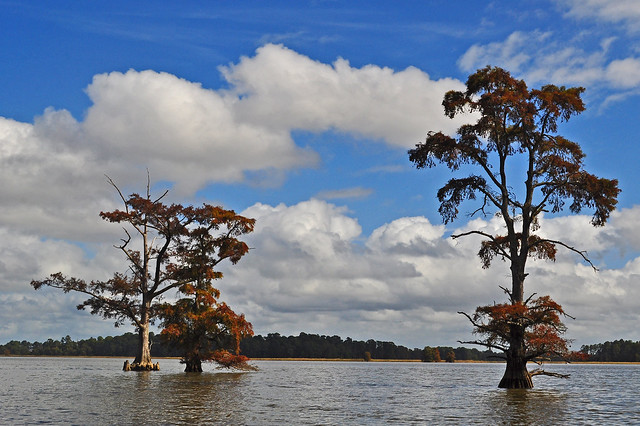
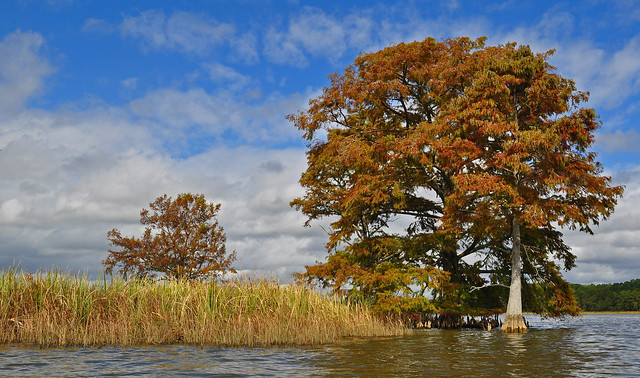
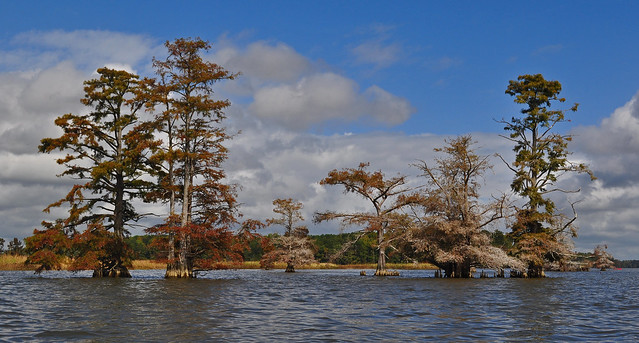
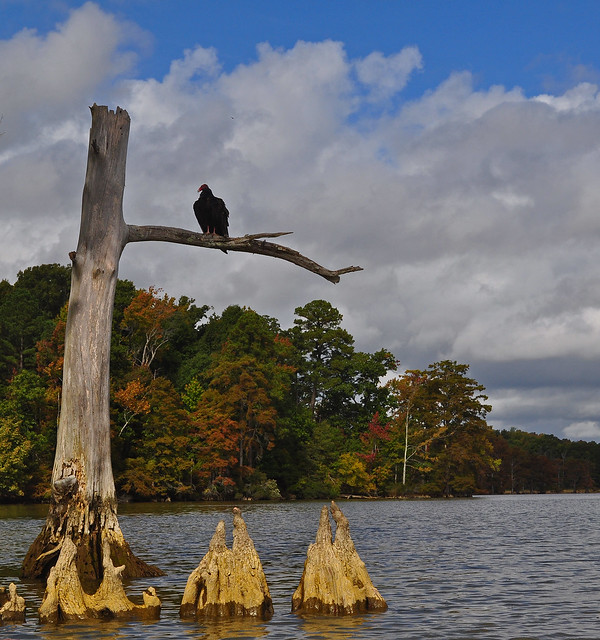
The Chickahominy has become one of my favorite places to paddle, and after any time spent there I always come away renewed. Part of the allure for me are the trees, specifically bald cypress (Taxodium distichum), and the opportunity to paddle between their knees and underneath their canopies. At the moment this species is tied for first place with live oak (Quercus virginiana) as my favorite tree. This weekend they were just beginning to sport their fall orange color. As I rounded one clump of cypress I could hear a loud commotion created by a pair of belted kingfishers, whose calls always sound like bitching to me. They were upset by a wake of vultures and a juvenile bald eagle perched in the trees along their part of the river. The kingfishers would not rest until the intruders were gone, and the presence of a lumbering middle-aged man in a bright red kayak was enough to push the raptors on their way, quieting the kingfishers. The lone eagle joined several others further down the shoreline; the place is thick with them, almost like pigeons.
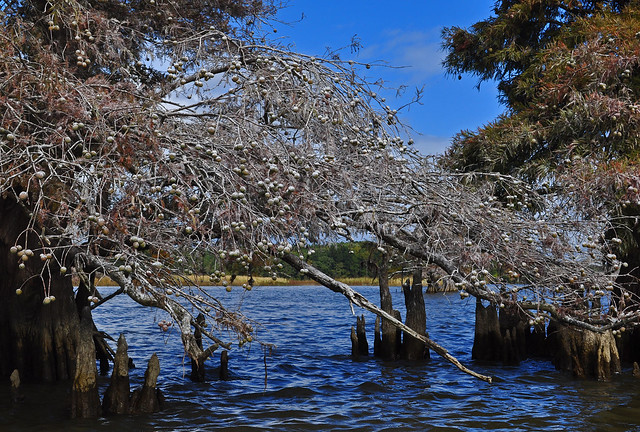
In one area of the river some of the cypresses looked as if they had been frosted. While it made for interesting photos, the "frost" was actually a coating of guano, probably from cormorants, or egrets.
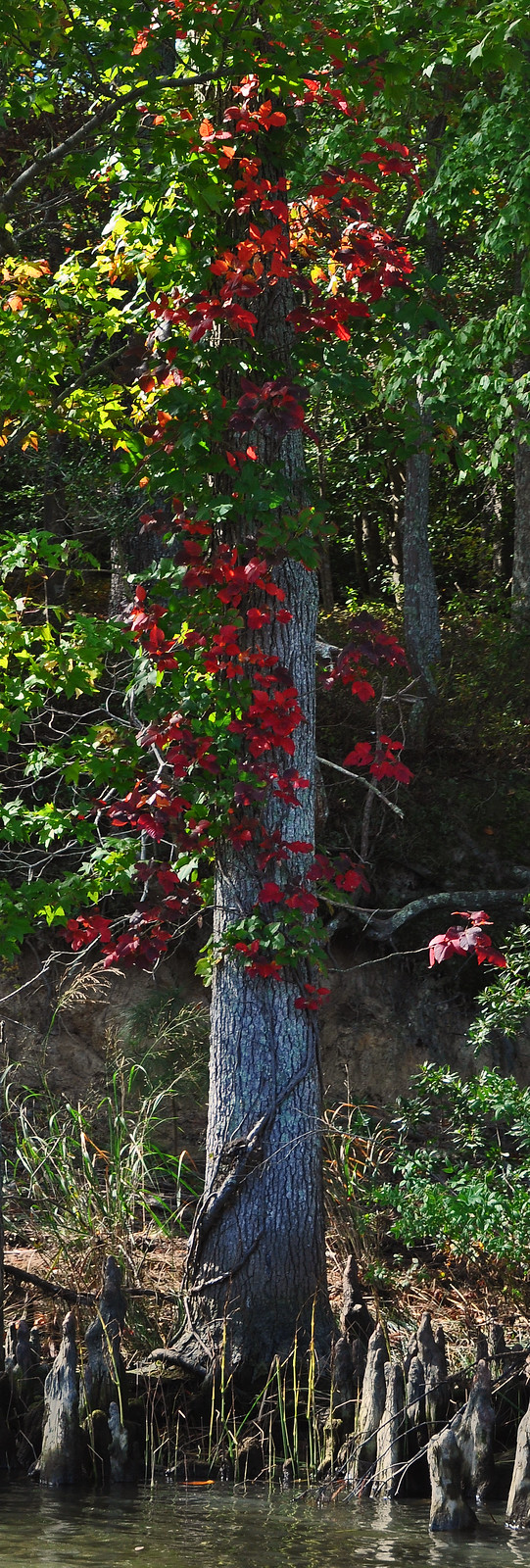
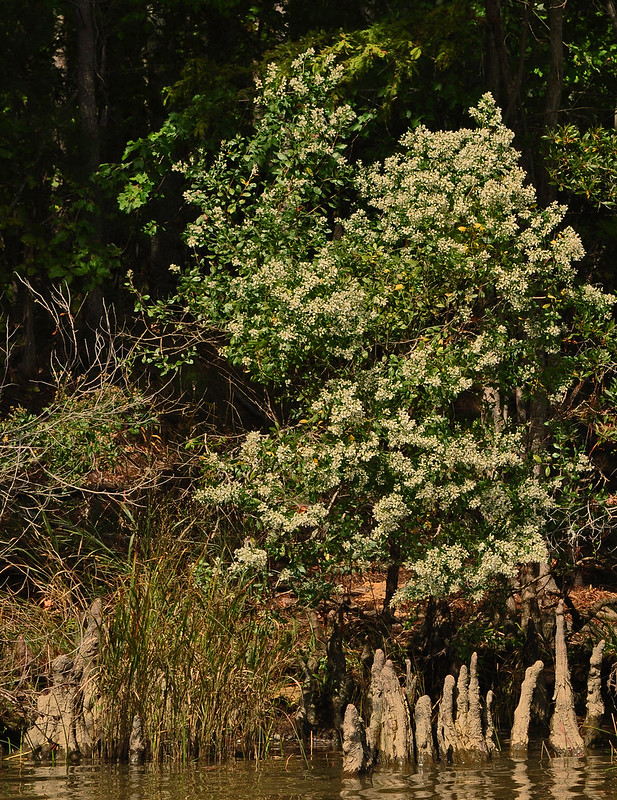
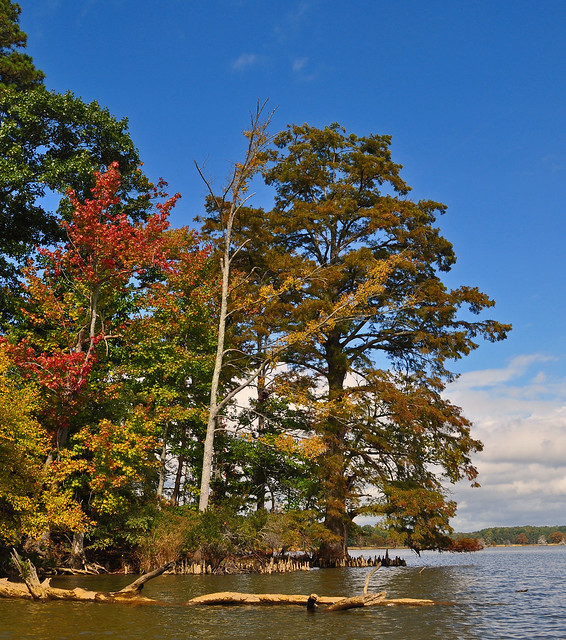
The cypress were not the only trees with fall color. A few red maples (Acer rubrum) right next to the shore were starting to turn, as were a few sweetgums (Liquidambar styraciflua), both a little further along, color-wise, then their kin on drier land. In many of the trees poison ivy (Toxicodendron radicans) climbed in shades of red, orange, and yellow, proving that even one of our most reviled plants can have its moment. All over the coast here, not just along the Chickahominy, the white blooms of saltbush let you know what time of year it is.
Eventually I had to leave the river, and as I neared the campground where the landing was, I was brought back to reality. One camper at a site right on the river was busy hanging his oversized American flag on a pop-up tent, right next to his oversized "Make America Great Again" flag so, all the other campers and everyone on the water would have no doubt as to where he stood. Who does this on a camping trip? My gut response was to yell adjectives, but that would have been just as bad as waving oversized flags in other people's faces, and I didn't want to find out if he was exercising robust second amendment rights as well. I feel like we are living in a land of multiple realities these days, with collisions an ever present danger. I think I prefer a reality full of birds, paddling on mixed waters under bald cypress.
November 27, 2015
Making Friends at Church
A couple of Sundays ago, I had the chance to meet a fellow blogger, Marilyn Kircus. I've been following her blog, Adventures of a Vagabond Volunteer, for some time now, as she documents her travels and volunteer work for the U.S. Fish and Wildlife Service. I've enjoyed reading about Marilyn's encounters with wildlife, her hikes, her canoe trips, and even the more mundane work she has had to do. Many of the photos she has shared on her blog had me ready to throw the tent and sleeping bag into the back of the truck, lace up my boots, and head out west. Her stint at each refuge lasts several months, and when I heard she was going to be working this winter at the Alligator River National Wildlife Refuge just south of here in North Carolina, I suggested a watery meet up at Merchant's Millpond State Park. I have been this place several times before, and hoped that she would find it as special as I do.
I got there a little early, and the park was not open yet. Riding further down the road, I saw someone, camera in-hand, and knew it had to be Marilyn. We caught up with each other as mist rose over the pond's dam, and is as often the case with kindred spirits, we didn't stop talking until it was time to go, which is likely the reason Marilyn reported seeing so few birds in her account of the trip.
![]() |
| The Dam |
![]() |
| This structure is a fish ladder that enables river herring to continue upstream. Just as was the case during my last visit to Merchants Millpond, the dark, tannin-rich water transformed its surface into a mirror. In these parts it has not been the most spectacular fall color-wise, but what little we did see was made twice as nice by the watery reflection. |
![]() |
| Spanish moss (Tillandsia usneoides) has an affinity for bald cypress (Taxodium distichum). |
![]() |
| Swamp Rose (Rosa palustris) |
![]() |
| Parrot's feather (Myriophyllum aquaticum) might have a nice texture, but it is an exotic invasive. |
![]() |
| Sweetgum (Liquidambar styraciflua) |
September 27, 2014
Among the Ancients
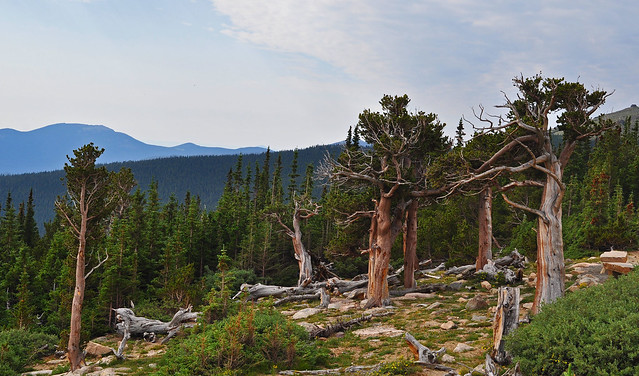
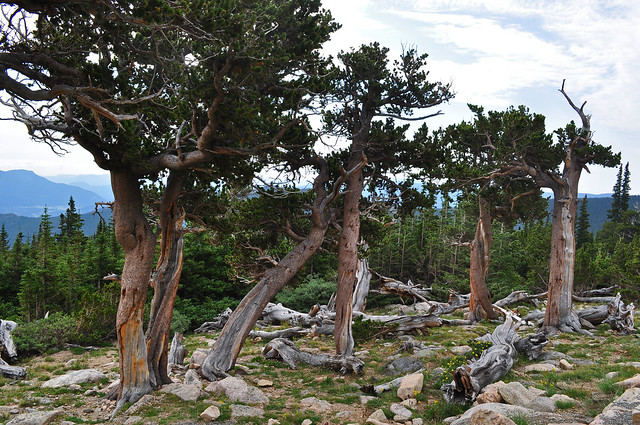
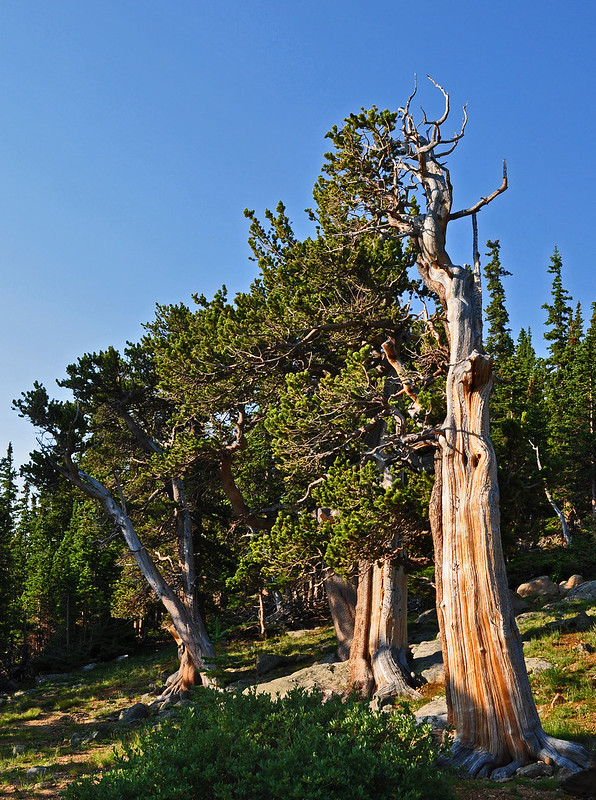
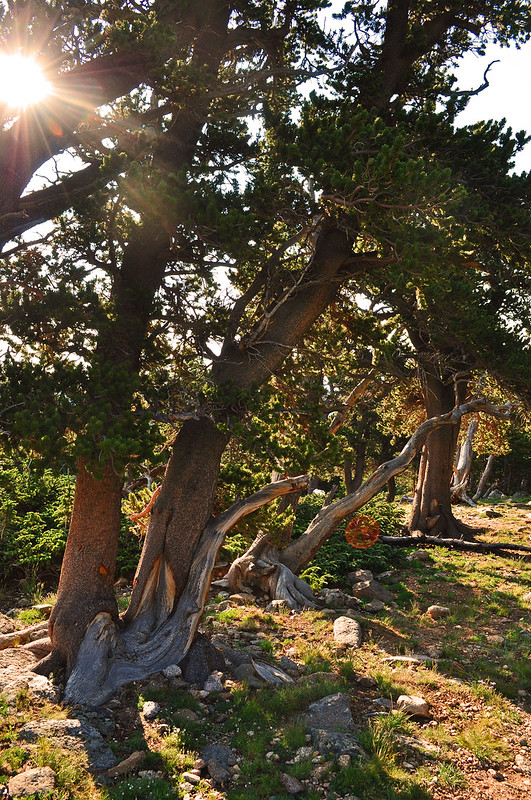
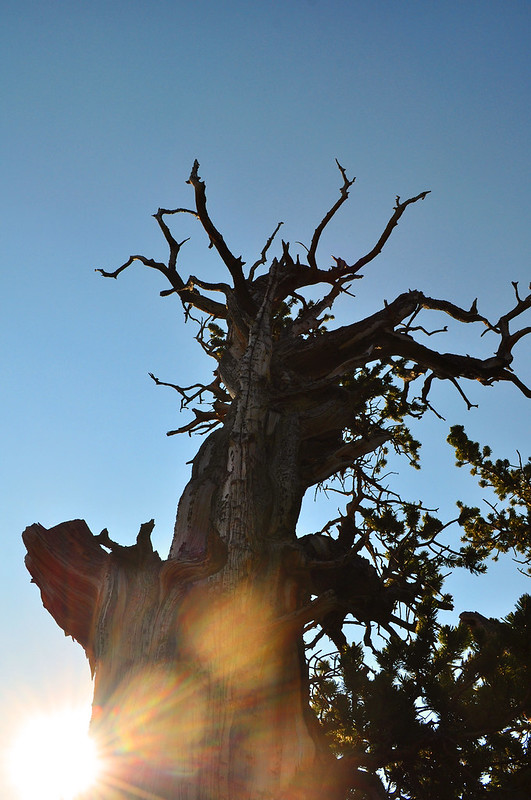
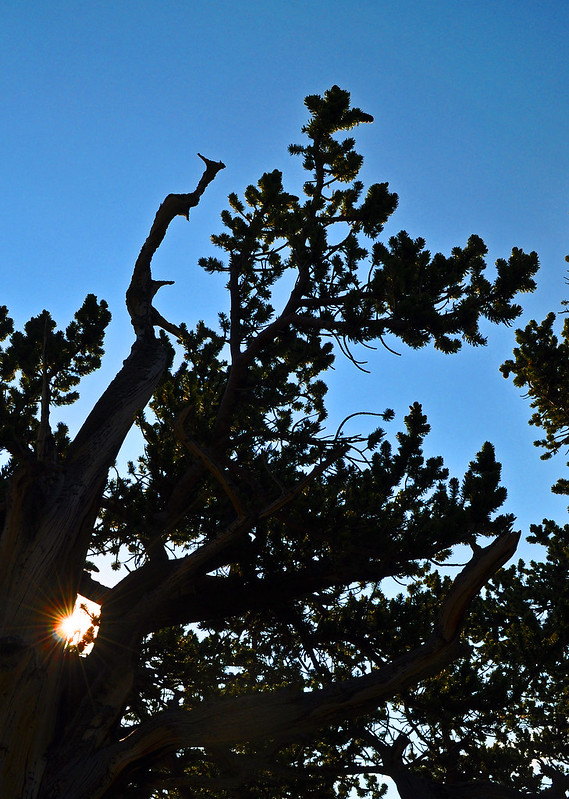
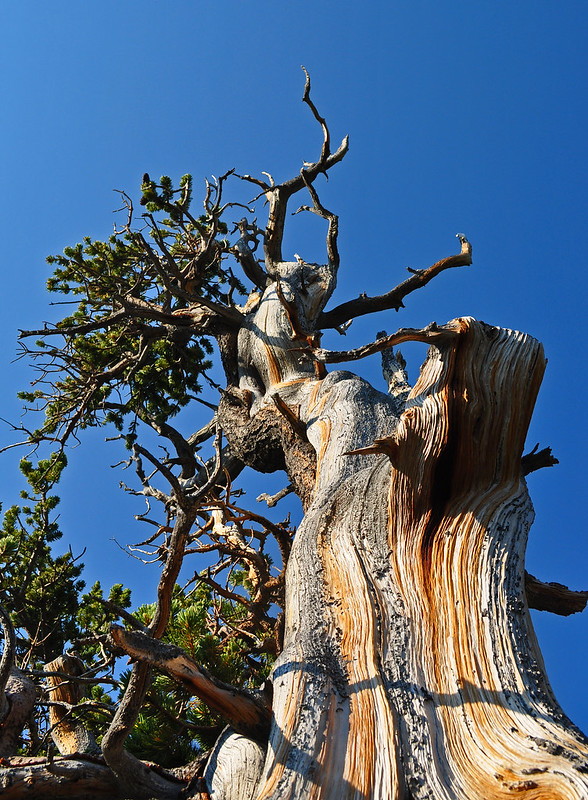
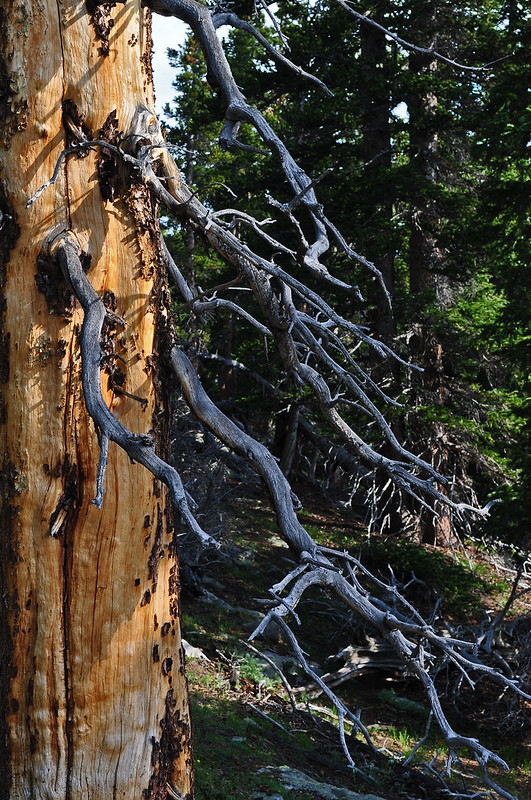
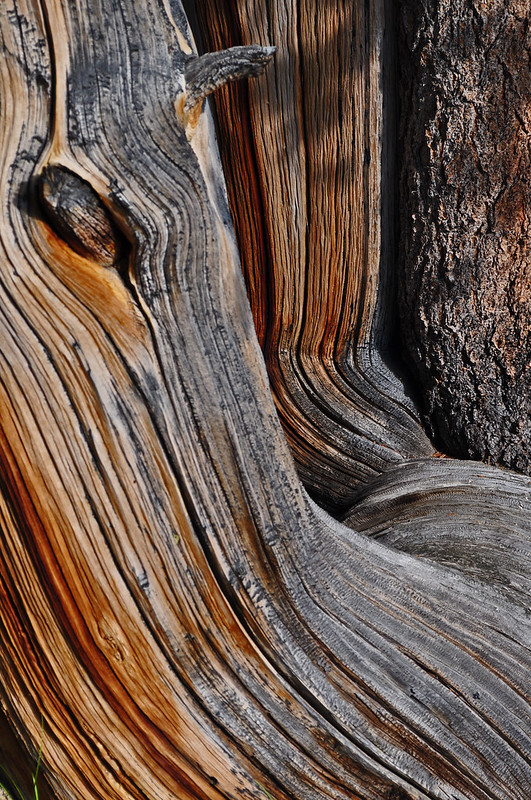
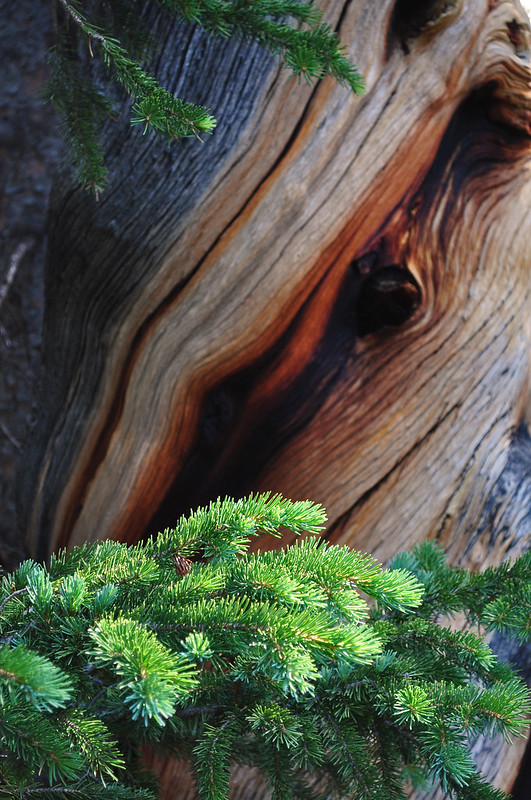
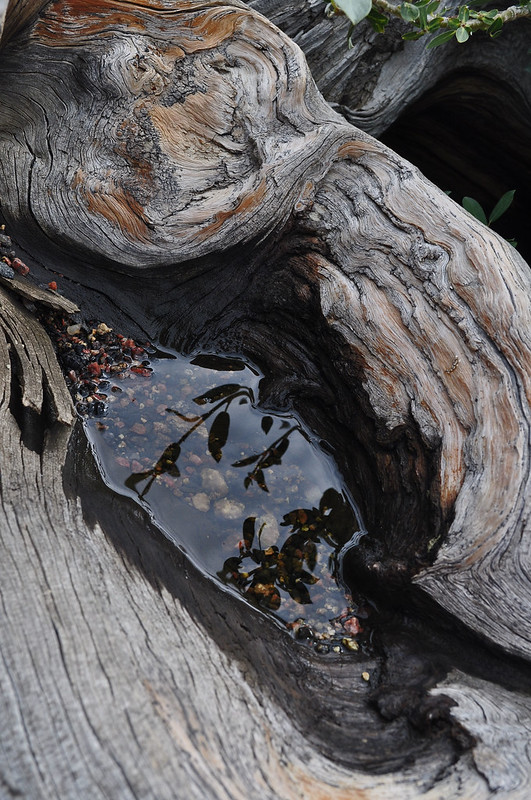
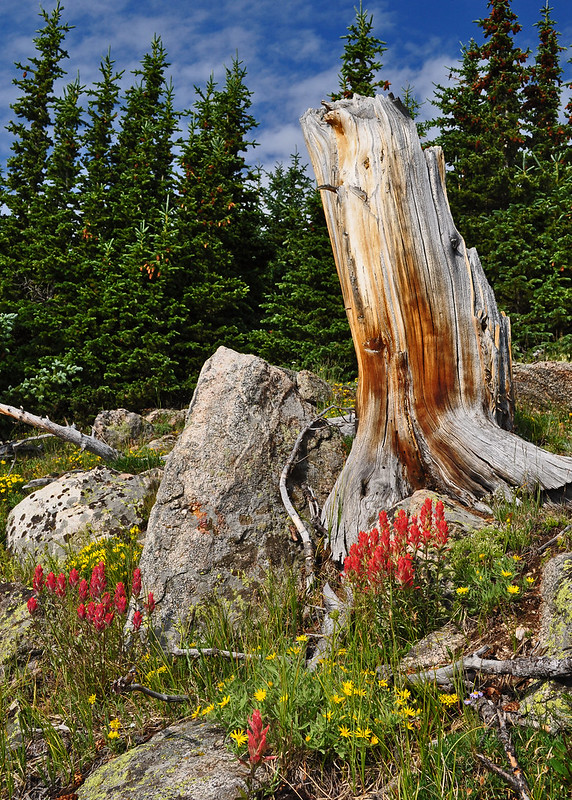
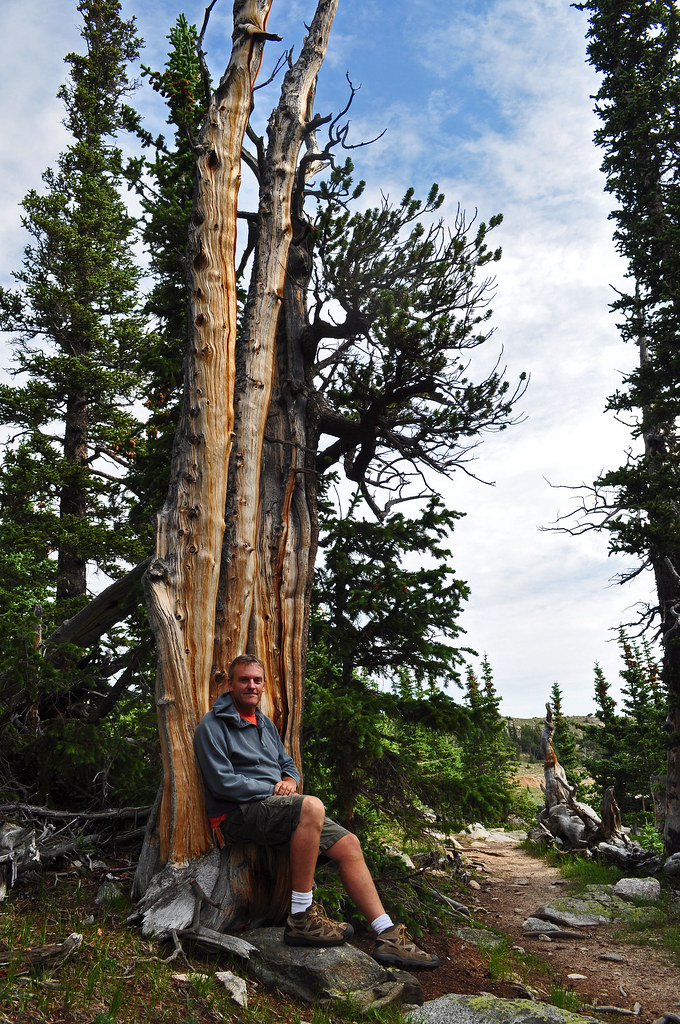
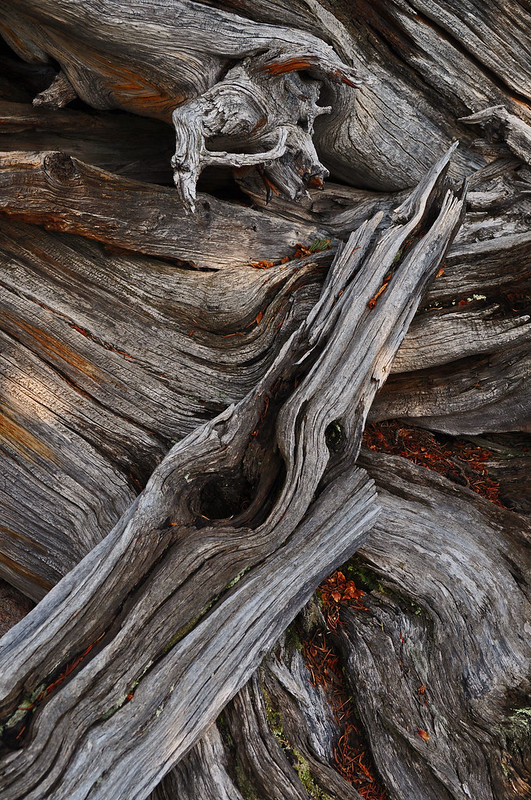
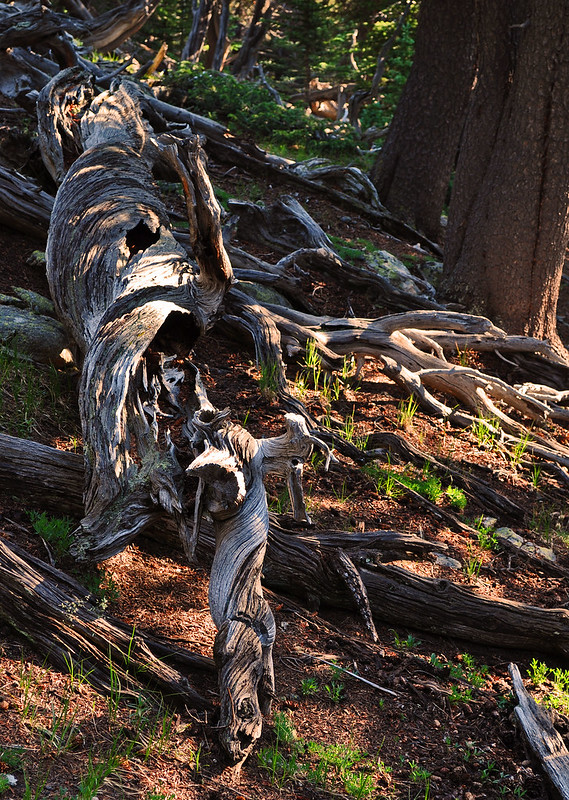
On our trip to Colorado this summer, one of the places I really wanted to visit again was the Mt. Goliath Natural Area. We briefly stopped here on our first trip west, but I was alone in wanting to spend more time here and felt rushed, plus I did not own a decent camera then. This summer there was no rush, and Sherpa Girl K and I were able to wander leisurely among the bristlecone pines (Pinus aristata). Some of these wonderfully gnarled trees are between 1000 and 1600 years old, which given my own species' record of stewardship on this planet, it is totally remarkable that these plants are still able to survive. The natural area has a small visitors center where you can learn more about the surrounding environment, and immediately outside, native wildflowers are showcased in an alpine garden, but it was the pines I came to see.
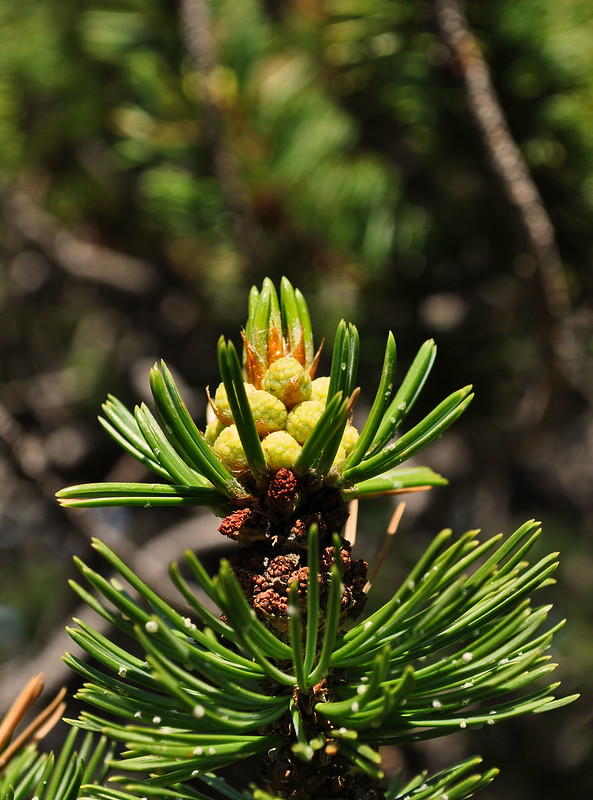
Bristlecones are extremely well adapted to their environment, which is quite harsh. The soils are thin, rocky and poor, the winter temperatures are brutally cold, the rain is sparse, but the wind is not, and this high up the sun's radiation is intense. The trees have adapted by growing very, very slowly, making the wood dense, strong and resistant to diseases, insects, rot and bacteria. Each needle can last close to 20 years, minimizing the amount of energy needed to produce new growth. The gnarled and twisted trunks make the trees more resistant to the strong winds. The large amount of dieback on the bark and in the xylem layer reduces the need for moisture and nutrients when the trunks have been damaged by drought or fire. The relatively large distance between specimens helps keep fire from spreading when one of the pines has been hit by lightening. Even when one does die, it can take many decades for the ghost tree to finally fall to the forest floor.
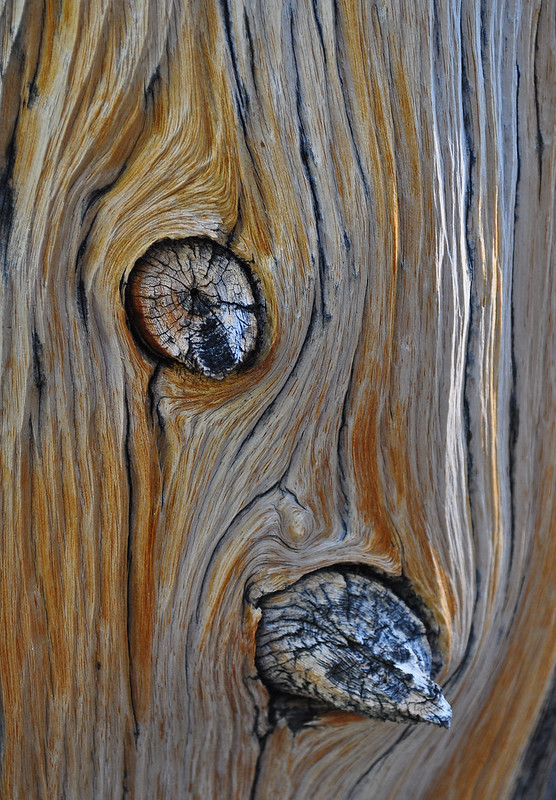
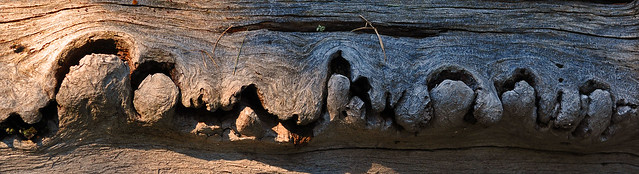
I would love to know what this tree was trying to tell us, but the alphabet was not familiar.
If you haven't had your fill, my complete set of photos from my morning at Mt. Goliath can be seen here, at my flickr page, and while you are looking at them, do so trying to imagine the feel of cool crisp air, and the smell of fresh Christmas trees.
Labels:
Colorado,
Hiking Trails,
Making Time for Church
Subscribe to:
Posts (Atom)