Showing posts with label Fun On the Water. Show all posts
February 3, 2018
T. Tyler Potterfield Memorial Bridge
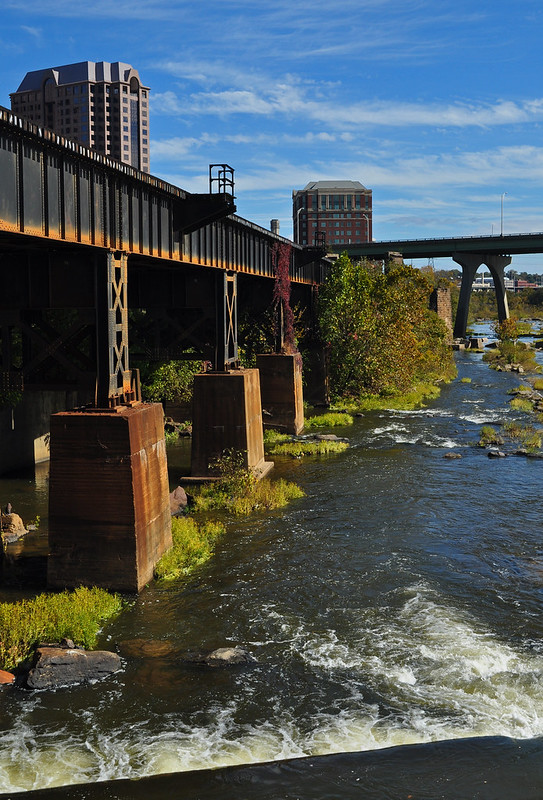
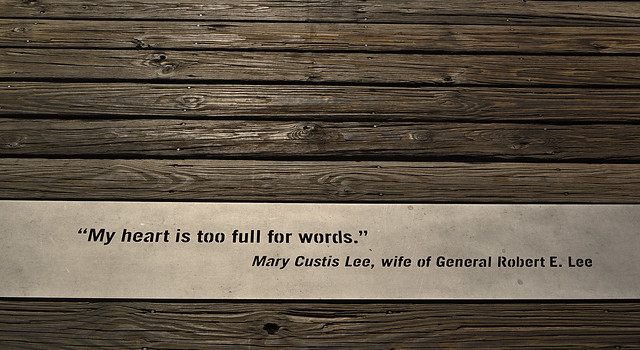
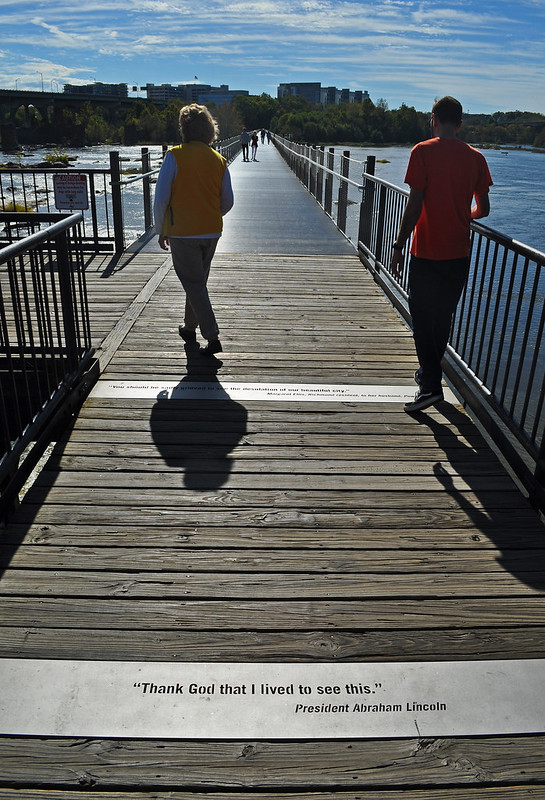
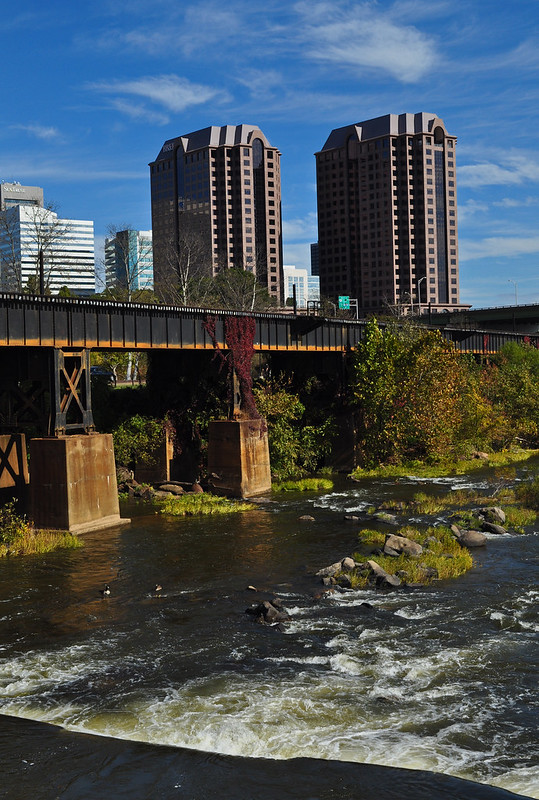
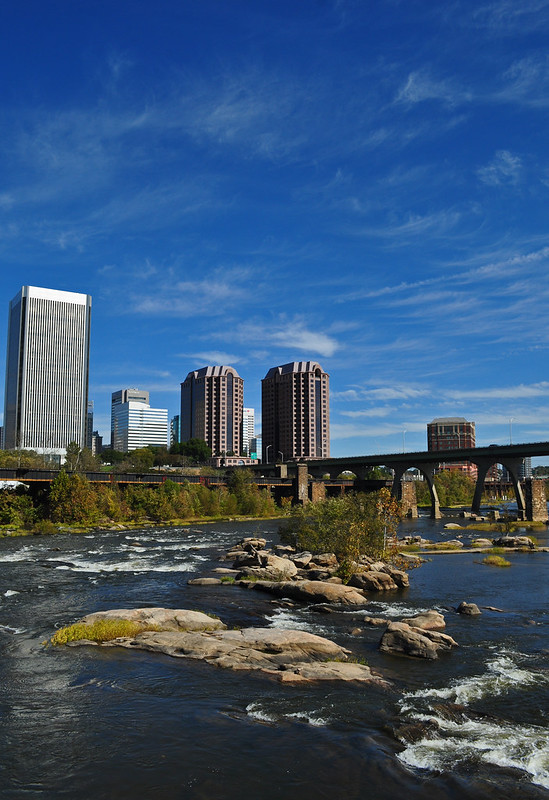
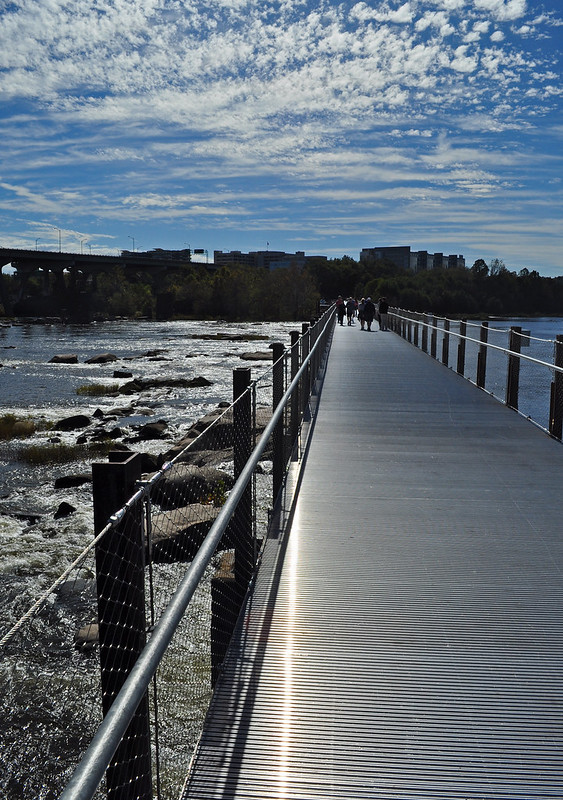
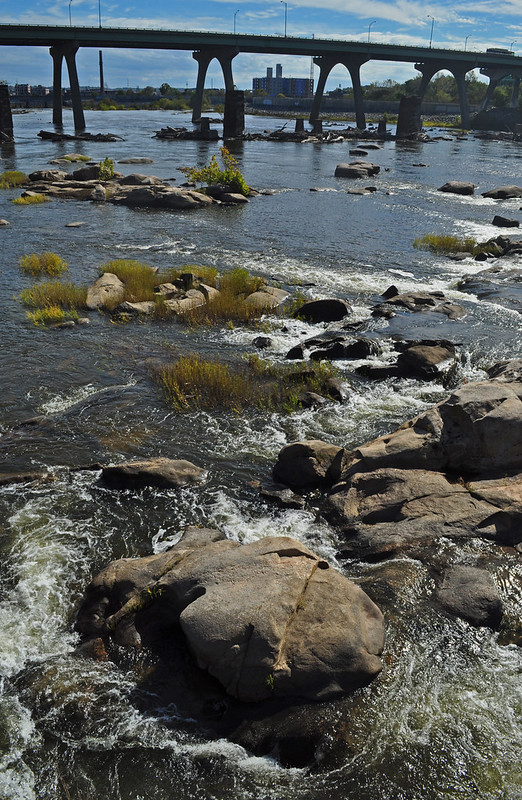
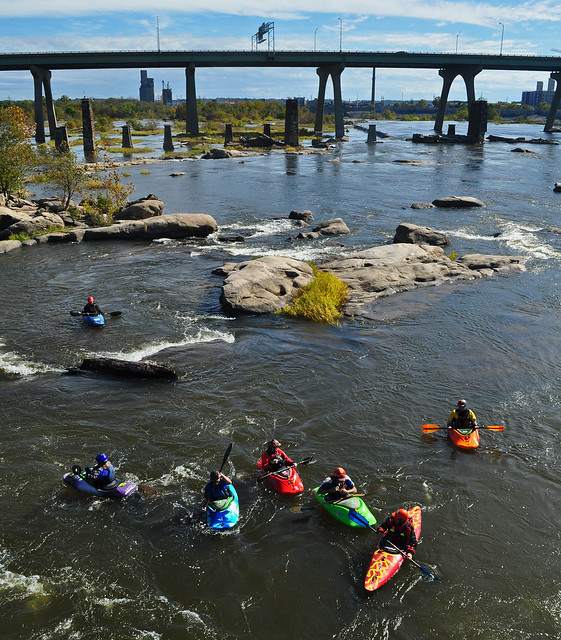
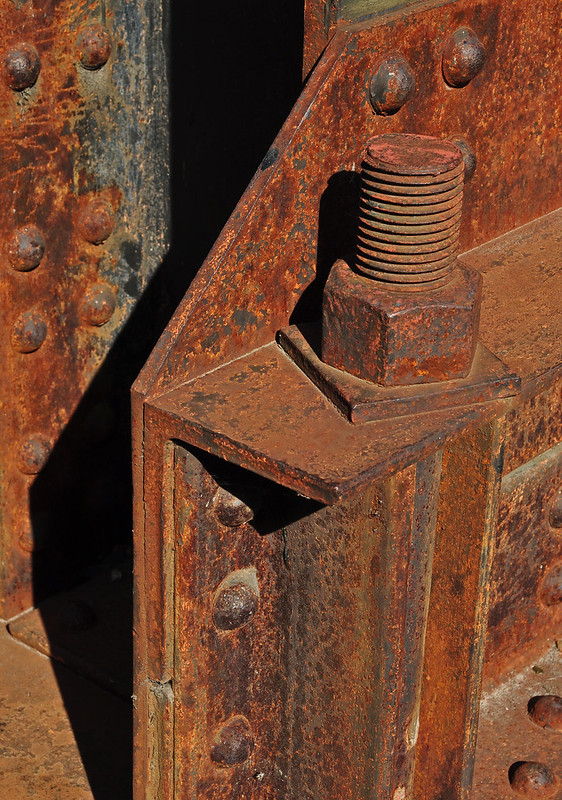
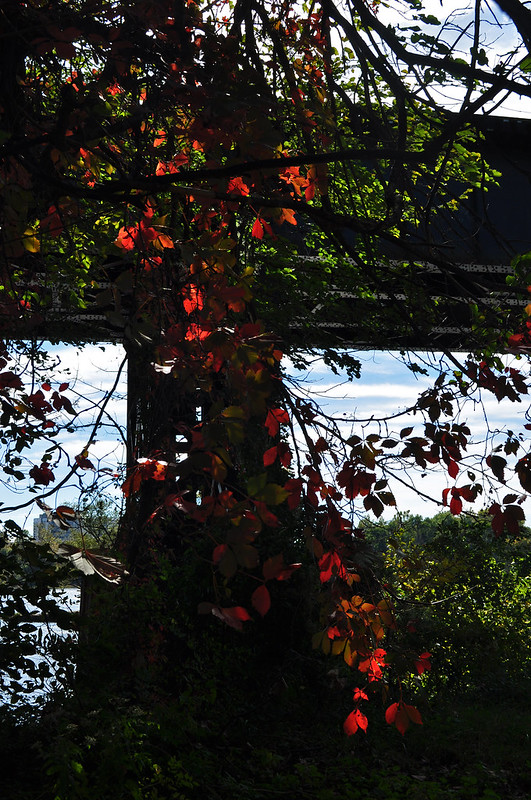
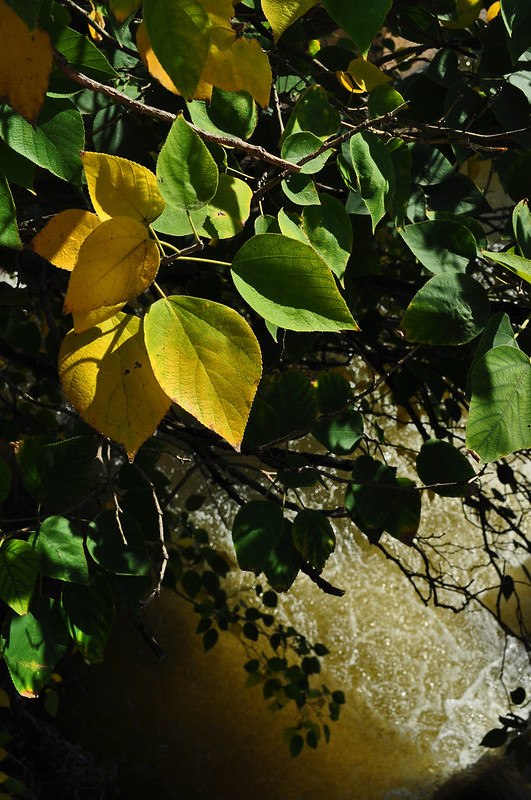
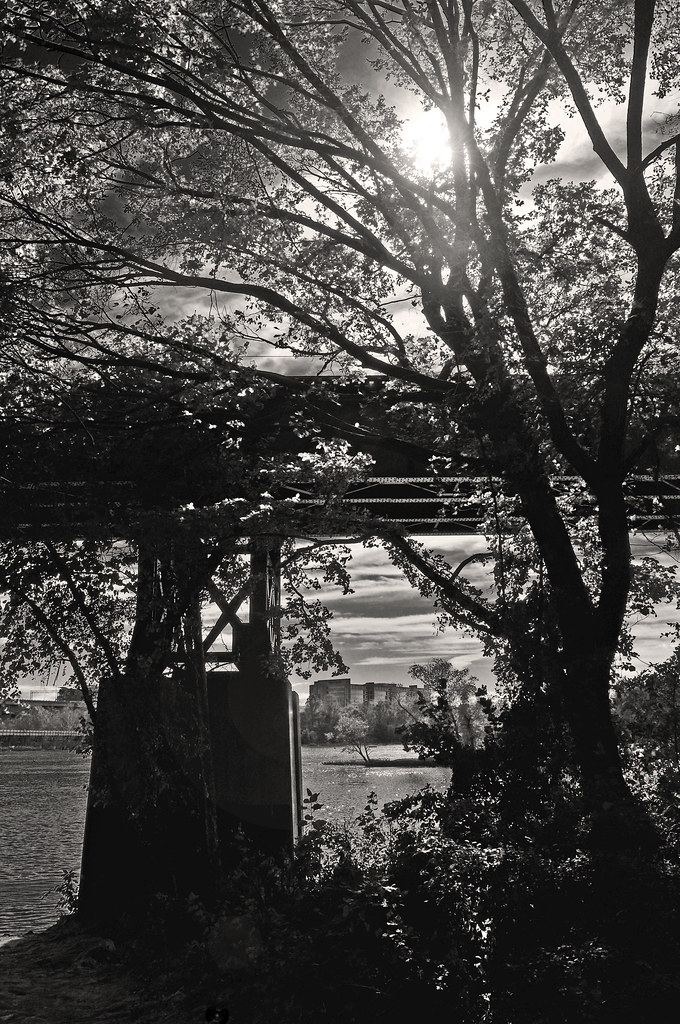
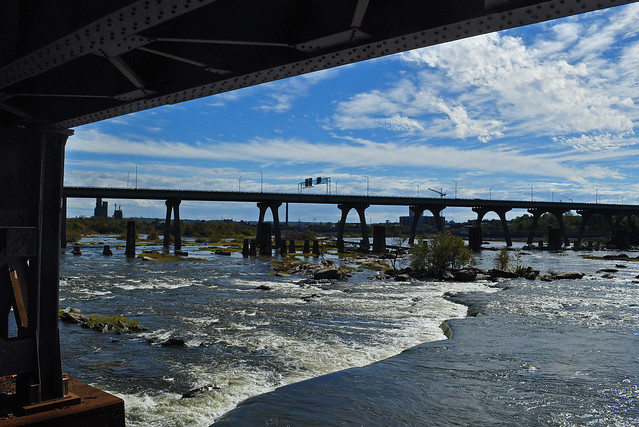
Back in October, my wife, a friend, and I traveled to Richmond for the day to celebrate my son's birthday. After a delightful lunch we headed down to the James, as I wanted to see the relatively new Potterfield Bridge. The pedestrian and bike only bridge is built atop the stone piers of an old hydroelectric structure, allowing visitors cross the river 20' above the quick waters. The bridge is named after T. Tyler Potterfield who was passionate about his adopted city, and before he died at a young age, was the project manager for the bridge that now bears his name. The north entrance commemorates the fall of Richmond in 1865, over the falls of Richmond. Embedded into the bridge deck are quotes from various people, famous and not, who were present then. The south entrance in Manchester is marked by Joshua Wiener's The Path Untraveled, a series of 8 17' tall large coreten steel rings that seem to roll across the landscape.
Labels:
Day Trip,
Fun On the Water,
Hiking Trails,
James River,
Richmond
October 9, 2017
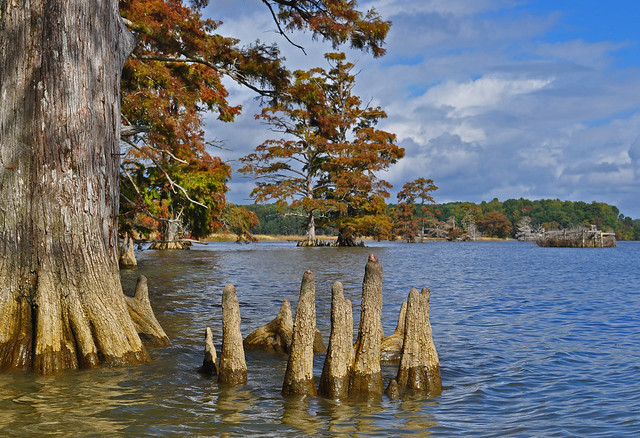
Early Fall on the Lower Chickahominy
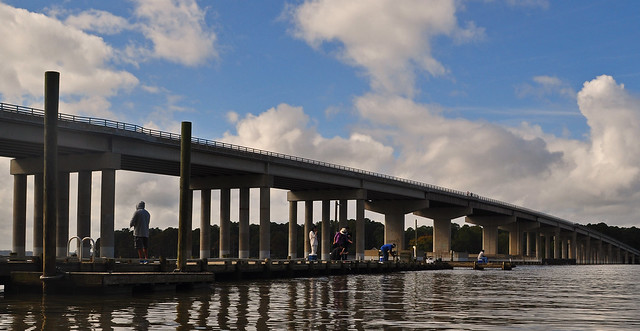
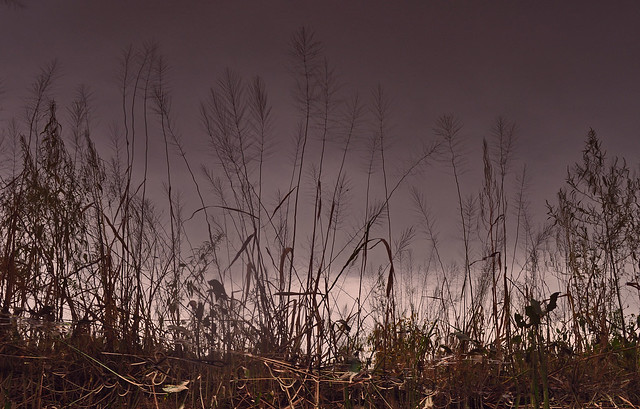
This past Saturday I took my kayak to the Chickahominy River, close to where it meets the James. This was not my first time here. When I was a child my father belonged to a rod and gun club with a cabin on a bluff overlooking one of the river's tributaries, and visits there are some of my fondest place memories. The water here is brackish, more fresh than salt, but still subject to the tides. This mix of different waters allows for an abundant diversity of animal and plant species, which made hunger a little less threatening to the native Americans who once called this place home. It was here that Capt. John Smith was captured, and taken to the chief of the Powhatans. As the flawed story goes, Smith's life was eventually spared by Pocahontas, the chief's daughter. Today the river and its tributaries remain relatively free from development, and save for a few houses and a bridge or two, it is easy to imagine what the Chickahominy may have looked liked centuries ago.
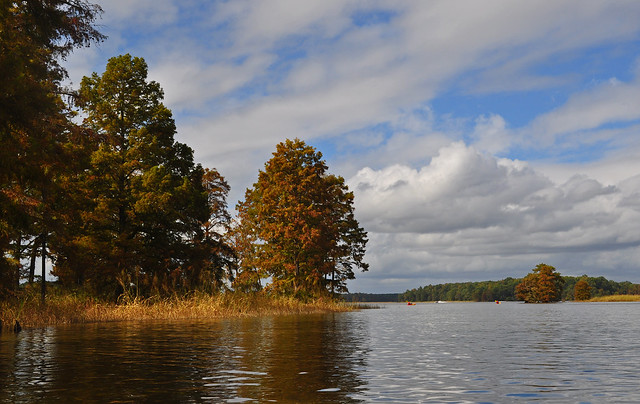
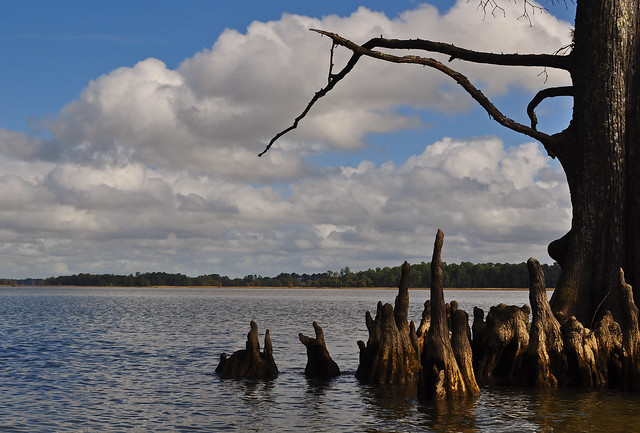
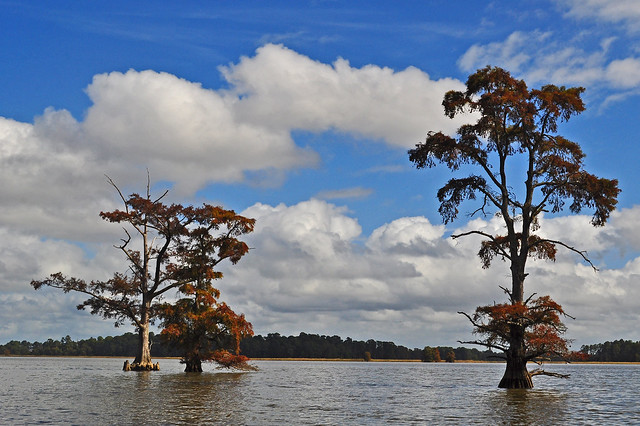
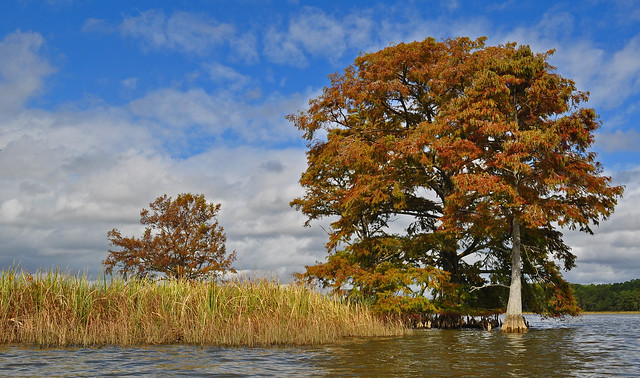
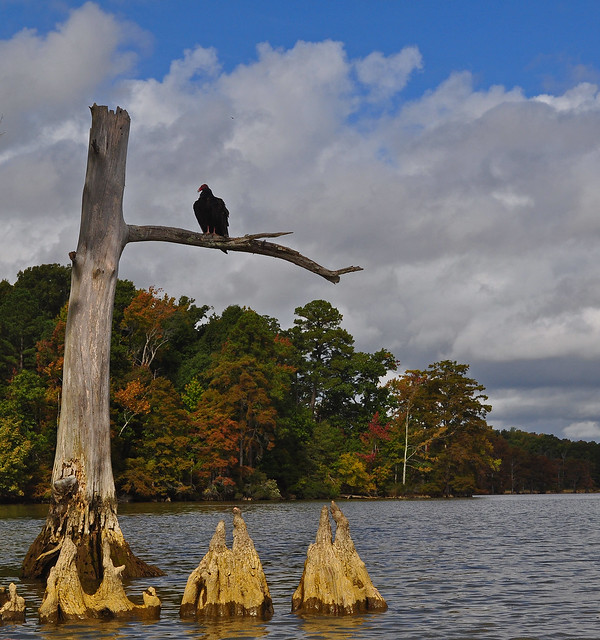
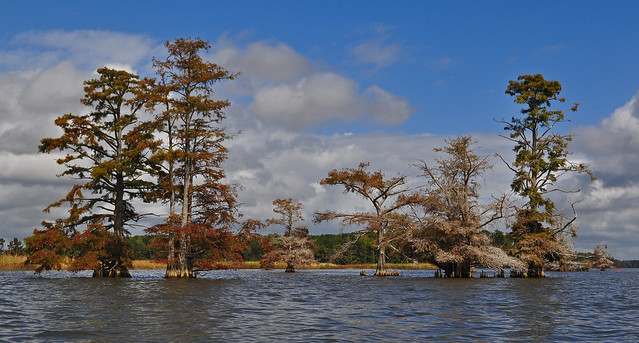
The Chickahominy has become one of my favorite places to paddle, and after any time spent there I always come away renewed. Part of the allure for me are the trees, specifically bald cypress (Taxodium distichum), and the opportunity to paddle between their knees and underneath their canopies. At the moment this species is tied for first place with live oak (Quercus virginiana) as my favorite tree. This weekend they were just beginning to sport their fall orange color. As I rounded one clump of cypress I could hear a loud commotion created by a pair of belted kingfishers, whose calls always sound like bitching to me. They were upset by a wake of vultures and a juvenile bald eagle perched in the trees along their part of the river. The kingfishers would not rest until the intruders were gone, and the presence of a lumbering middle-aged man in a bright red kayak was enough to push the raptors on their way, quieting the kingfishers. The lone eagle joined several others further down the shoreline; the place is thick with them, almost like pigeons.
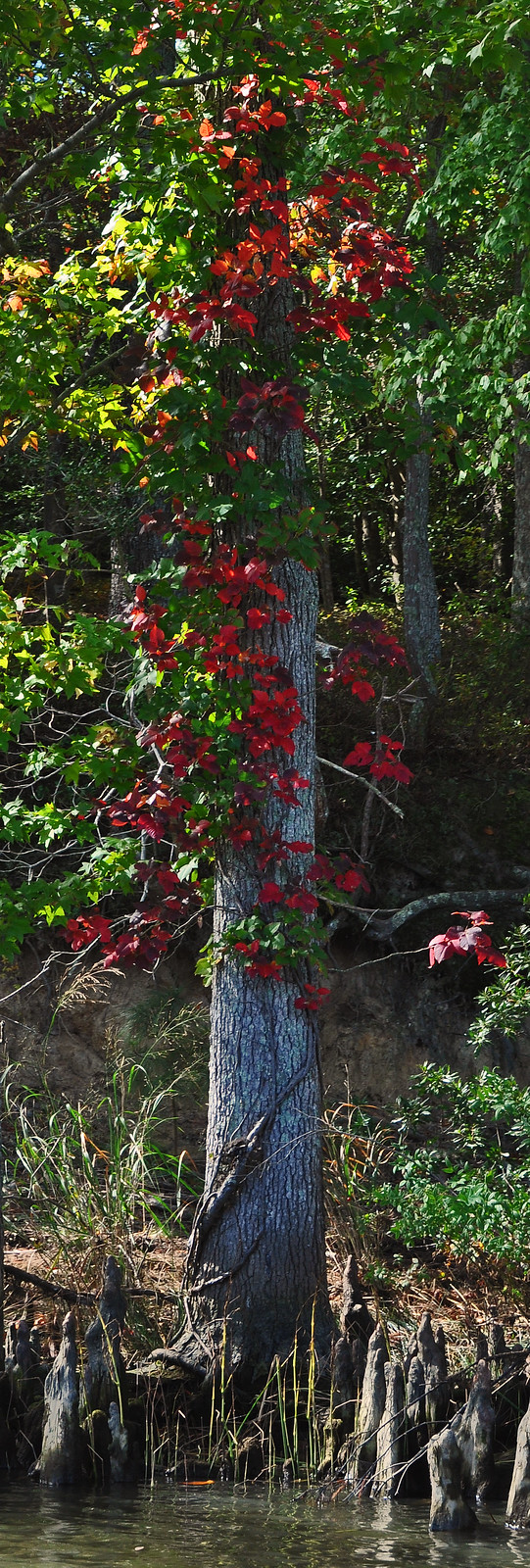
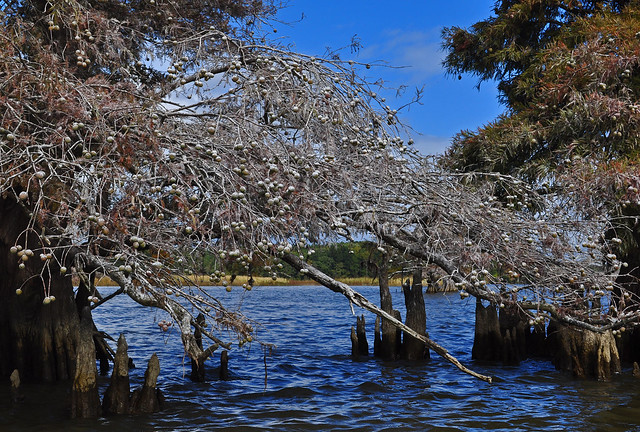
In one area of the river some of the cypresses looked as if they had been frosted. While it made for interesting photos, the "frost" was actually a coating of guano, probably from cormorants, or egrets.
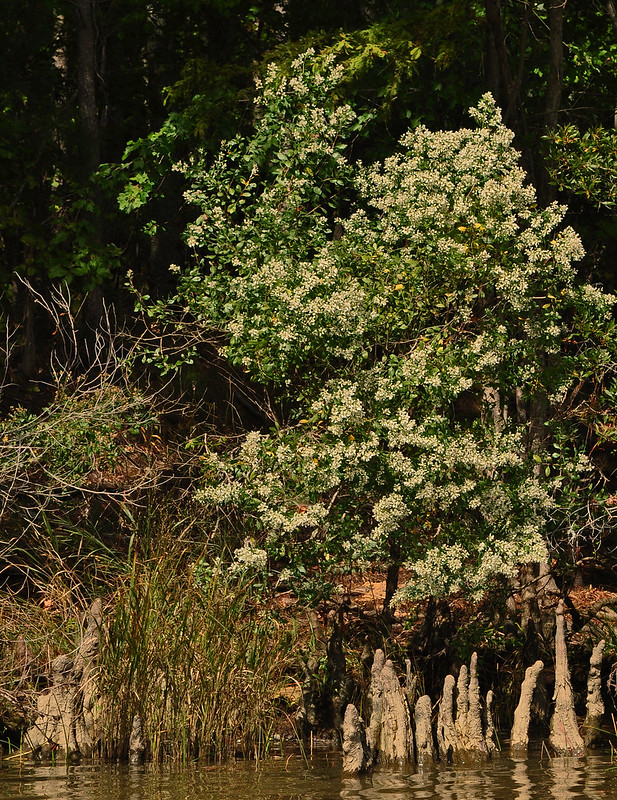
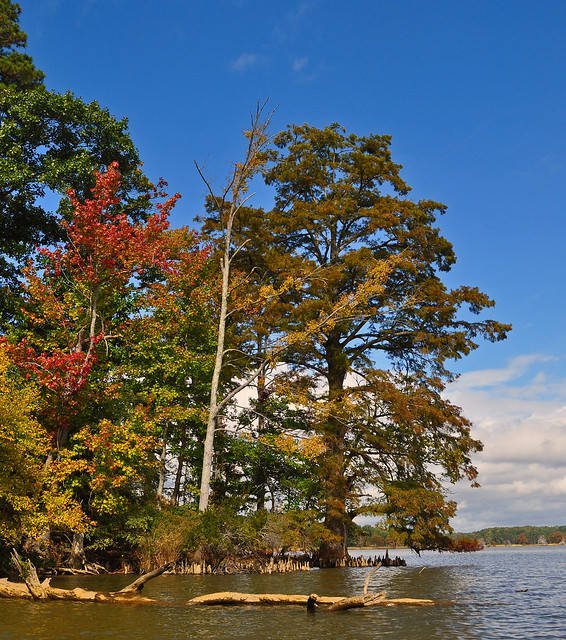
The cypress were not the only trees with fall color. A few red maples (Acer rubrum) right next to the shore were starting to turn, as were a few sweetgums (Liquidambar styraciflua), both a little further along, color-wise, then their kin on drier land. In many of the trees poison ivy (Toxicodendron radicans) climbed in shades of red, orange, and yellow, proving that even one of our most reviled plants can have its moment. All over the coast here, not just along the Chickahominy, the white blooms of saltbush let you know what time of year it is.
Eventually I had to leave the river, and as I neared the campground where the landing was, I was brought back to reality. One camper at a site right on the river was busy hanging his oversized American flag on a pop-up tent, right next to his oversized "Make America Great Again" flag so, all the other campers and everyone on the water would have no doubt as to where he stood. Who does this on a camping trip? My gut response was to yell adjectives, but that would have been just as bad as waving oversized flags in other people's faces, and I didn't want to find out if he was exercising robust second amendment rights as well. I feel like we are living in a land of multiple realities these days, with collisions an ever present danger. I think I prefer a reality full of birds, paddling on mixed waters under bald cypress.

October 12, 2016
Mystery on Queens Creek
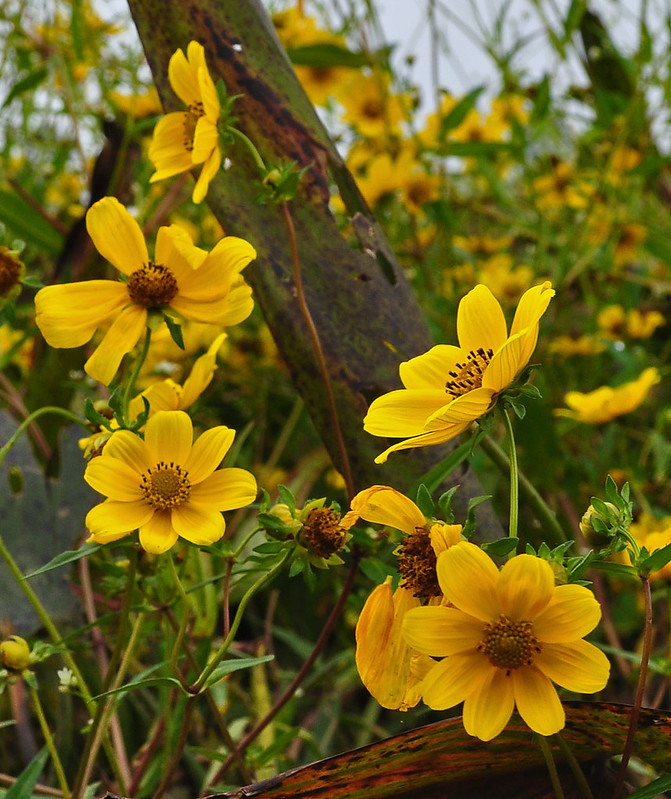
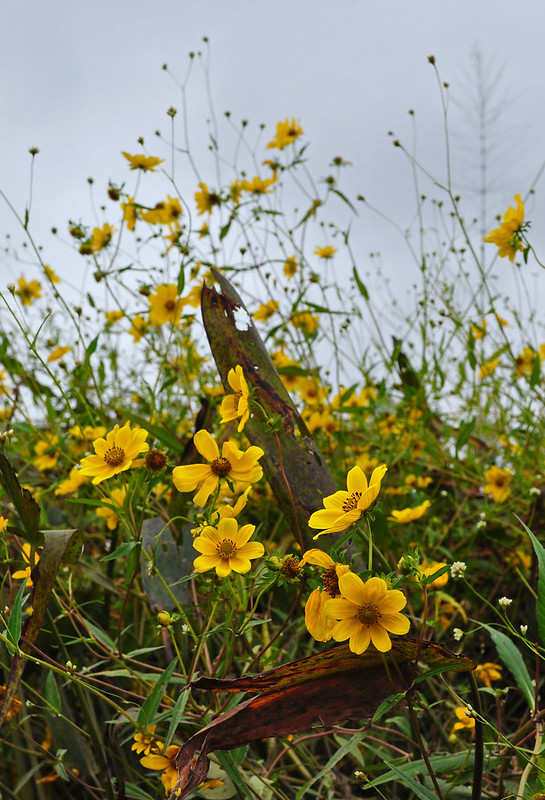
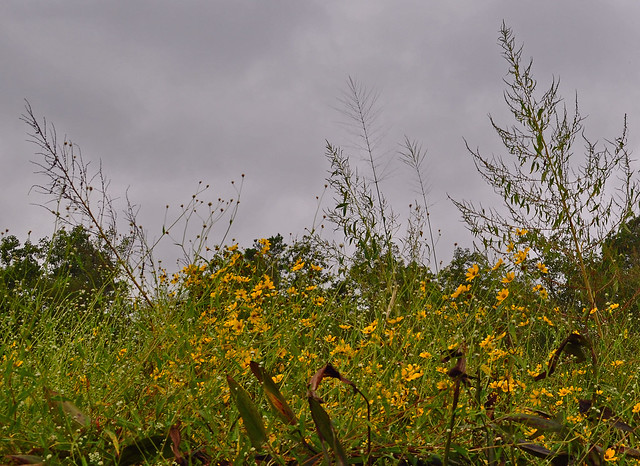
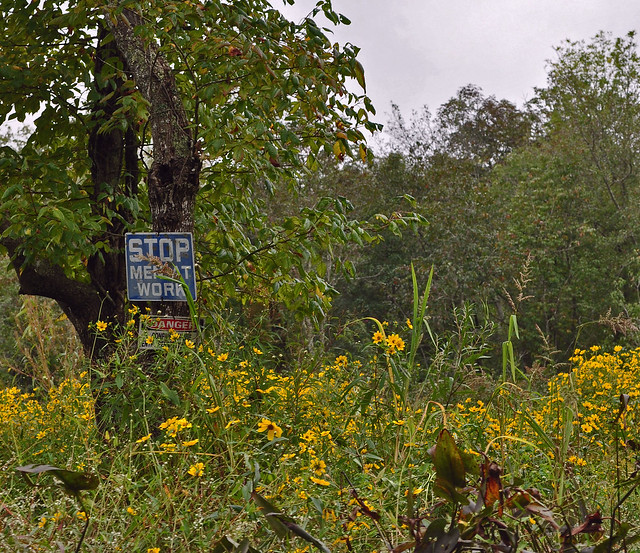
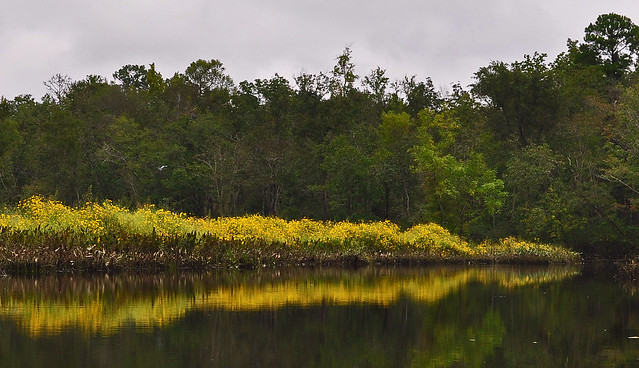
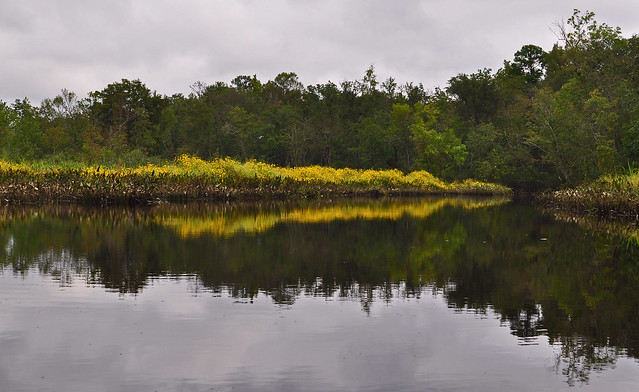
I love the internet, especially for sleuthing out mystery plants. A few carefully considered questions asked in the right places will usually lead me to what I am looking for. Of course I am also just as likely to head down some wormhole and forget what I was looking for in the first place. What recently kept me busy was trying to ID a plant I saw blooming earlier this month while kayaking on Queens Creek, a small tributary of the James River in Charles City County. In places the flowers smothered the shoreline in bright yellow, which was a nice contrast to the gray storm-threatening skies. I first thought it could be any one of those yellow composite species that all begin with h-e-l (Helianthus, Helenium, Heliopsis) that are difficult for me to tell apart. Although Helenium autumnale (sneezeweed) is very common here, and was blooming elsewhere on my trip, I knew that was not it. I next guessed it might be Helianthus angustifolius (swamp sunflower), as I was indeed in a swamp, but after paddling closer for further inspection all I could confirm was my cluelessness. So I took close up photos of foliage and flowers to look up when I got home, and resolved just to enjoy the site of it.
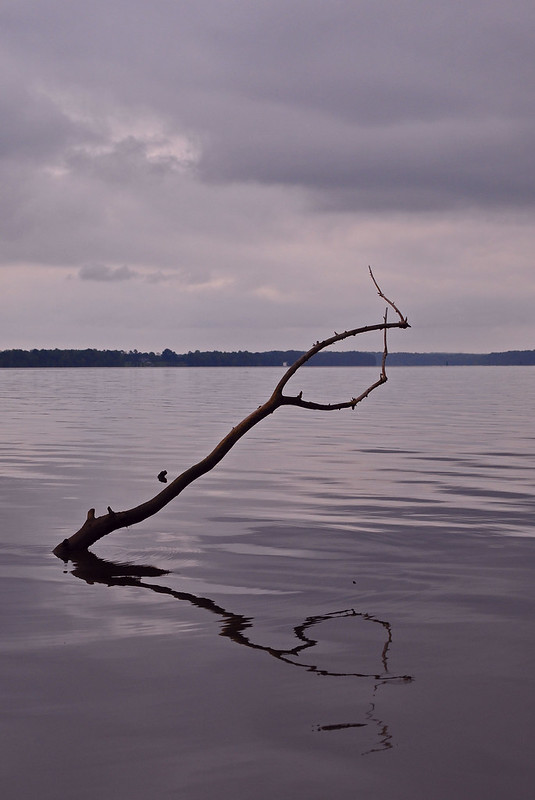
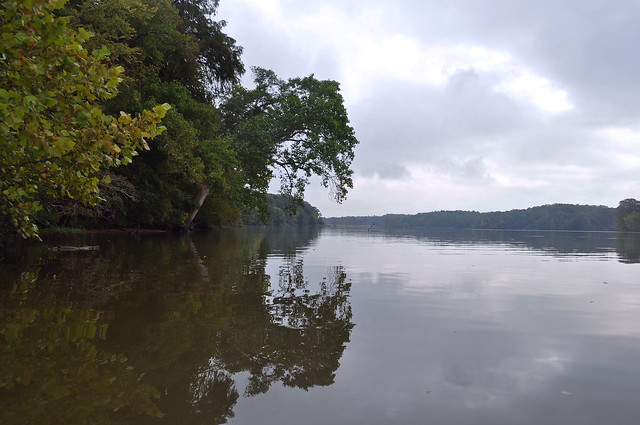
During my trip I had the creek to myself, no one else was on the water, though I did speak with a couple of guys on the shore getting their duck blind ready for the coming season. Judging from the number of blinds I saw, I will avoid this place in-season. I wouldn't want to be mistaken for a duck. Below are some of the other sights I saw.
After a few minutes on the internet I narrowed the plant down to one of the Bidens. A little while later I think I fixed it to Bidens laevis (smooth beggartick, smooth bur-marigold, showy bur-marigold). To help in the identification of this plant I used two of my favorite sites; the Native Plant Database at wildflower.org., and the Digital Atlas of Virginia Flora, which is a decades long project to map all of the state's native plants. From the atlas I learned that B. laevis inhabits tidal freshwater marshes to oligohaline marshes. I had to look up the definition of oligohaline, which means having a very low amount of salt, and I decided to make it my word of the day, and wondered if health conscious snack companies could successfully market oligohaline chips or crackers. I digress. If any of you know this plant to be something else, please feel free to correct me. Regardless of its exact ID, it was a lovely thing to see, especially in such proliferation.
Labels:
Fun On the Water,
James River,
Natives
Location:
Charles City County, VA, USA
May 1, 2016
Barred Owls and Buttercups
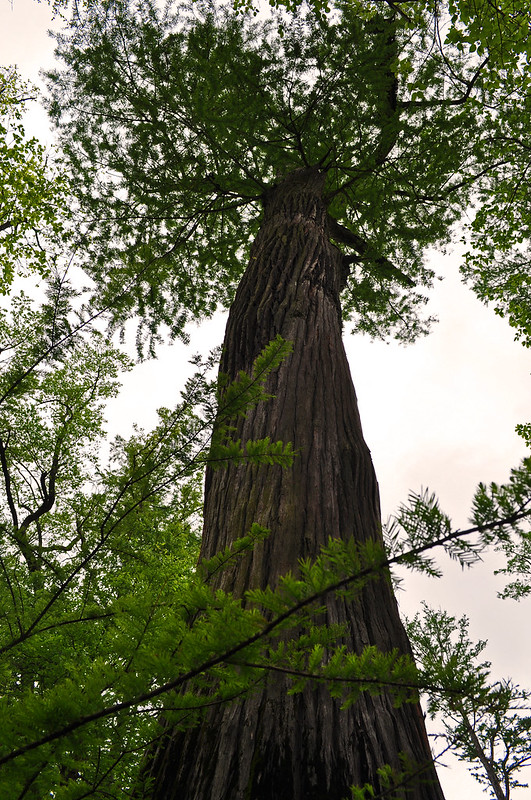
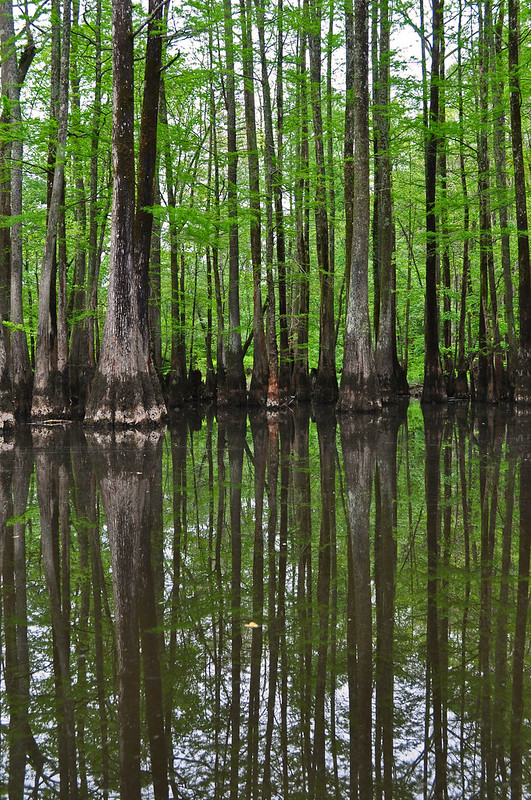
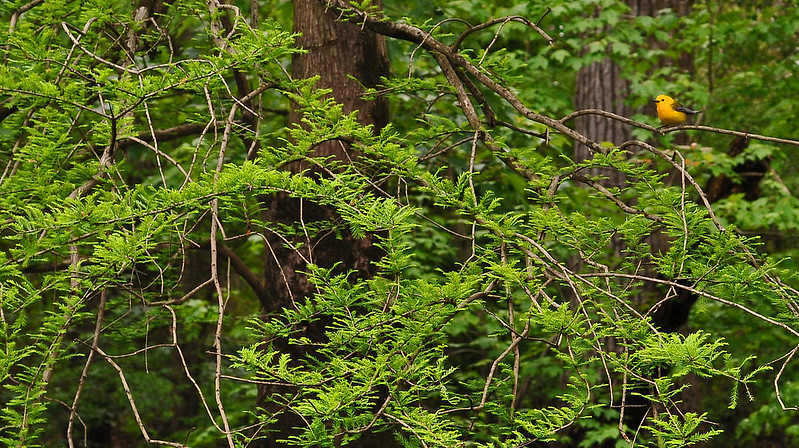
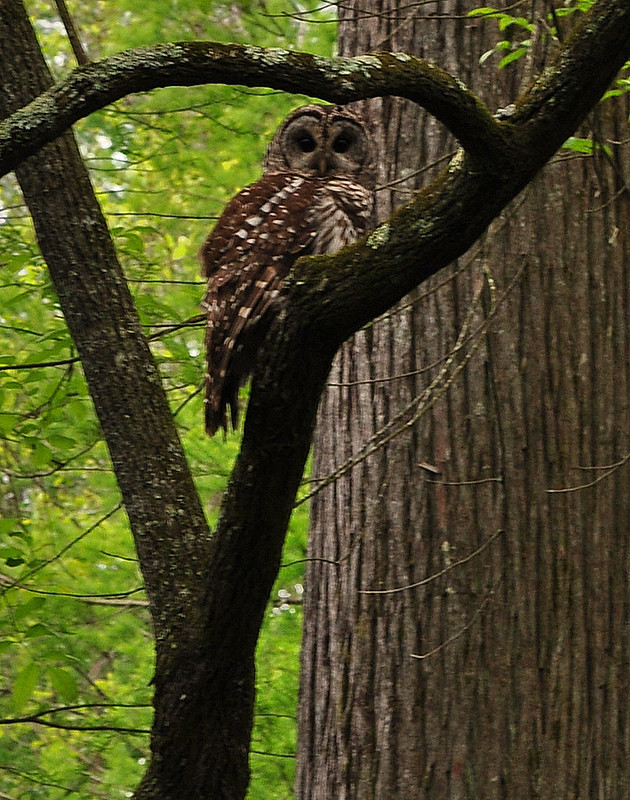
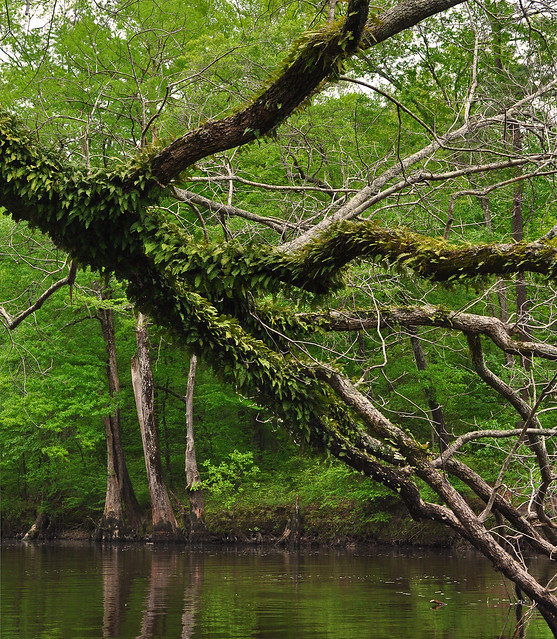
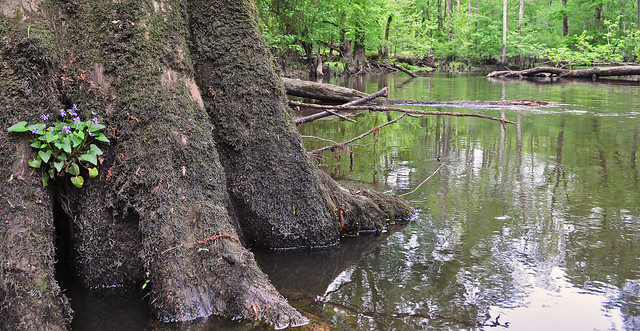
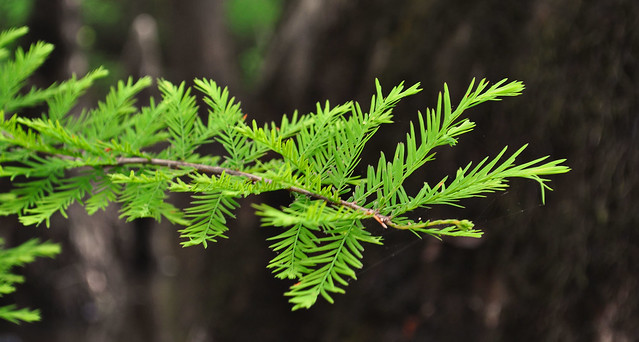
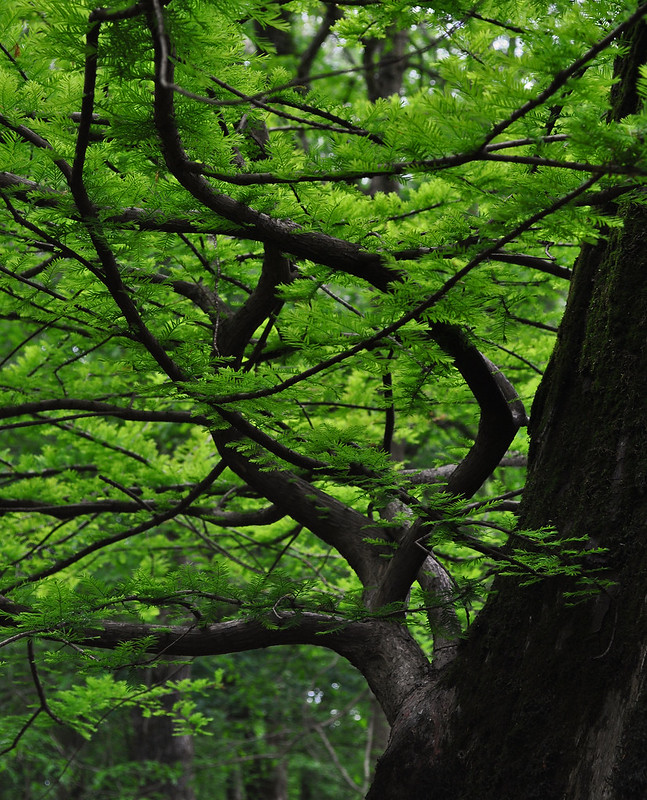
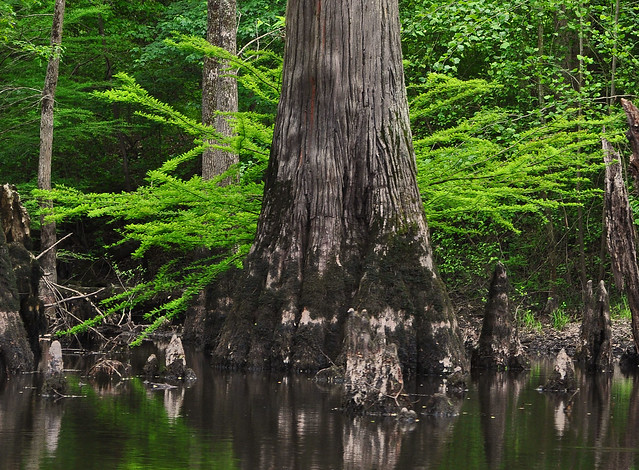
Yesterday I took my first paddle of the year. While I had opportunities to go earlier in the year, it was way too cool. When warmer temperatures did arrive I was under doctor's orders not to lift anything over 20 lbs until the end of April. Yesterday was not ideal with strong northeasterly winds, overcast skies, and with the threat of rain, but I would not be deterred. I headed inland and west to the Blackwater River, and put in at Joyner's Bridge near Walters. This river is lined with one of my favorite trees, bald cypress (Taxodium distichum), freshly leafed out in an impossible shade of green. Paddling among these giants connects me with something much older and much larger than myself. This genus has witnessed 100 million springs, when the first seedlings somehow manged to avoid trampling from creatures like Tyrannosaurus Rex, while Pterosaurs flew overhead. While I saw neither creature yesterday, their descendants were numerous. Ospreys, great blue herons, cardinals, crows, wrens, sparrows, yellow warblers, wood ducks, wild turkeys, and pileated woodpeckers were all present, but the greatest thrill was being able to approach a barred owl while smaller birds were trying to peck its head.
Of course the cypress were not the only plants I noticed. Resurrection fern (Pleopeltis polypodioides) was full and fresh from recent rains.
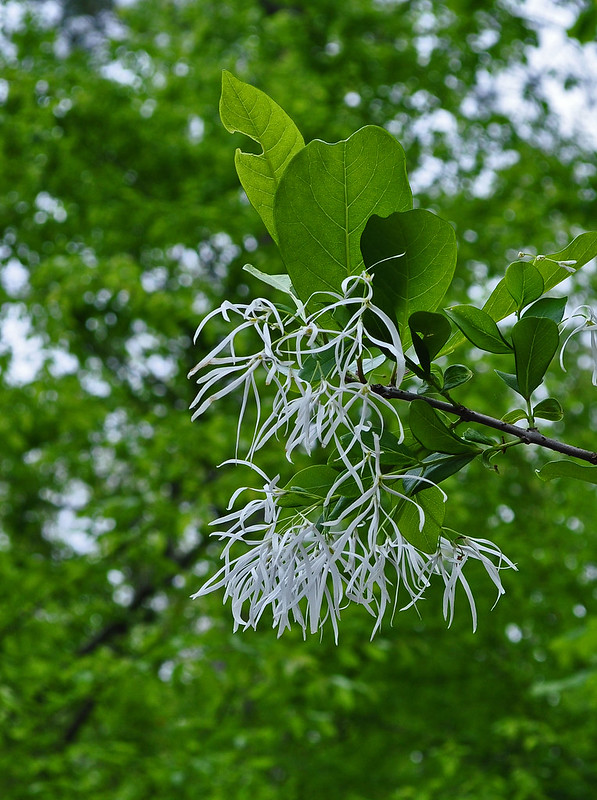
Fringe Tree (Chionanthus virginicus)
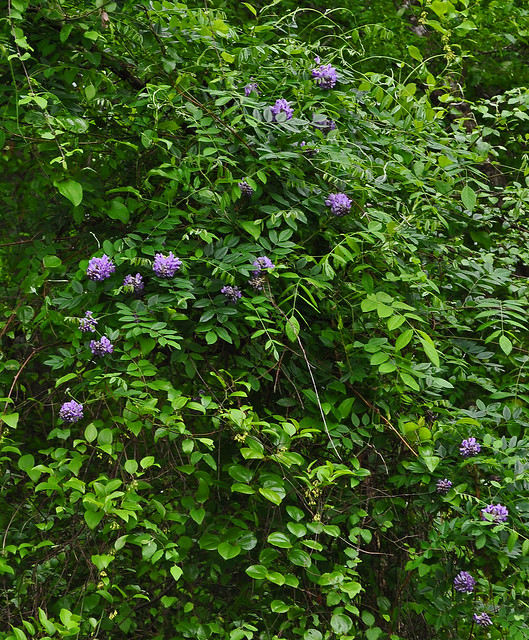
American Wisteria (Wisteria frutescens)
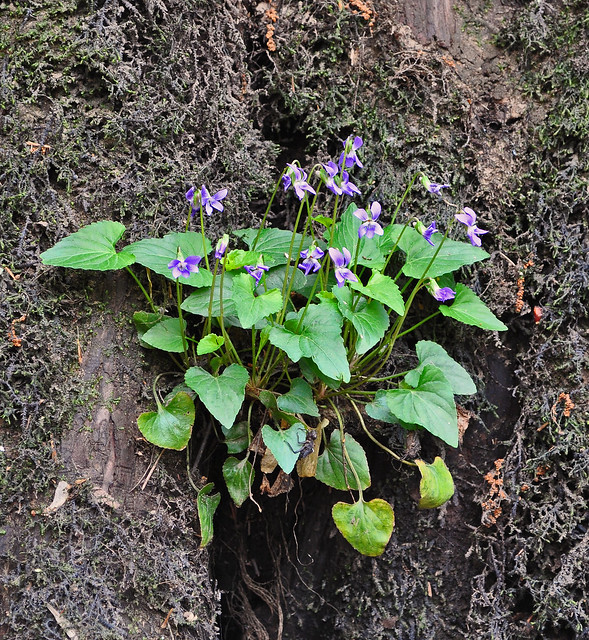
Viola affinis
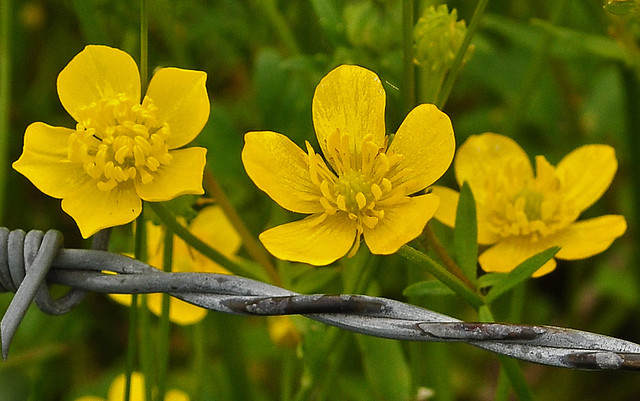
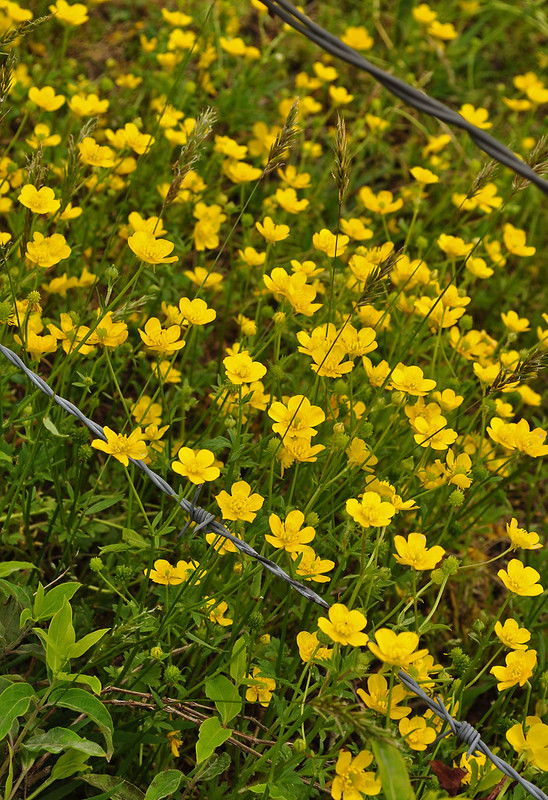
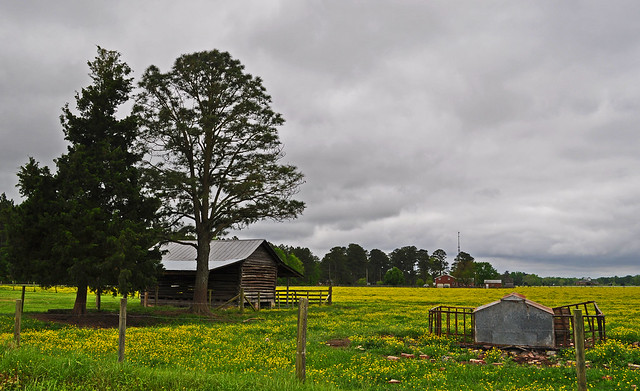
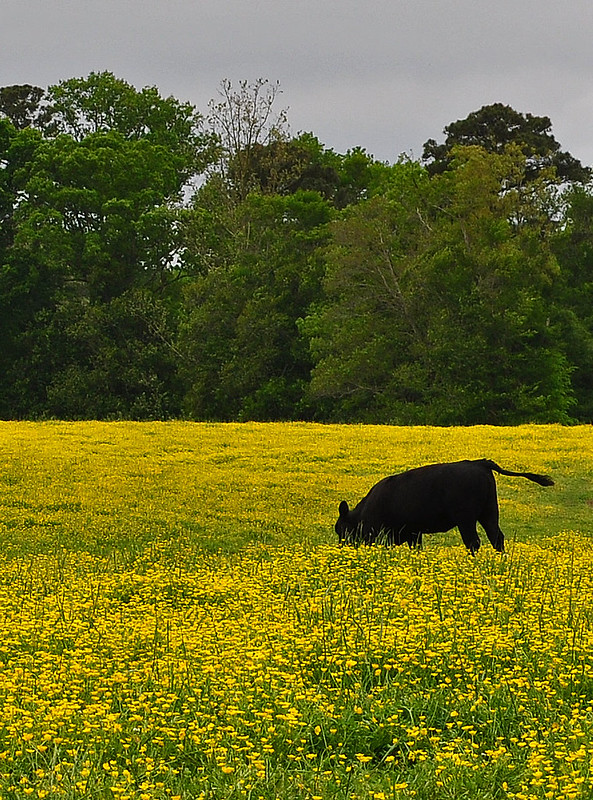
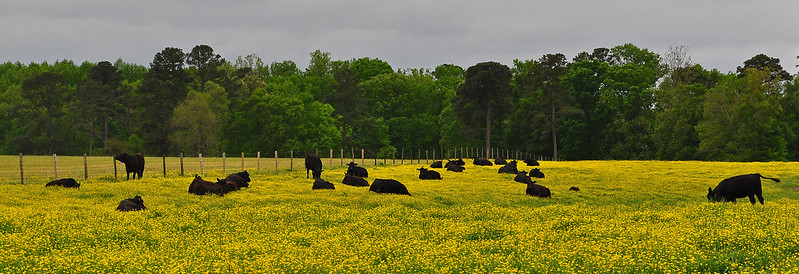
As green as the river was, many of the nearby fields were equally as yellow, cloaked in a blanket of buttercups (Ranunculus species), and I couldn't help stopping for a quick trespass. This European invasive is toxic to cattle and horses, but it is also distasteful, and when there is enough good forage livestock avoid it.
Fringe Tree (Chionanthus virginicus)
American Wisteria (Wisteria frutescens)
Viola affinis
As green as the river was, many of the nearby fields were equally as yellow, cloaked in a blanket of buttercups (Ranunculus species), and I couldn't help stopping for a quick trespass. This European invasive is toxic to cattle and horses, but it is also distasteful, and when there is enough good forage livestock avoid it.
Labels:
Day Trip,
Fun On the Water,
Isle of Wight,
Taxodium
Location:
Isle of Wight County, VA, USA
Subscribe to:
Posts (Atom)