An unapologetic plant geek shares advice and opinions on gardening, the contrived and the natural landscape, as well as occasional topics from the other side of the gate.
Showing posts with label Lovely Weeds. Show all posts

April 19, 2015

A Weekend in Williamsbug

     I spent last weekend at the Williamsburg Garden Symposium. I have always wanted to attend this event, but its timing and my money never aligned. However, I was invited to speak at this year's event, and I agreed before self-doubt had a chance to step in and sway me otherwise. While I am not adverse to public speaking, and in fact do it frequently, this talk was my highest profiled gig to date, and much of that had to do with those I shared the stage with. My subject was understory trees for mid-Atlantic gardens, and judging from the comments afterwards it went well, or at least people were just being polite to say so.

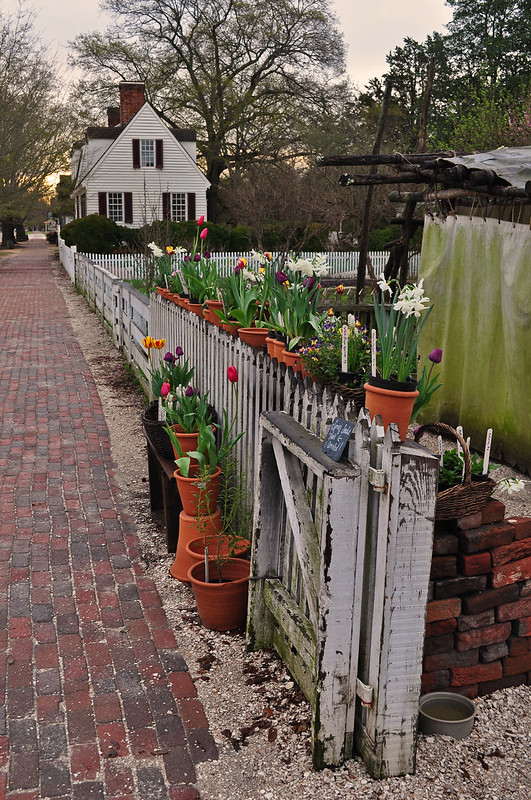
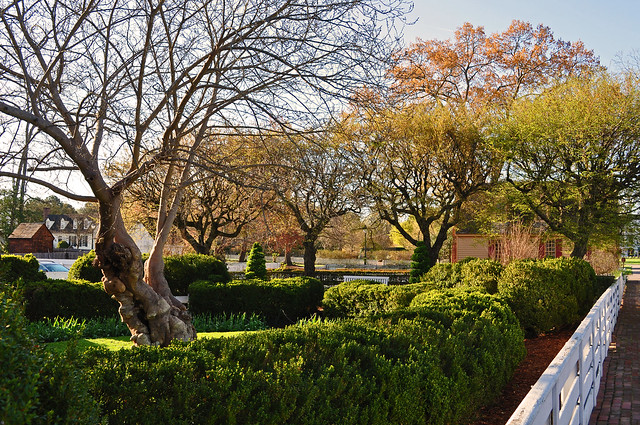
     The schedule left plenty of time to explore Colonial Williamsburg, which was an easy walk from my hotel. I have always loved this place and visit several times a year, but I have never been able to see it in spring, nor early in the morning before the crowds pour in. Colonial Williamsburg has often been wrongly accused of merely being an American history stage set, but a significant number of its buildings are true restorations, and those that are true recreations have been done so fairly faithfully to what was there. This is not necessarily the case with the gardens in Colonial Williamsburg, most of which were recreated in the colonial revival style, and are a not quite accurate picture of what once was. I am OK with this though. The gardens are beautiful as they are, and most of them and the surrounding buildings have enough of a patina to convince you that you are walking back through time, even if that patina is only 80 years old and not 250.

(Warning: this is a photo-heavy post, you may want to check how much bandwidth is in your boiler before proceeding.)

Sheep Feeding

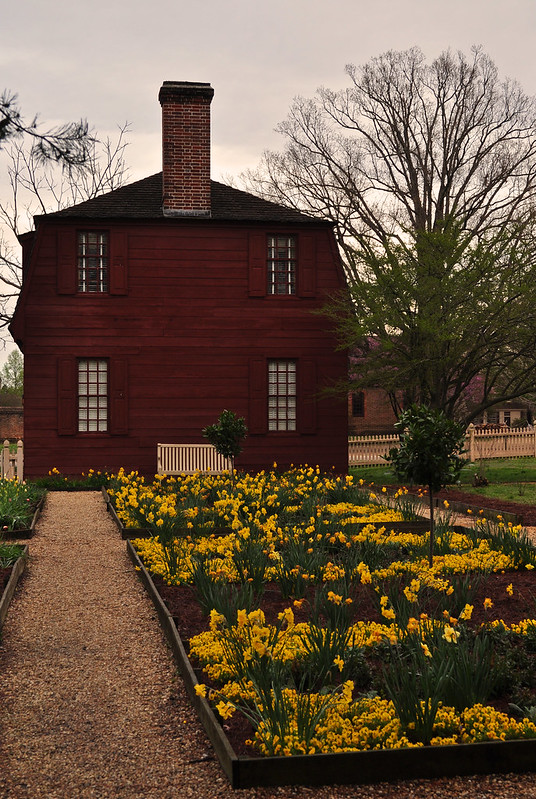
Red House, Yellow Garden (1)

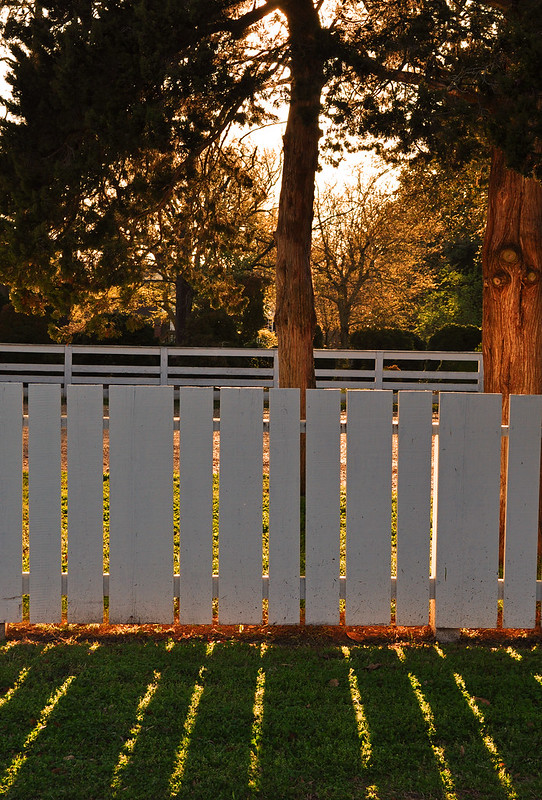
Slatted Light

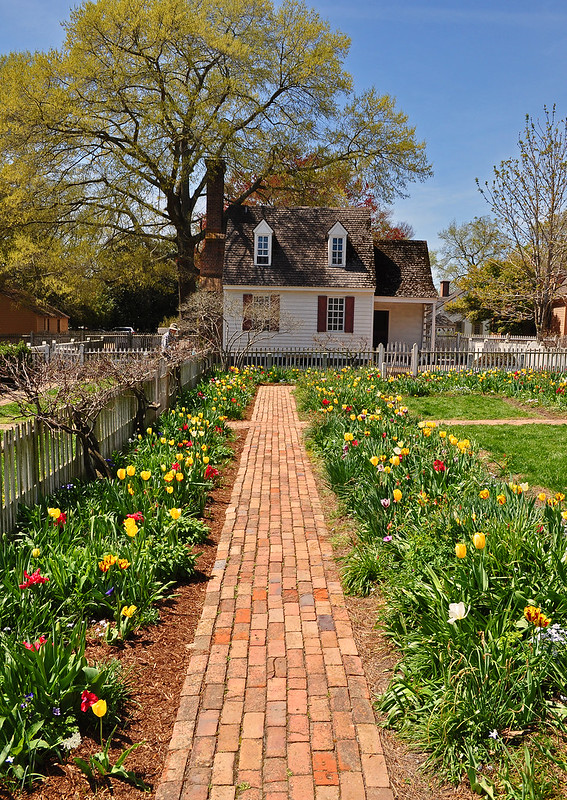
Tulip Garden (2)

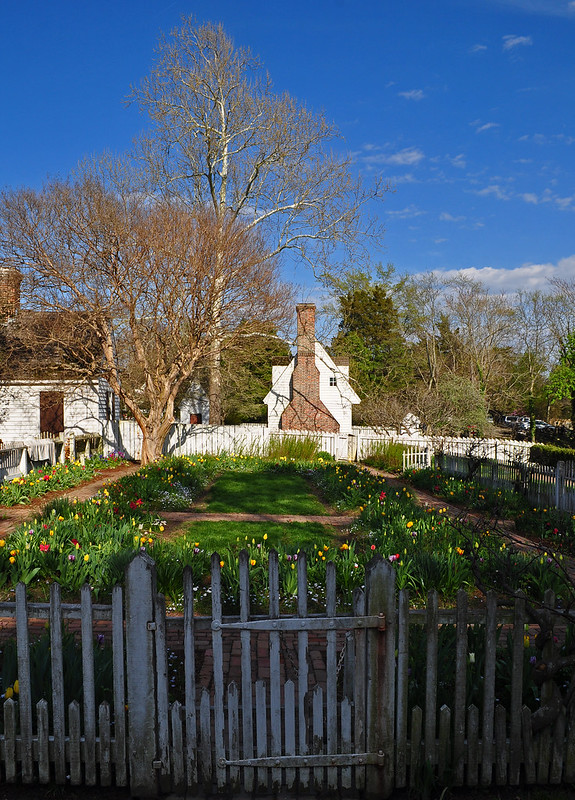
Tulip Garden

Wellhead (1)

Colonial Garden (5)

Colonial Garden (3)

Acer Samaras

Celtis Light

Colonial Garden (8)

Gnarled (1)

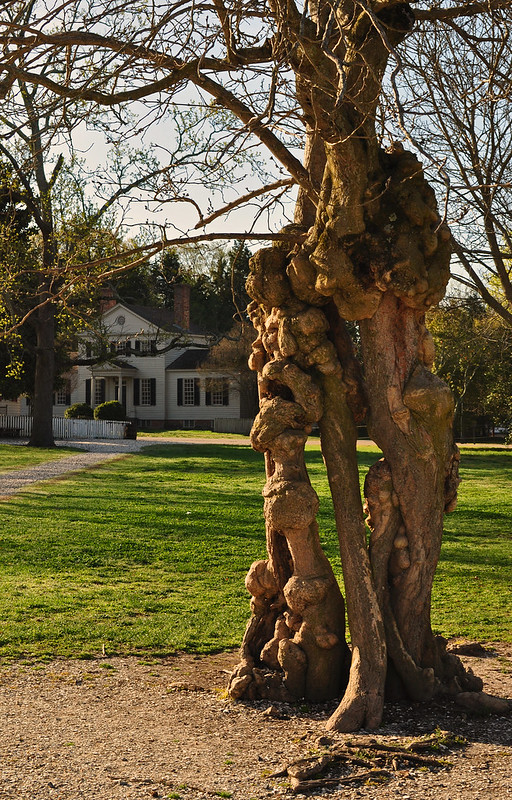
Living Skeleton

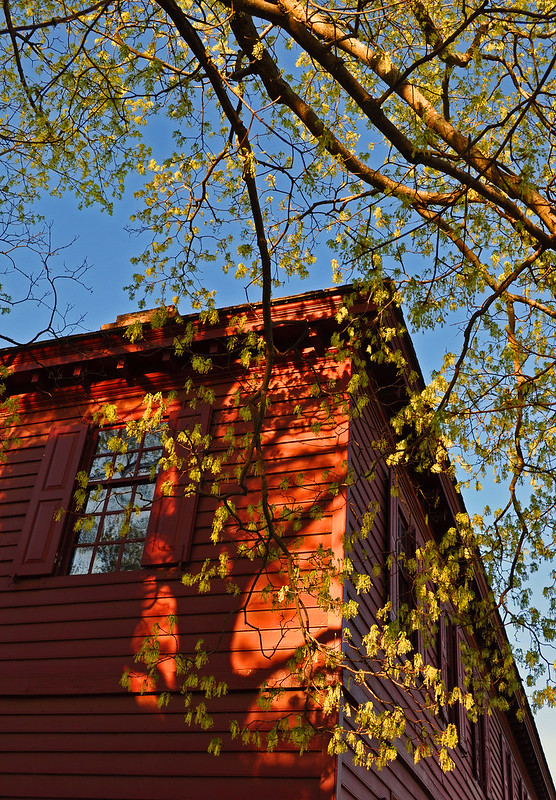
Maple, Peyton Randolf House (1)

Maple, Peyton Randolf House (2)

Nicholson St.

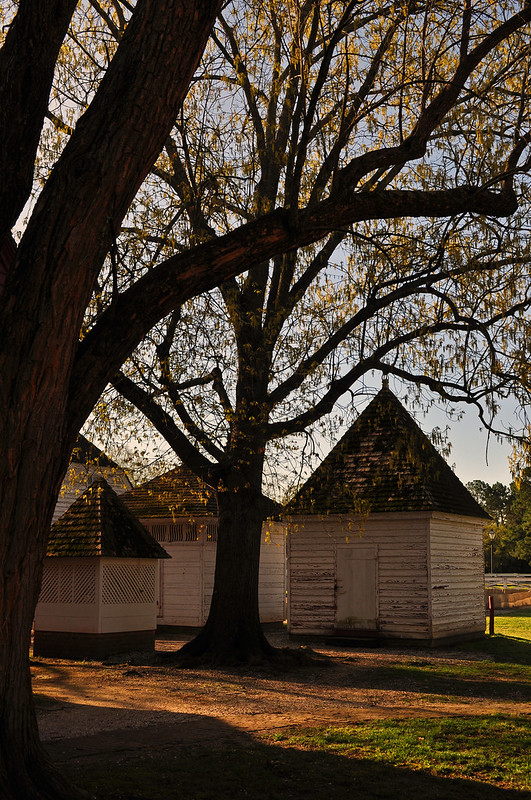
Outbuildings

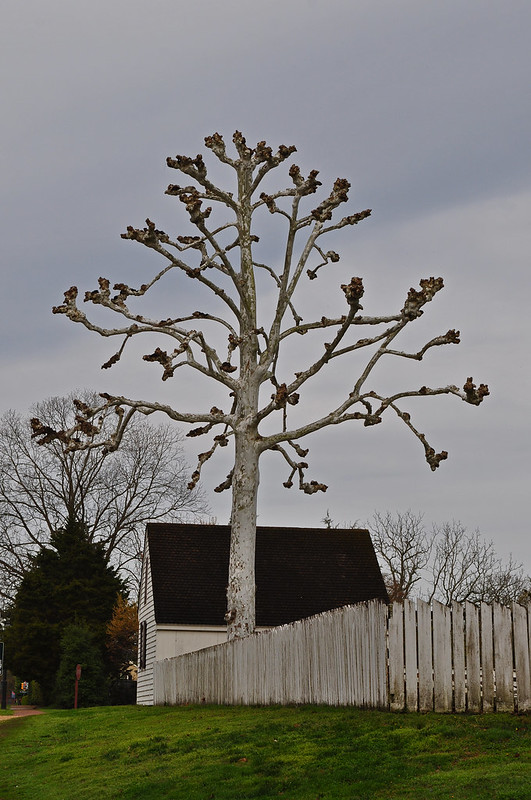
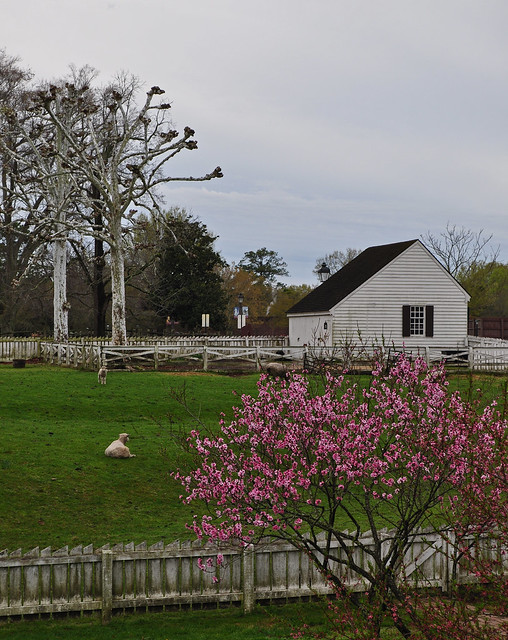
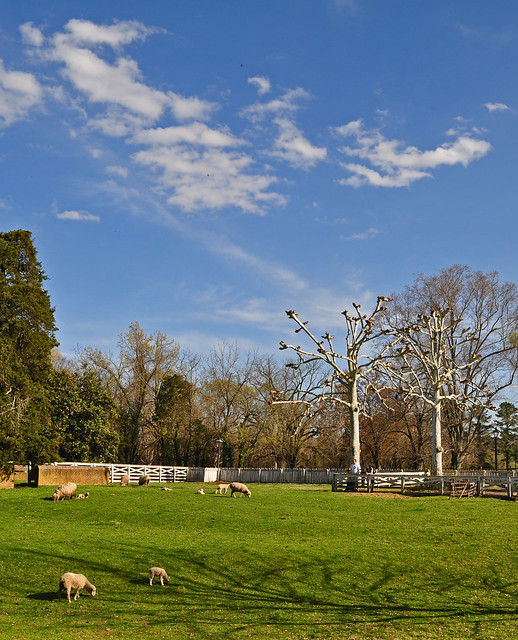
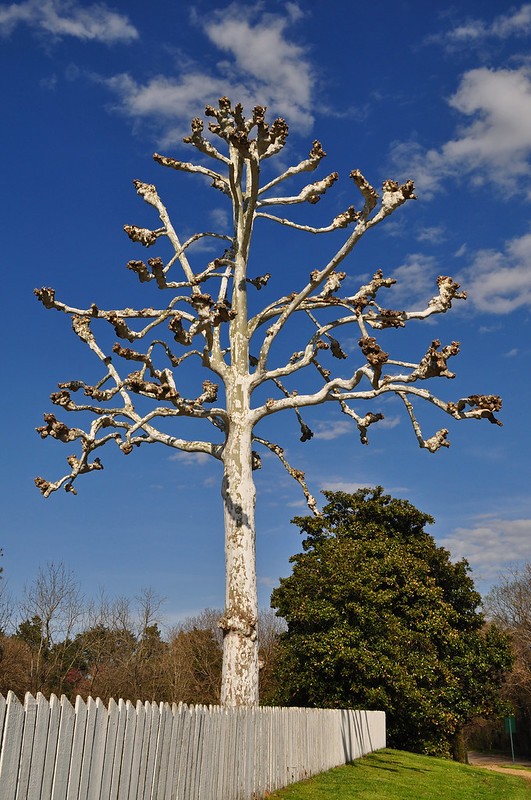
     I am not a huge fan of extreme pruning, but I guess in a historic context it can be appropriate, and in the case of these pollarded sycamores, somewhat beautiful as well, even more so without foliage.
Pollarded Sycamore (1)

Sheep Pasture

Sheep Pasture (2)

Pollarded Sycamore (2)

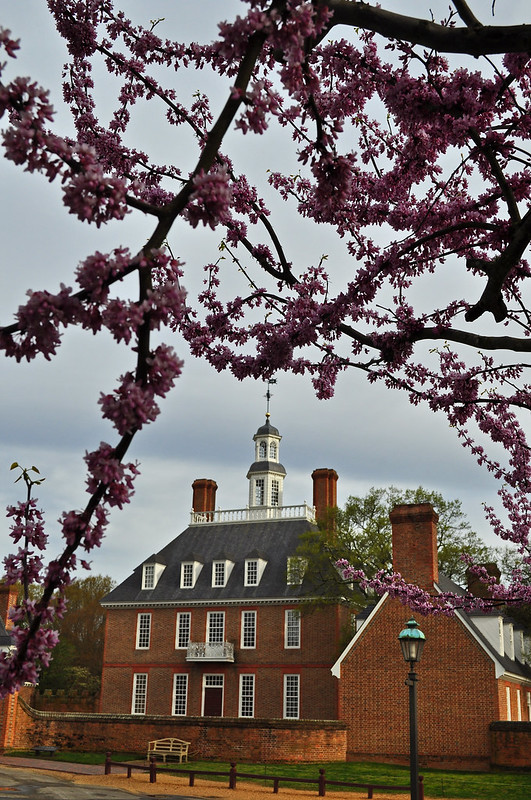
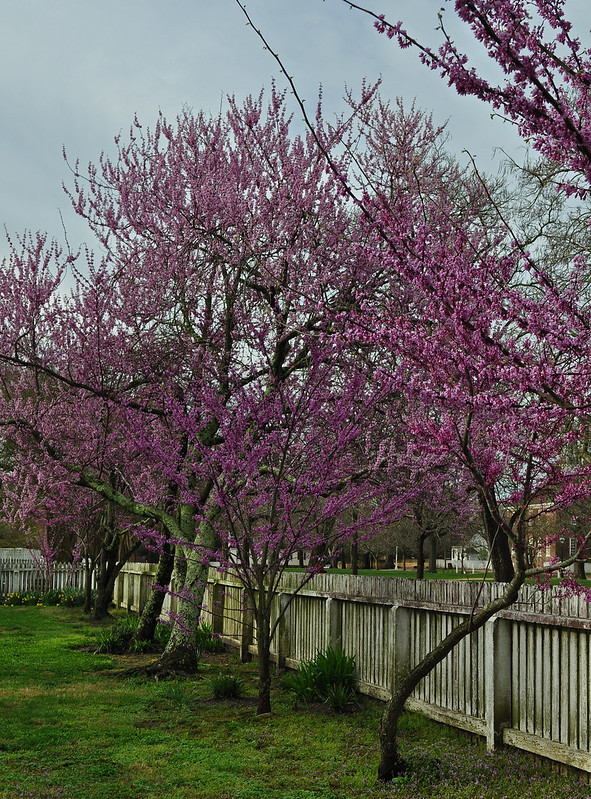
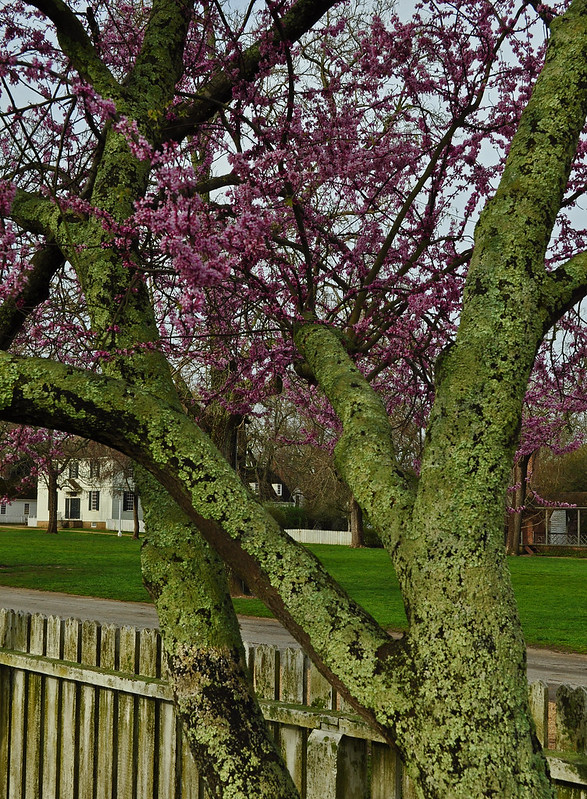
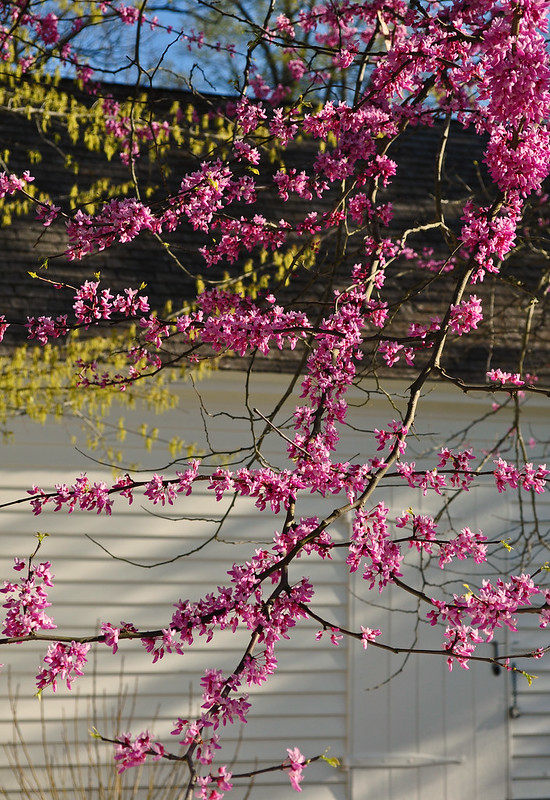
     During my talk I gave more time to redbuds (Cercis canadensis) than many other trees, and fortunately the Williamsburg landscape abundantly backed me up.
Cercis canadensis (3)

Cercis canadensis (4)

Cercis canadensis (7)

Cercis canadensis (6)

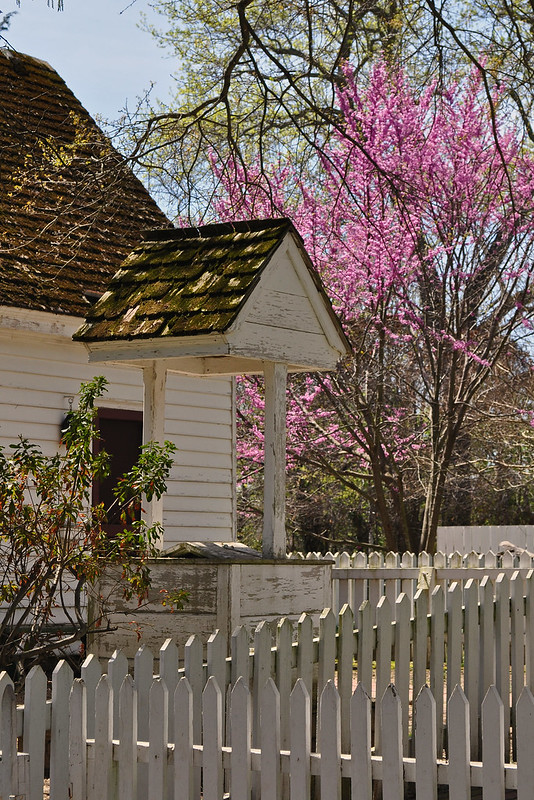
Wellhead (2)

Cercis canadensis (11)

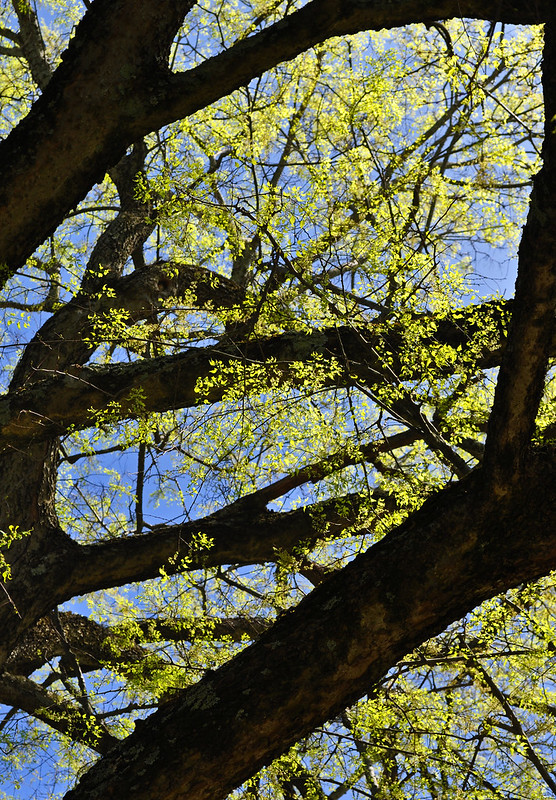
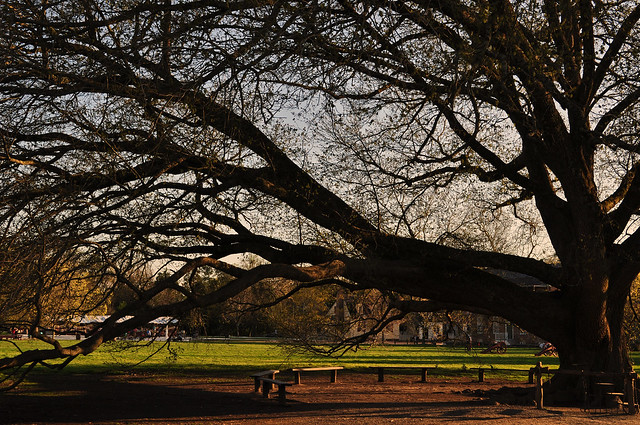
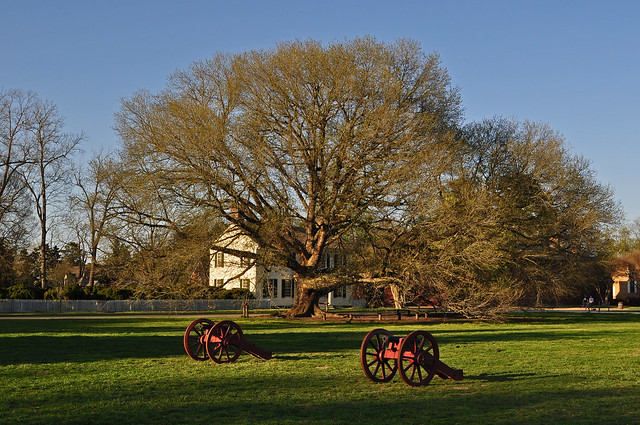
     One of my favorite trees in Williamsburg is definitely not an understory tree. The Compton oak (Quercus x comptoniae) is a hybrid between live oak (Q. virginiana) and overcup oak (Q. lyrata). This particular one is huge, and sitting underneath of it is like being in a circus tent. It was planted in 1930, but you might think it was here when Jefferson and Washington walked by.
Compton Oak (1)

Compton Oak (2)

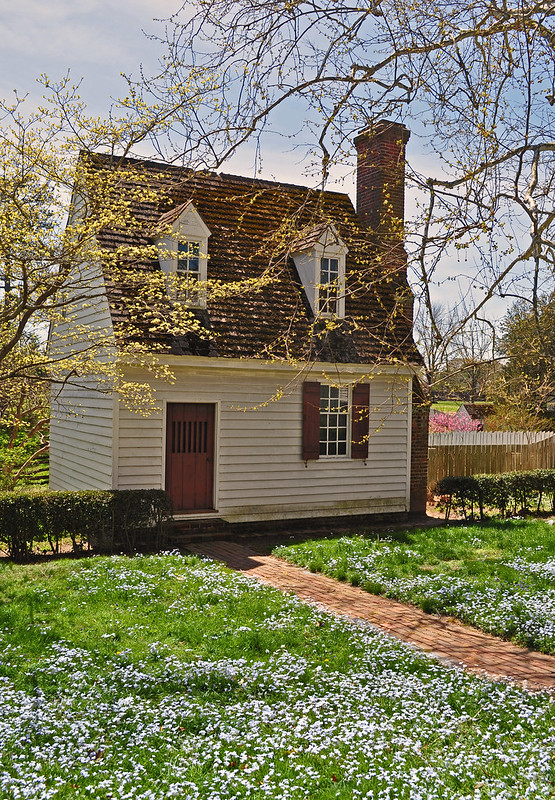
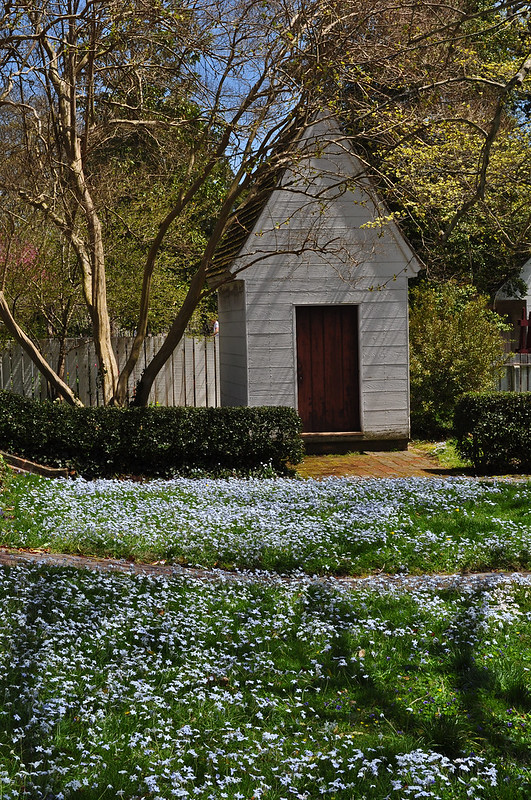
     When you think of colonial gardens images of regimentation and symmetry might come to mind, as well as plants clipped with precision. However, even if the lines are tight, the plants are not so much so, and in Williamsburg many are allowed to flow and grow with some wildness, more or less as they please. After all, back in the day there were no string trimmers or power pruners, and sheep were the lawn mowers. I love the contrast between rigid designs and free flowing plants, and one plant that helped blur the lines was Ipheion, which has naturalized in many Williamsburg gardens.
Ipheion Lawn (2)

Ipheion Lawn

Ipheion Lawn (1)

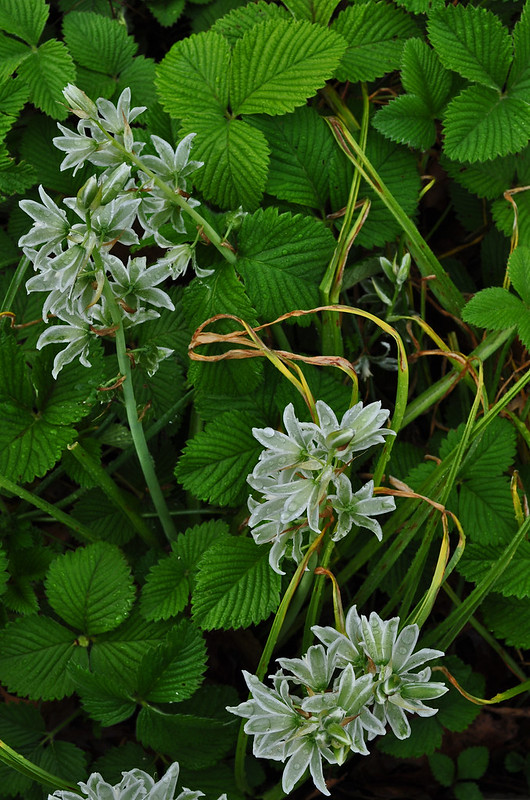
      I ran across one plant totally unfamiliar to me. I was initially attracted to its ghostly silver green blooms, and thought I should find out what it was and how I could get some for my own garden. Then when I saw it coming up all over the place without regard, I thought twice. Asking around I found out it was Ornithogalum nutans (nodding or drooping star of Bethlehem). At our first house one of its cousins carpeted our backyard every spring, so I know what this genus is capable of.
Ornithogalum nutans

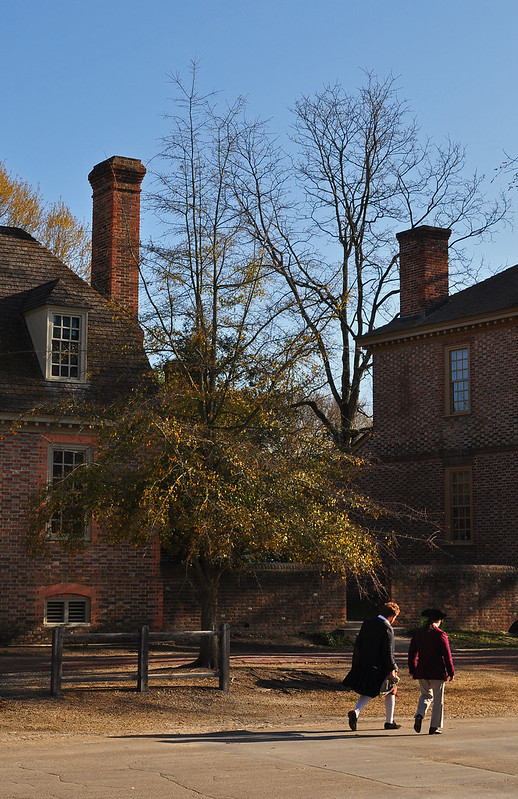
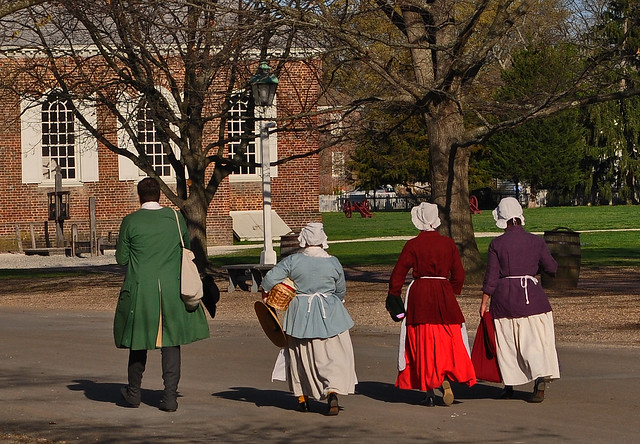
      One of the benefits of getting up early was having a chance to see some of Colonial Williamsburg's interpreters begin their day. I overheard snippets of conversation as they walked by ready to assume their roles, and I could have sworn they were speaking in character with each other.
In Character (1)

In Character (2)

     If you want to read more on Colonial Williamsburg's gardens, and the role that the colonial revival movement had in its landscape, here is a very good article on the subject.

June 7, 2014

Yorktown Onion

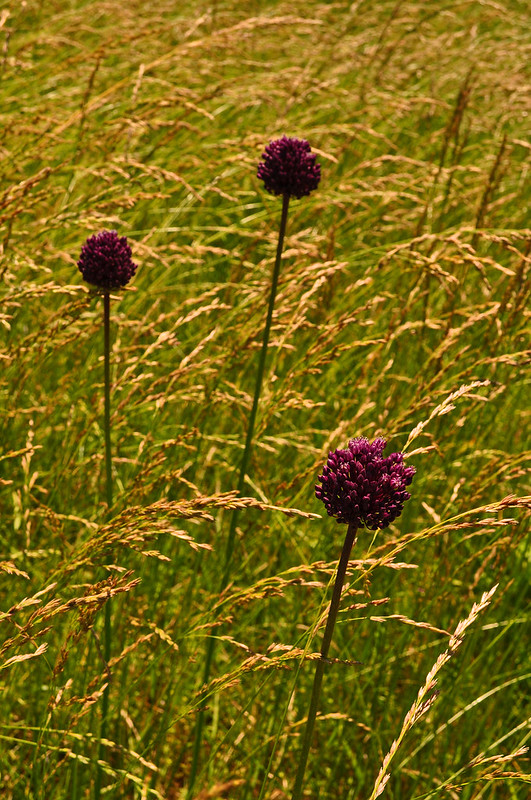
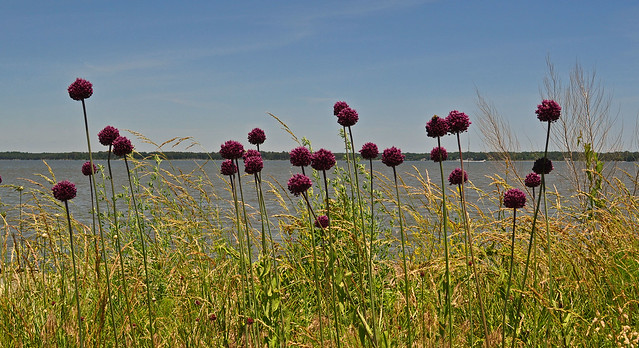
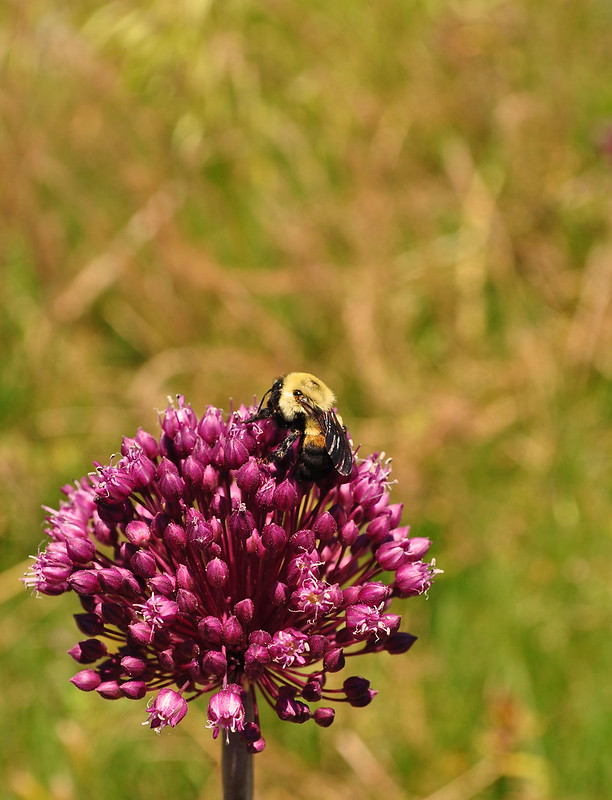
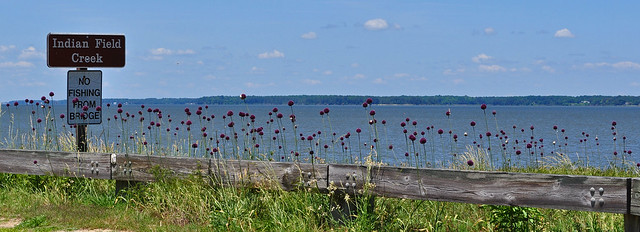
     This past Sunday on the way back from kayaking, I impulsively took the Colonial Parkway home. Nearing Yorktown I quickly pulled to the side of the road when I recognized blooming fields of Yorktown onions (Allium ampeloprasum). This Eurasian native (known to the rest of the world as wild leek) made its way to England eons ago and then made its way to Yorktown during the Colonial era. It naturalized locally and is now revered by people who live in the area. It has even been given protected status by county ordinance.

Allium ampeloprasum (11)

Allium ampeloprasum (1)

Allium ampeloprasum (2)

Allium ampeloprasum (3)

Allium ampeloprasum (10)

Allium ampeloprasum (8)


      Local gardeners who want to grow Yorktown onion usually get them from friends or family as a passalong plant. The only other source I know of is Brent and Becky's Bulbs, but if you live in Idaho the import of all allium species is forbidden.

(My usual disclaimer is in place, in that I have not received any compensation for the mention of anything in this post, including a bag of Muscari neglectum or Lilium henryi which would not be refused if they should happen to appear in my mailbox.)

March 9, 2012

Madwoman's Milk

Last March I became infatuated with an acid green weed growing in the cornfield adjacent to my parent's place.  I dug a few clumps and planted some in my mom's garden and some in my own. I knew it was some sort of Euphorbia, but was unsure as to the exact species.  Fellow blogger Entangled suggested it may be Eurphorbia helioscopia (Sun Spurge, Madwoman's Milk), and I am now pretty sure that identification is correct. This species is a winter-blooming annual native to Europe, North Africa and Asia, and is apparently now quite at home here as well. Further reading on this plant told that although it is considered poisonous and a carcinogen, its extract is used medicinally and is easily found for sale on the web.  My clump had whithered by late April of last year, and I thought that was likely the last I would see of it.  This week I noticed about a dozen separate plants coming up in the hell-strip, not far from where my clump was planted.  So it looks as if I have introduced this weed to my neighborhood. I am sorry neighbors!
Euphorbia helioscopia

Here is another reminder that my Winter Walk-Off 2012 is going on until Monday the 19th.  All bloggers are welcome to join in.

November 8, 2011

Country Comes to Town

I was driving through Smithfield today and had to turn the car around when I saw these urns planted with dog fennel (Eupatorium capillifolium).  Normally you don't see this planted on purpose, never-the-less it has a firm foothold in local landscapes and is most often seen along roadsides, abandoned fields and in other and various no-man's lands.  Apparently Frances  and Janet have company in being able to see past this plant's reputation to enjoy it's ornamental qualities.


August 5, 2011

Europeans Happy in New Home

During our camping trip last month to Lake Sherando we had time to explore the nearby Blue Ridge Parkway.  Today the area is heavily forested, but at the turn of the last century most of the mountains were denuded of trees and being used for pastureland and apple orchards.  There are still a few remnants maintained as meadows, and one of those is the Big Spy Mountain Overlook.  It's a place I usually stop, not so much for the view, but for a chance to wonder through the small meadow.  On this trip I found it full of wildflowers, and the place was abuzz with insect activity.  It was also abuzz with people activity.  A caravan had pulled up just before we got there, and the occupants found themselves suddenly able to receive signals for their smart phones after seemingly going sometime without.  It was comical watching husbands, wives and children all checking email, calling contacts and texting.  They acted like sailors, marooned on some desolate coast, boarding the rescue ship.

Anyway, when it comes to wildflowers, I usually have to do a little research to get a definite species name on a few.  While I was in this process for the plants below I was baffled that I could not find two of them listed in any native plant references.  Expanding my search I found the unknowns listed as invasives of European origin.  Judging from their numbers at the overlook, they are very happy in their new home and seem to get along with the older neighbors, at least at this point.

Centaurea maculosa (Spotted Knapweed, non-native)
Big Spy Overlook (7)

Centaurea maculosa and Daucus carota (Queen Anne's Lace, non-native)
Big Spy Overlook

Tragopogon dubius (Western Salsify, non-native)
Big Spy Overlook (5)

Big Spy Overlook (4)

Monarda fistulosa (Beebalm, native)
Big Spy Overlook (3)

Asclepias syriaca (Common Milkweed, native)
Big Spy Overlook (2)

Big Spy Overlook (6)

Rudbeckia fulgida (Black-eyed Susan, native)
Big Spy Mountains Overlook

Hopefully if I have missed an ID, someone out there will let me know.