An unapologetic plant geek shares advice and opinions on gardening, the contrived and the natural landscape, as well as occasional topics from the other side of the gate.
Showing posts with label Portsmouth. Show all posts

March 11, 2018

Chilly Bike Ride to Portsmouth

     On Friday the weather man told me that if I had any outdoor plans for the weekend, that I should make them for Saturday, as a nor'easter would be rolling in on Sunday. So I got up Saturday morning, had my coffee, found my Felcos, and headed outside to tend to my neglected back garden, only to feel rain. I may do wet, and I may do cold, but I don't do wet and cold. I went back inside intending to wait out the rain, but started watching Babylon Berlin on Netflix, and didn't stop watching until it was time for bed. If you don't mind subtitles this is an excellent series set in late 20's, pre-Nazi Berlin, a time and place that intrigues me. I have since read that Babylon Berlin is the most expensive German TV series ever produced, and I can see why. They spent a lot of time recreating the look and feel of the era. However, I think they could have saved a ton of money by cutting back on the number of cigarettes the characters smoke, and they smoke constantly. With cigarettes running about 6.00 € currently, and with at least an entire pack consumed every 5 minutes, in a multi-episode series, that's a lot of Euros.

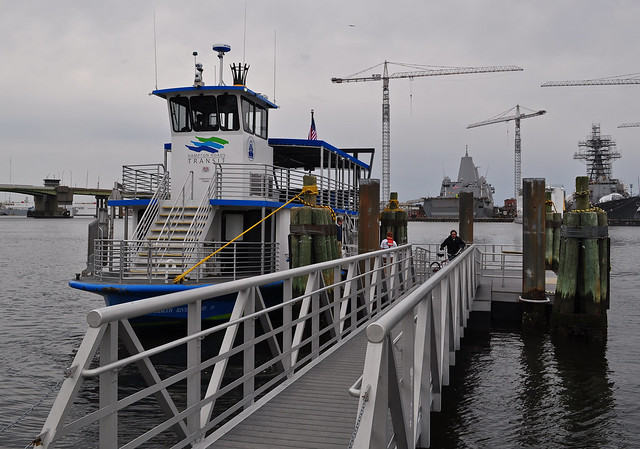
     Pardon the digression. When I woke up on Sunday, and saw that it was not raining, I decided to ride my bike to Olde Towne Portsmouth before gardening. This blog has been to Olde Towne several times before. To get there I rode to downtown Norfolk, and there got on the ferry to Portsmouth. There were so few people out and about, that both city centers looked as if they may be under evacuation orders. Given the cold dank weather, it was no surprise.
Elizabeth River Ferry

     Waiting for the ferry, I had time to ponder gulls, as well as The Hotel of Unresolved Issues, a place I was twice employed. 
Gull

Hotel of Unresolved Issues

Elizabeth River Ferry 2

Shipyard (4)

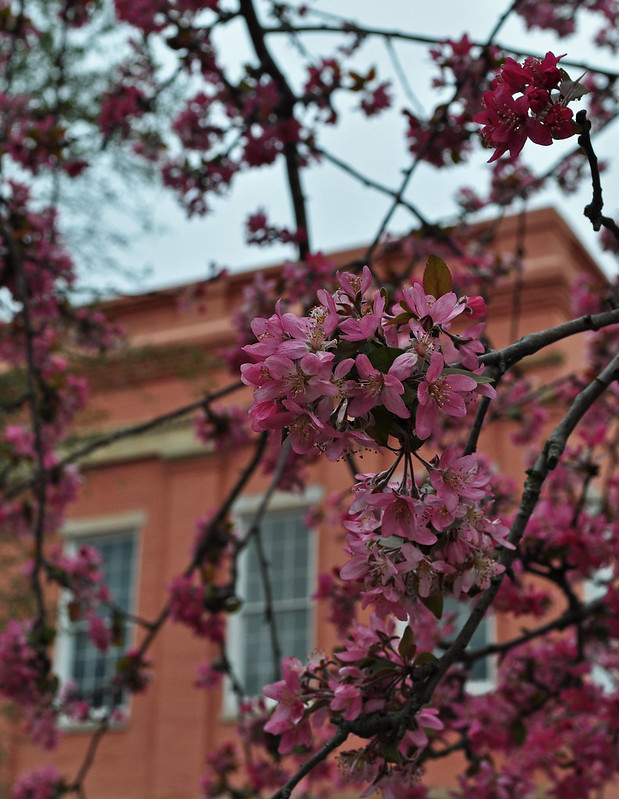
     Once in Olde Towne I found much in bloom. Crabapples planted around the old Norfolk County courthouse nicely framed the building, as well as the adjacent Confederate memorial. One of these days I may share my thoughts on such memorials, but I haven't figured out how to say what I want to say without coming across as someone I am not. Besides, my thoughts are still fluid on the matter.
Crabapple on Court St. (1)

Crabapple on Court St. (2)

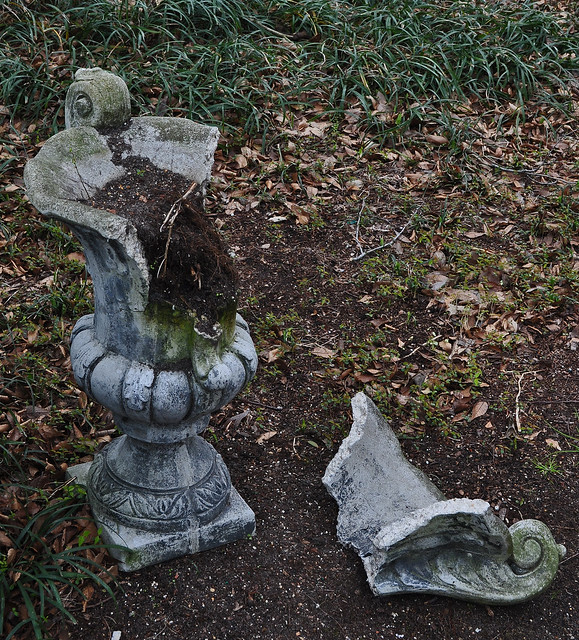
Busted

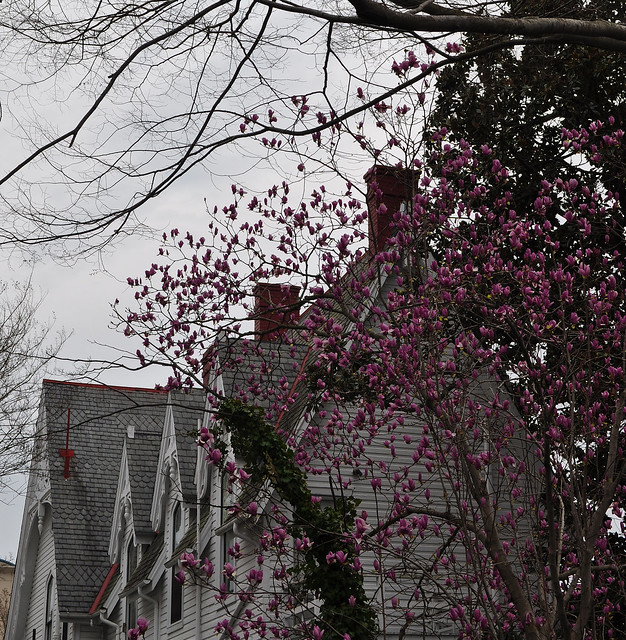
Magnolias on Middle St.

Forsythia and Hyacinth on Washington

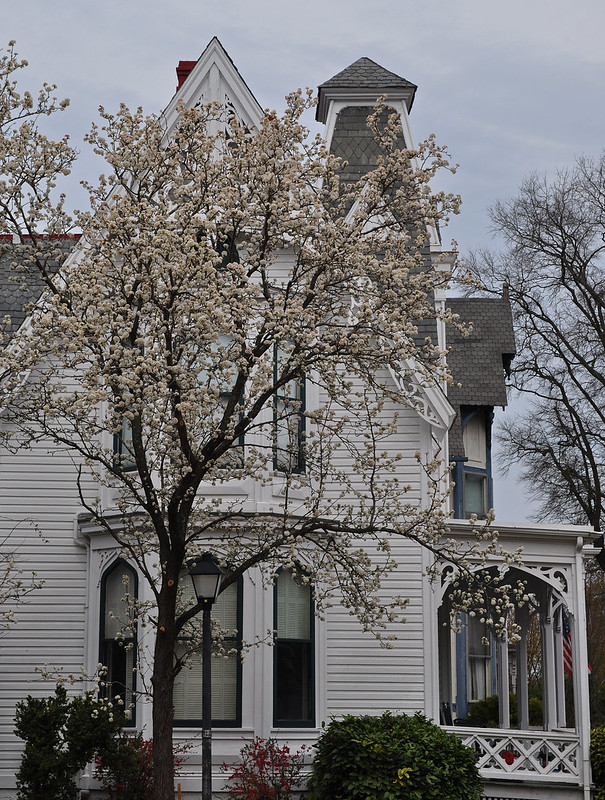
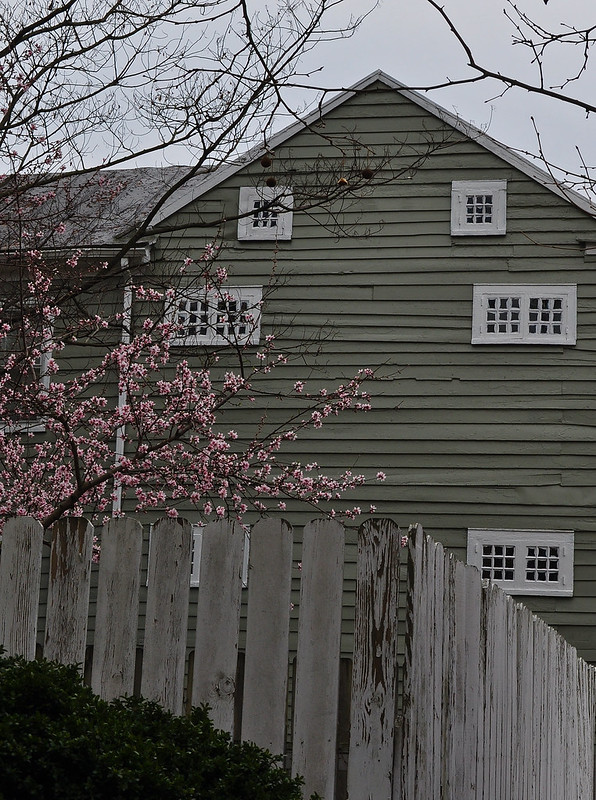
    Unfortunately, there are a lot of Callery pears in Olde Towne. I guess Portsmouth hasn't gotten the invasive species memo yet. One was blooming next to one of my favorite houses in Olde Towne, which currently happens to be for sale. According to Zillow, it has been in the same family for four generations.
Bradford Pear on Middle St.

Magnolia on Middle

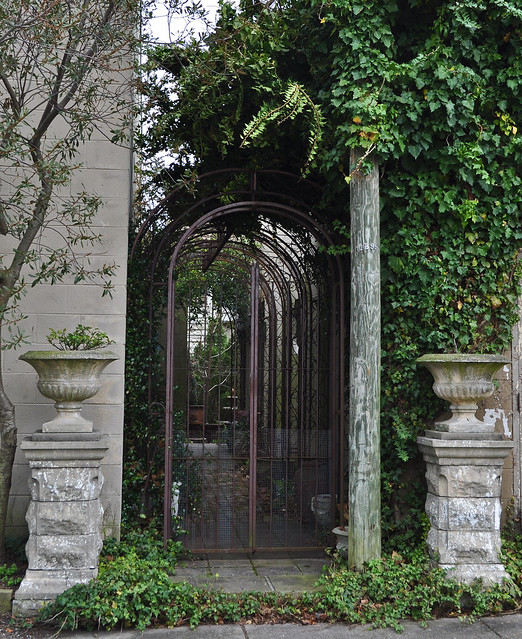
     Speaking of invasive species, English ivy looks very nice here, but it is a scourge in many local woodlands.
Anderson-Wright Rooms & Gardens

Cherry on Washington

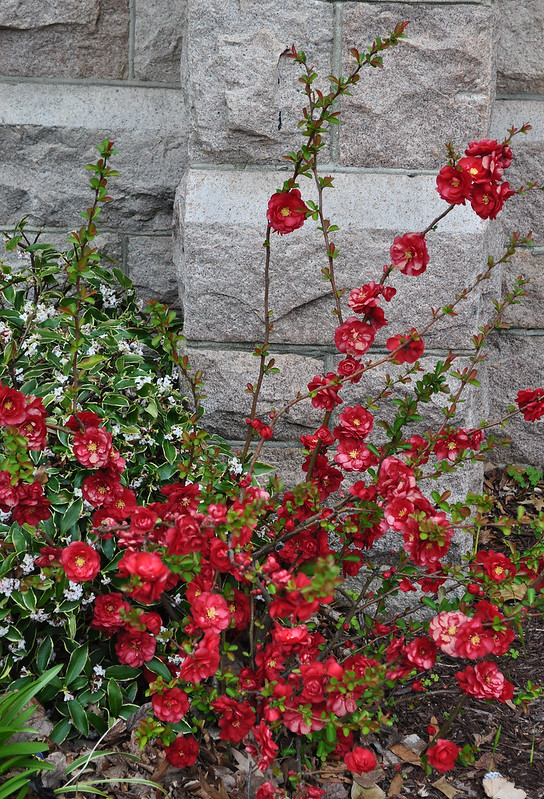
     Next to St. John's Episcopal, one of Olde Towne's many churches, I saw a quince blooming. I think it is one of the new Double Take series (Chaenomeles speciosa Double Take™ Scarlet).
St. John's Episcopal Church (3)

St. John's Episcopal Church (1)

St. John's Episcopal Church (2)

     I have always wanted to see what the inside of St. John's looks like, but have never had the chance. So I googled it, and had to borrow a photo from the church's web site to share. I hope they don't mind; it is lovely.

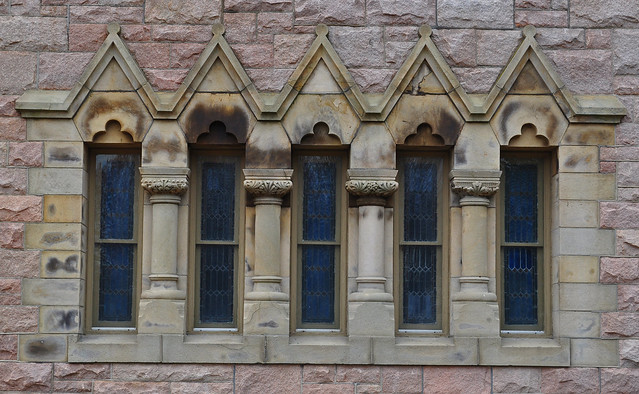
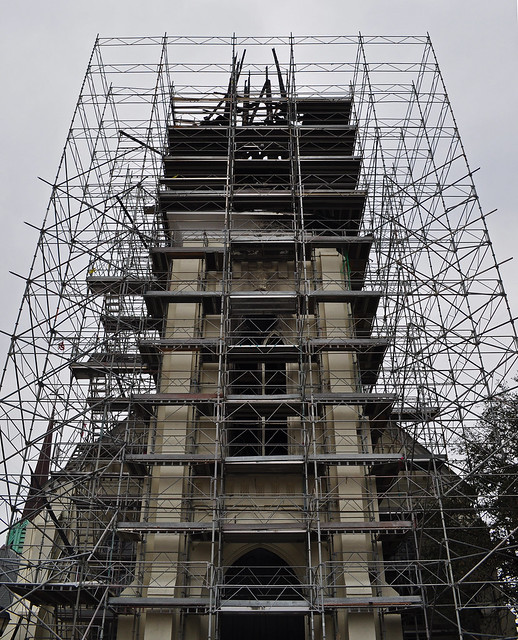
     Another Olde Towne church, Monumental United Methodist, recently made the news when its steeple caught fire. As a lapsed Methodist, I am glad the rest of the church was spared, and that the steeple is being restored. It was a local landmark, and one of the taller structures in downtown Portsmouth.
Monumental Methodist

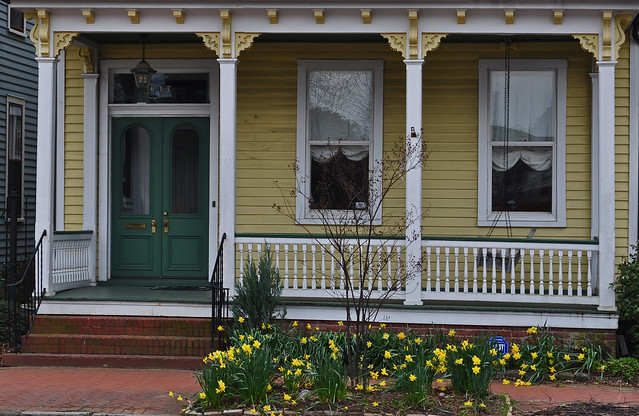
Narcissus on London

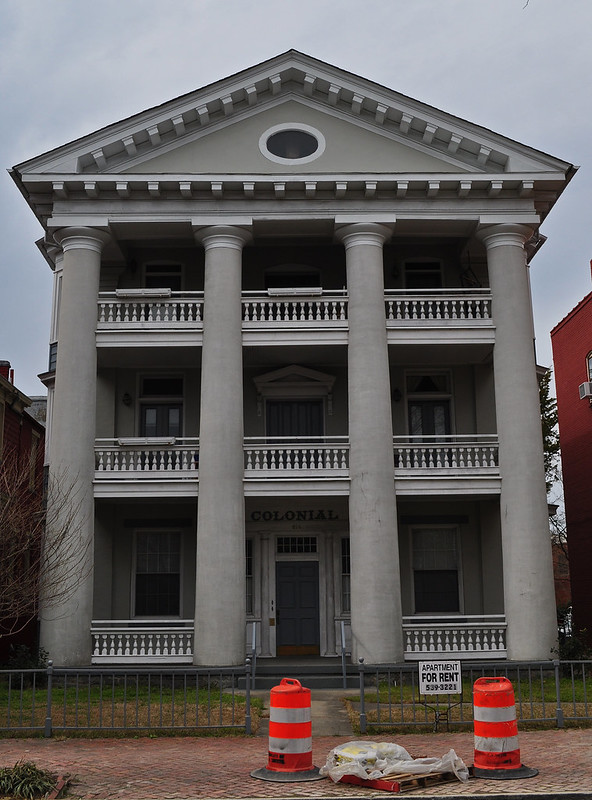
     Don't you love robust columns and a strong pediment?
Robust Columns

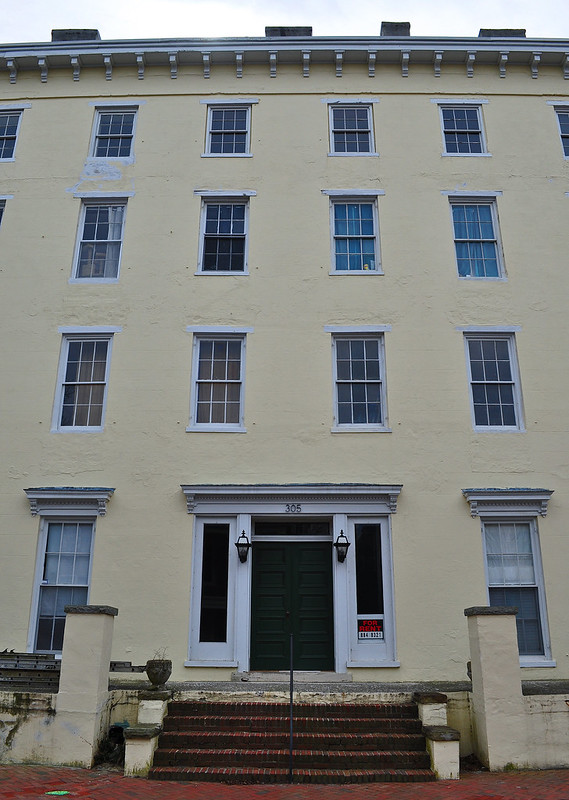
     I lived in Olde Towne Portsmouth right out of college in the apartment building below. Built in 1851, it began life as part of the Macon Hotel, ironic for me at the time because I was working at the Hotel of Unresolved Issues across the river in Norfolk. During the Civil War it was one of the city's many hospitals, so it is no wonder I thought the place was haunted. 
Macon Hotel

     Thanks for riding with me! If you would like to walk with me, my 2018 Winter Walk-Off continues, with entries accepted through March 19th.
April 27, 2013

Hoffler Creek

     As I mentioned a few posts back, I am participating in the Virginia Master Naturalist training program, which includes classroom time, but also includes field trips.  One of these was a trip to Hoffler Creek Wildlife Preserve in Portsmouth, Va. This place was once a waterfront farm owned by the Ballard family. Since the mid 1800's the family made a comfortable life for themselves raising fruits and vegetables to send north by steamer to hungry cities further up the Eastern Seaboard.  This was long before the days of tomatoes from Florida, grapes from Chile or lettuce from California, and when those realities came into being, the family sold the land to the Virginia Dept. of Transportation.  Good topsoil was pushed aside so the clean sand underneath could be mined to use in building local highways, creating a deep pit in the process that soon filled with water. Once the highways were finished, VDOT put the property up for sale, and several developers salivated over its prime waterfront location, but a group of local residents thought of something better. VDOT offered the property to the city of Portsmouth for $1, but the city refused. Of all the cities that make up Hampton Roads, Portsmouth is the poorest, and much of the land within its boundaries is federally owned and generates no tax revenue. So they were not warm to idea of yet another unproductive parcel.  But never underestimate the power of a small group of determined citizens.

Leaning Loblolly

On the Trail

Hoffler Creek

     Hoffler Creek Wildlife Preserve is about 140 acres of forest and tidal marsh centered on Lake Ballard.  There are miles of trails through several different habitats; a couple of blinds where close to 200 different bird species can be seen; there is a visitor center and a kayak dock. This is so much better than yet another vinyl-clad village.

Cercis canadensis (Eastern Redbud)
Cercis canadensis

Gelsemium sempervirens (Carolina Jessamine) 
Gelsemium sempervirens

Hoffler Creek (2)

Living Shoreline

On they day we were there oaks unfolded for the season.
Oak Unfolding Over Water

Oak Unfolding Over Water 2

Aesculus pavia (Red Buckeye)
  Aesculus pavia

     The old Ballard mansion is no longer there, but many of the family's plants are still around, and while some have lived a life of good behavior, others have taken far to well to their Virginia home.  Chinese privet (Ligustrum sinensis), Chinese wisteria (Wisteria sinensis), Japanese honeysuckle (Lonicera japonica), English ivy (Hedera helix) and Vinca minor are all doing their best to choke out Hoffler Creek's natives.

Camellia japonica
Homeplace Camellia

Hyacinthoides hispanica (Spanish Bluebells)
Hyacinthoides hispanica

Lunaria annua (Money Plant) is listed as naturalized, or invasive depending on what you source you read.
 Lunaria annua (my best guess)

Oxalis crassipes (Pink Wood Sorrel)
Oxalis crassipes


Wisteria (8)

Even given its invasiveness and python-like grip, there is no denying wisteria's beauty.
Wisteria

Wisteria (9)

Wisteria (4)

     When the Ballard family left Hoffler Creek, the marked graves of their ancestors were moved to a nearby church, but the unmarked graves of their slaves remain. The site of the old cemetery is covered in Vinca minor, a plant long associated with graveyards. Our tour leader said that vinca was thought to help keep the world of the living and the dead separate from each other.
  Vinca minor (3)

Vinca minor

     I say this with no basis in fact, but I feel that Portsmouth probably has the area's most disconnected-from-nature population, particularly its children.  So Hoffler Creek and its extensive education and outreach programs are an essential city service.  Quite the bargain for a buck!

(You can see the complete set of my Hoffler Creek photos here.)

November 18, 2012

Another Day in Paradise

This past Saturday my son and I volunteered to help the folks from the Elizabeth River Project (ERP) at the new Paradise Creek Nature Park in Portsmouth, Virginia.  Paradise Creek is small tributary of the Elizabeth River, and is one of the most polluted and abused creeks flowing into one of the most polluted and abused rivers in the country.  But through the efforts of ERP, and others, things have slowly been getting better for the Elizabeth and it is a healthier river than it once was, but with a long way to go to ERP's goal of a fishable, swimmable river by 2020.

Paradise Creek lies just south of the Norfolk Naval Shipyard, the oldest and largest industrial facility belonging to the U. S. Navy.  The area has a long history of being the dumping place for what was not needed and eventually became a significant EPA Superfund site. The land that is becoming Paradise Creek Nature Park was once a vibrant tidal marsh, but over the years became a home for various unwanted materials, including the dredge spoils created by keeping the Elizabeth deep enough for large ships to navigate. By the time the dumping ceased, the site ended up with an unusually high elevation offering a nice view of the creek, and a forest of opportunistic species, natives and invasive exotics both, began to grow.

As part of a larger effort to restore Paradise Creek and the surrounding land, the park is being created and should open to the public by the end of the year.  We were there to plant trees, or more specifically to dig holes for other people to come in behind us and plant trees, all of them native species. After we did our digging, we took a stroll around the park before we had to go.  I think what struck me the most about the park is its juxtaposition to its industrial neighbors, many of whom have cleaned up their own properties and changed the way they conduct business next to the river.  If everyone is brought on board and works together, making changes is an easier proposition.

Paradise Creek Nature Park (2)

Paradise Creek Nature Park (26)

Paradise Creek Nature Park (25)

Paradise Creek Nature Park (6)

Paradise Creek Nature Park (7)

Phytolacca americana (Pokeweed) Paradise Creek Nature Park (9)

Celastrus scandens (American bittersweet) Paradise Creek Nature Park (3)

I think this species of Ligustrum is L. lucidum. It is not as invasive as L. sinense, but close.  The park has impressive tree-like stands of it dripping with fruit.
 Paradise Creek Nature Park (8)

The two most noxious ivies were also present, the invasive Hedera helix (English Ivy) and our own native Toxicodendron radicans (Poison Ivy), an itchy surprise awaiting anyone wanting a closer look at its beautiful fall colors.
Paradise Creek Nature Park (23)

Paradise Creek Nature Park (24)

Paradise Creek Nature Park (5)

Paradise Creek Nature Park (19)

Paradise Creek Nature Park (21)

Paradise Creek Nature Park (10)

Paradise Creek Nature Park (15)

Paradise Creek Nature Park (18)

The pink flagging tape and string were strung over the top of a recreated wetland in order to keep Canada geese from eating what is likely newly planted Spartina alterniflora.  This area was part of an agreement that allowed a company to partially atone for previous environmental sins by reverting ten acres of accumulated spoil back to marsh, the site's original environmental niche.