I have spent most of this week at the Mid-Atlantic Horticulture Short Course. I serve on the board of its sponsoring organization, and I have attended this annual event for decades now. It has always been a welcome diversion during the cold part of the year, as I look forward to being introduced to new plants, learning from great designers, and networking with my fellow green people, though others have referred to it as a CEU and certification farm. I found this year's conference somewhat somber in tone, as it seemed to me that many of the classes (at least the ones I took) concerned horticulture's response to a changing world, especially as it relates to climate. The keynote speaker was Michele Covi of Old Dominion University, and she set the tone with her talk on sea level rise and its affect on southeastern Virginia, after New Orleans, this country's most at-risk metropolitan area. I am sure I have mentioned that fact before, so pardon me for repetition, but it weighs on my mind constantly.
One of the most interesting classes I took was on a community-based program in Richmond that used a great deal of science, technology, and willing teenagers to measure the phenomenon of urban heat islands. They went all over the city last summer to measure ambient temperatures on a very hot July day. Comparing the collected data with maps of the city's tree cover, it was clear that the cooler parts of the city also had more trees, while the hottest areas were full of asphalt. They overlaid these combined maps with income levels, as well as the number of ambulance calls during heat waves, and the way the patterns lined up was eerily perfect. Another climate-centric talk I went to showed, among other things, how new computer programs predict the effects of a warming planet on native trees of Virginia, and where these species might have to migrate to to escape the heat, this as other more heat-tolerant trees could possible seize the void. This same talk framed everything in either of two scenarios, one where we do nothing to abate climate change, and another where we do what we can and hope for the best. Even under the best circumstances, the news is not good. For some time now I have been convinced that there is really nothing we can do to stop climate change, we can only manage its effects. Even if we slam on the brakes right now, the best we can do is to hope for a slow down, not a complete stop.
I also attended talks on introduced pests, including emerald ash borers, crapemyrtle bark scale, and ambrosia beetles. These are just a few of the threats to our natural and man-made landscapes resulting from a more connected world. The best news I got from these talks is that two species of our own lady beetles have now put crapemyrtle bark scale on their diets, especially important here in Norfolk, where 50% of all street trees are crapemyrtles. Technology played a role in several of the talks including using drones in forestry, sonic tomogaphy, and resistorgraphs. The latter are two non-invasive ways access tree health. There were also classes on phytoremediation, creationg bio-retention ponds, using IPM and biological pest control, and yes, there were pictures of pretty flowers too.
Showing posts with label Events. Show all posts
January 18, 2018
April 19, 2015
A Weekend in Williamsbug
I spent last weekend at the Williamsburg Garden Symposium. I have always wanted to attend this event, but its timing and my money never aligned. However, I was invited to speak at this year's event, and I agreed before self-doubt had a chance to step in and sway me otherwise. While I am not adverse to public speaking, and in fact do it frequently, this talk was my highest profiled gig to date, and much of that had to do with those I shared the stage with. My subject was understory trees for mid-Atlantic gardens, and judging from the comments afterwards it went well, or at least people were just being polite to say so.
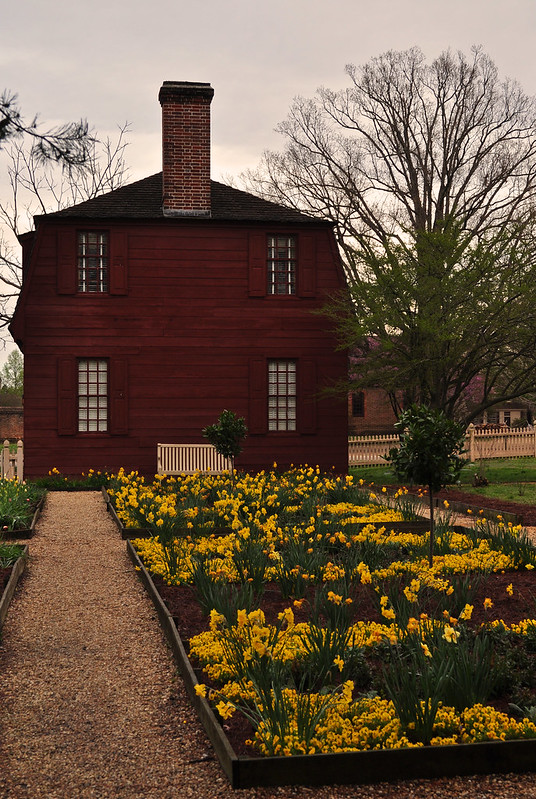
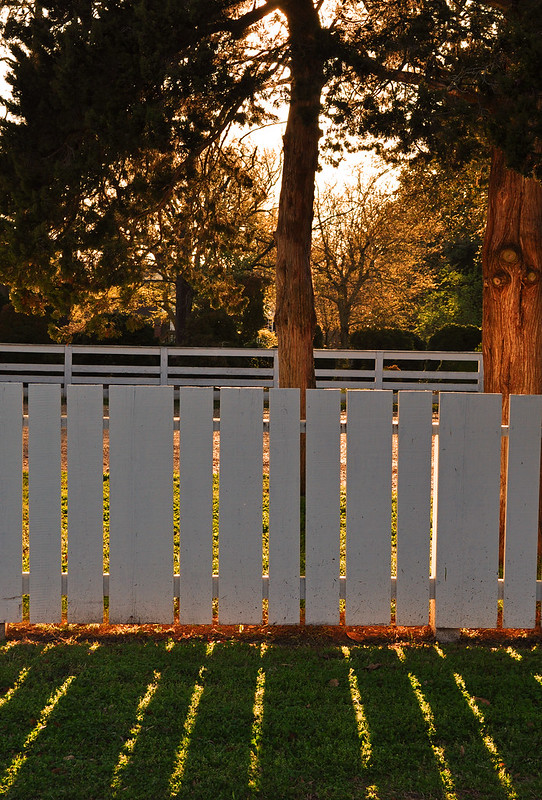
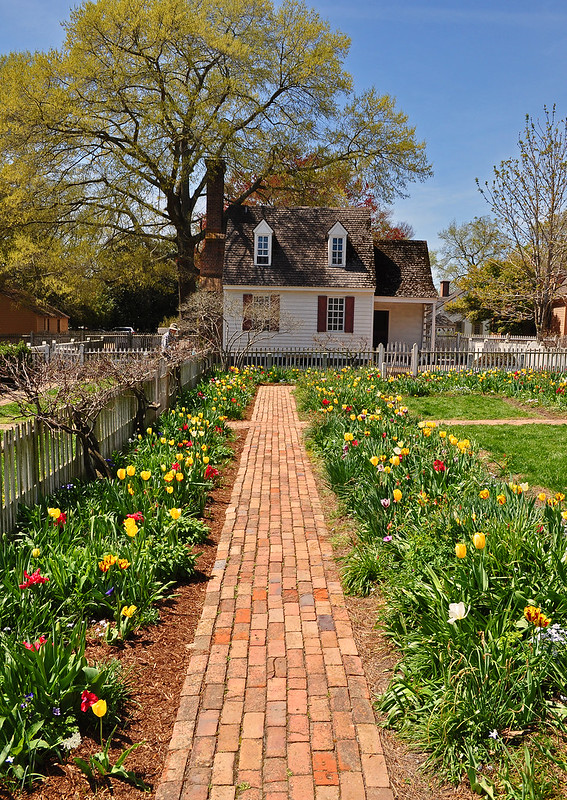
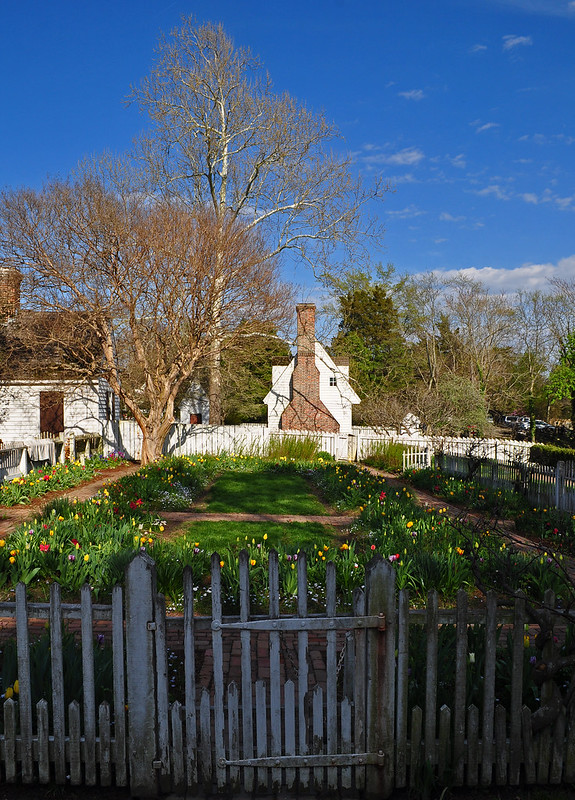
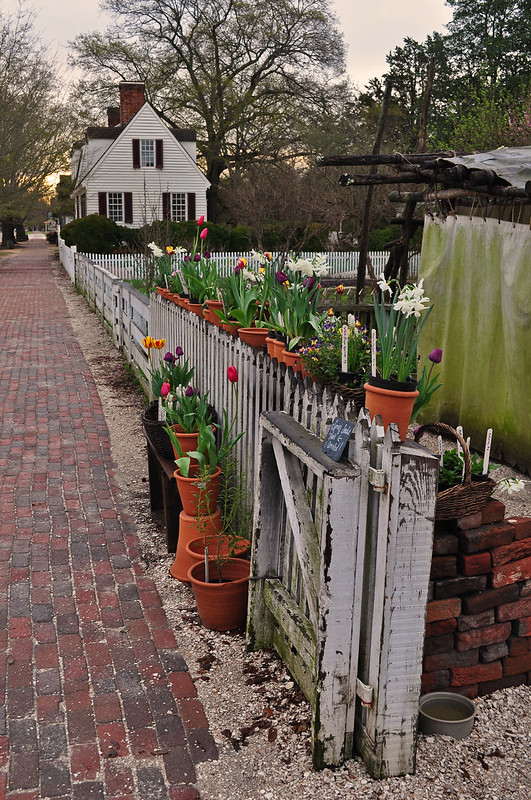
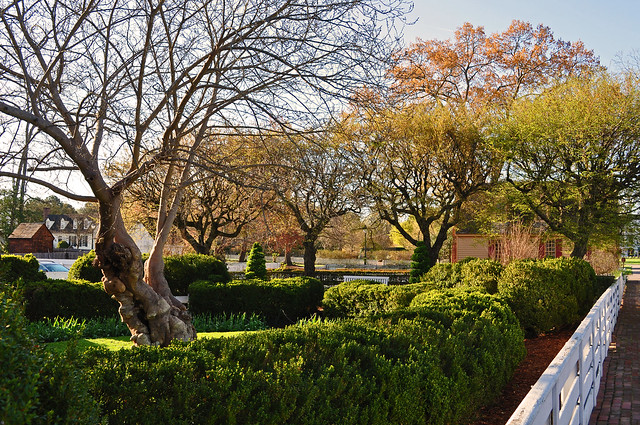
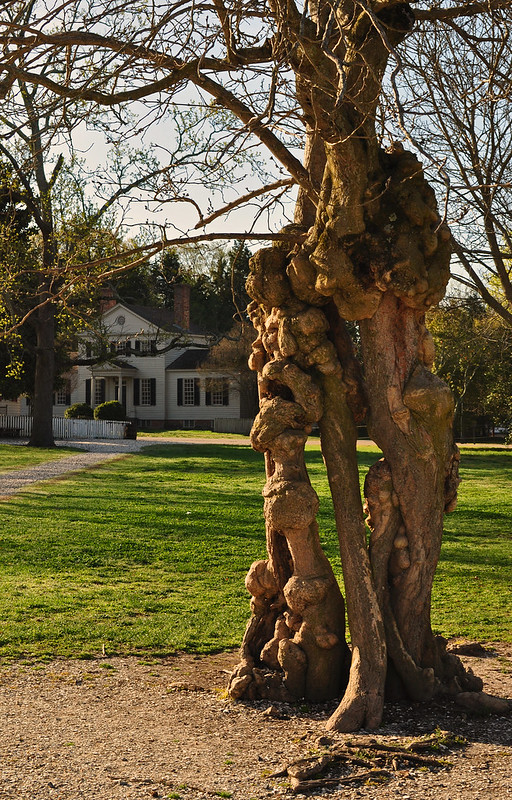
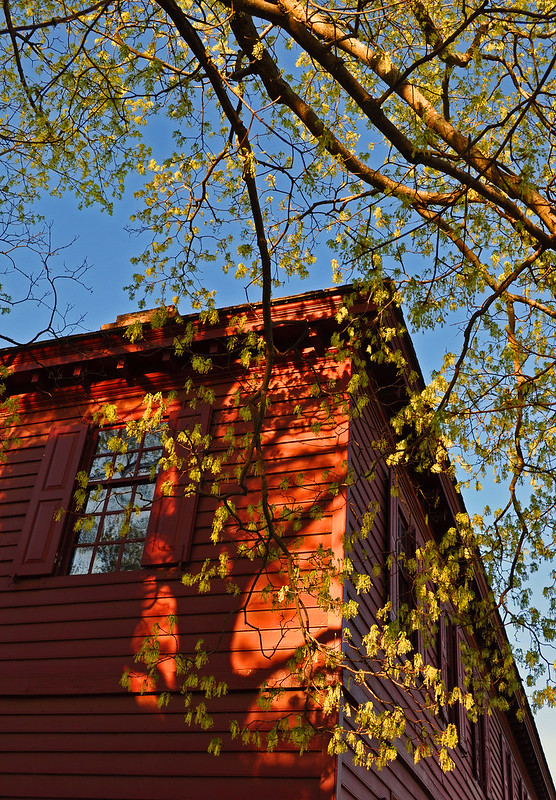
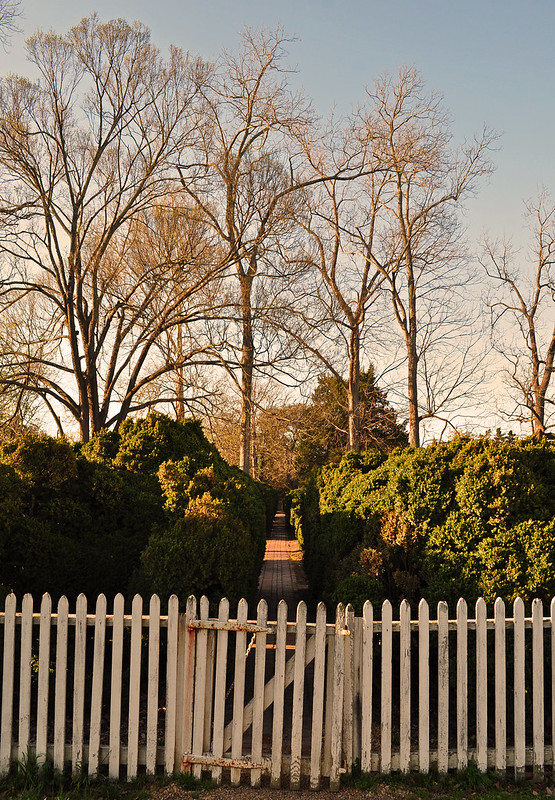
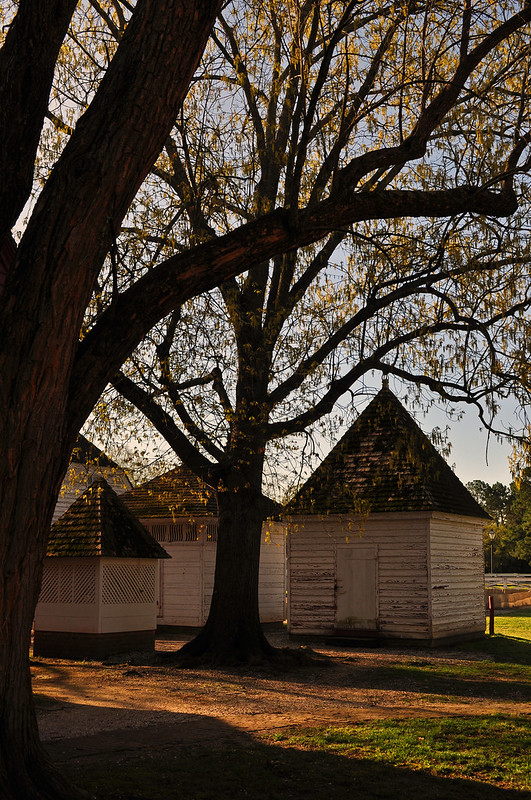
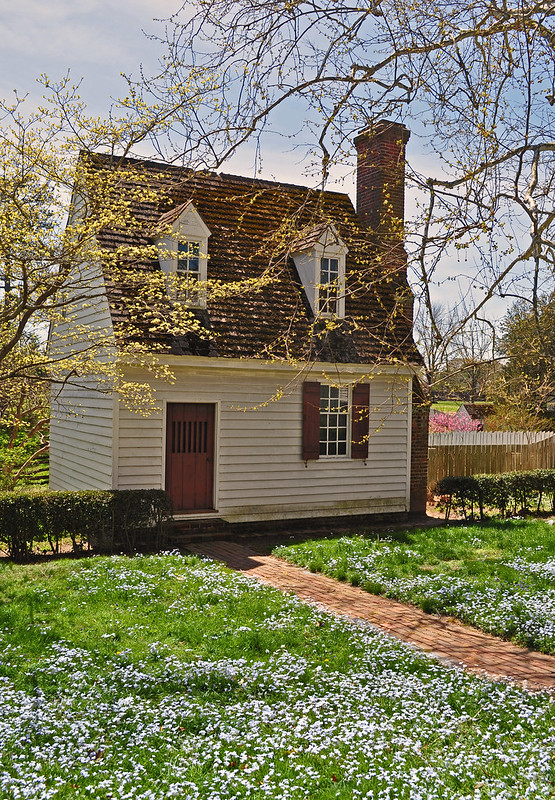
The schedule left plenty of time to explore Colonial Williamsburg, which was an easy walk from my hotel. I have always loved this place and visit several times a year, but I have never been able to see it in spring, nor early in the morning before the crowds pour in. Colonial Williamsburg has often been wrongly accused of merely being an American history stage set, but a significant number of its buildings are true restorations, and those that are true recreations have been done so fairly faithfully to what was there. This is not necessarily the case with the gardens in Colonial Williamsburg, most of which were recreated in the colonial revival style, and are a not quite accurate picture of what once was. I am OK with this though. The gardens are beautiful as they are, and most of them and the surrounding buildings have enough of a patina to convince you that you are walking back through time, even if that patina is only 80 years old and not 250.
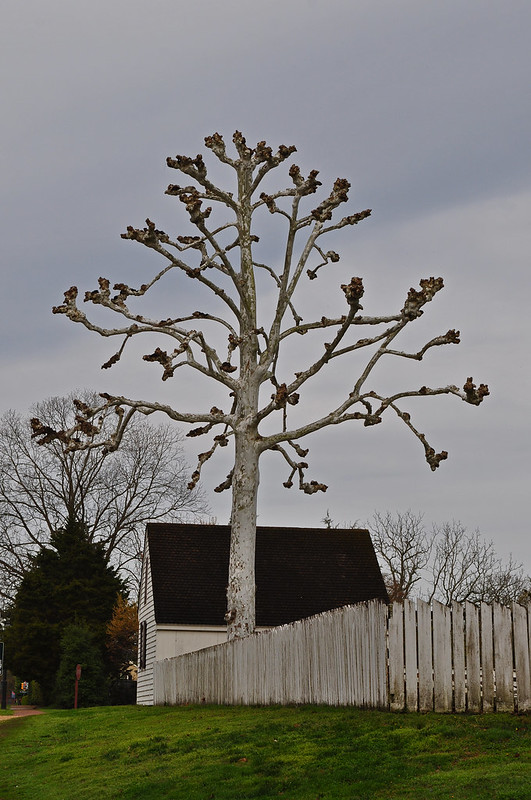
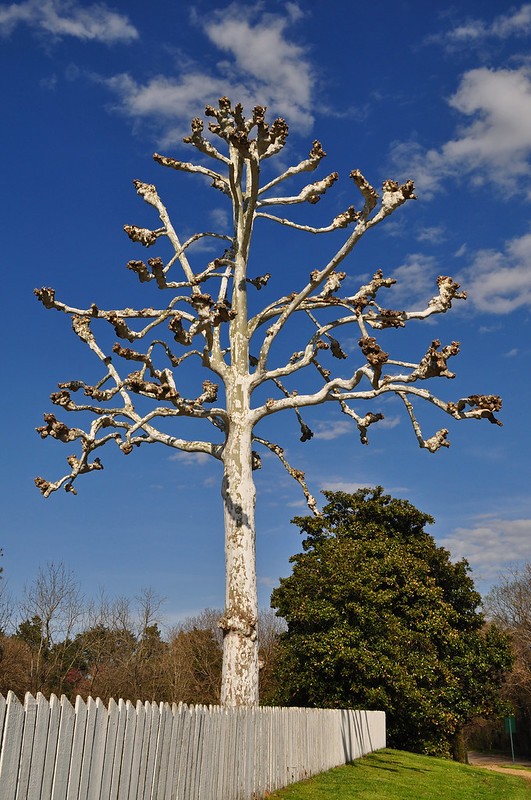
I am not a huge fan of extreme pruning, but I guess in a historic context it can be appropriate, and in the case of these pollarded sycamores, somewhat beautiful as well, even more so without foliage.
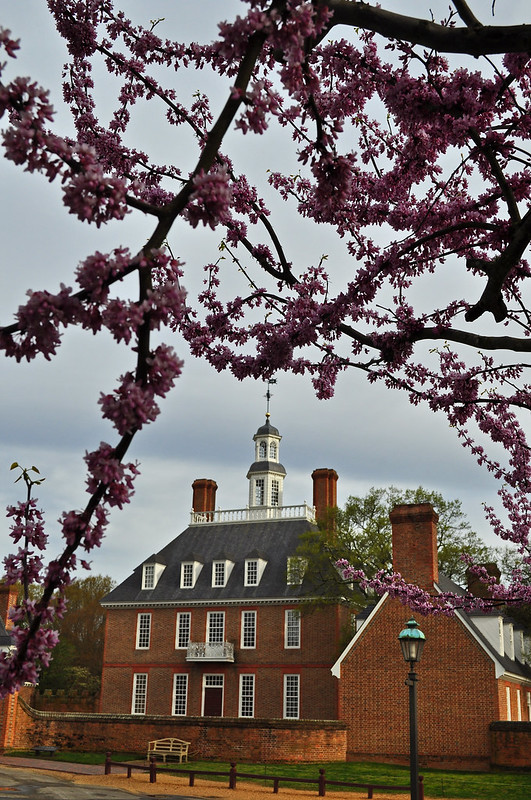
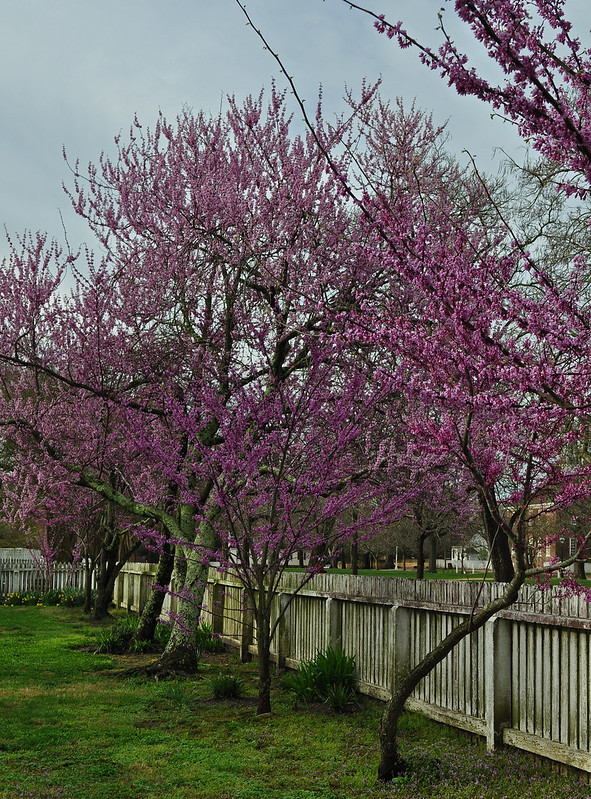
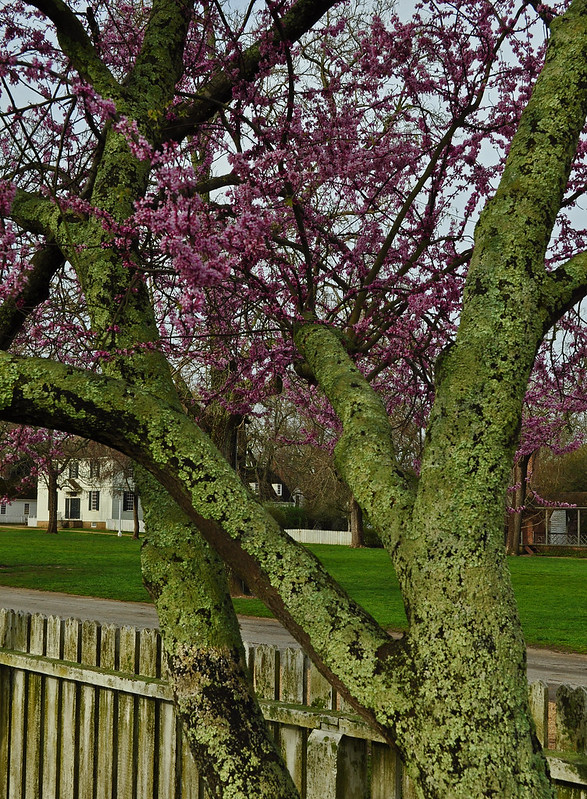
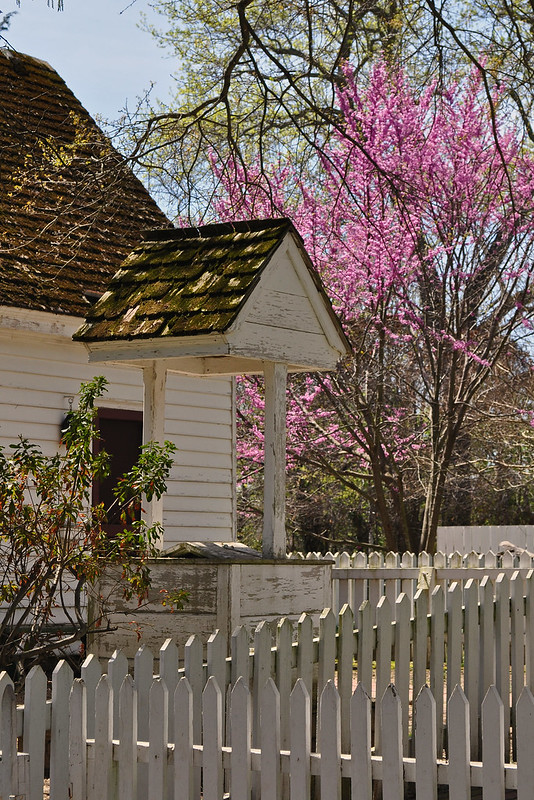
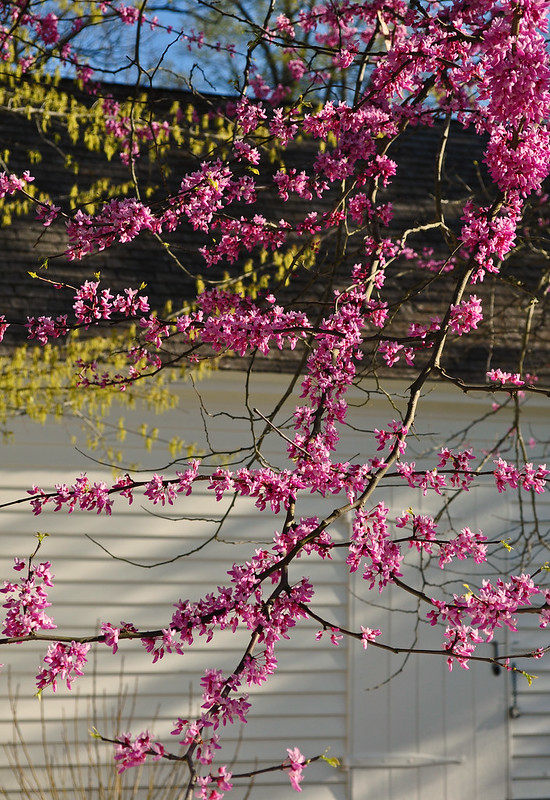
During my talk I gave more time to redbuds (Cercis canadensis) than many other trees, and fortunately the Williamsburg landscape abundantly backed me up.
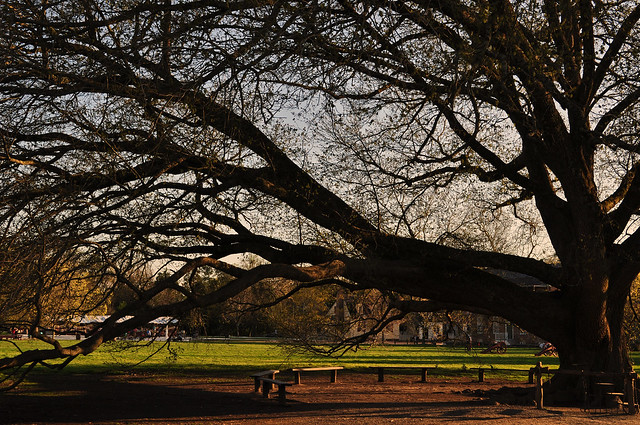
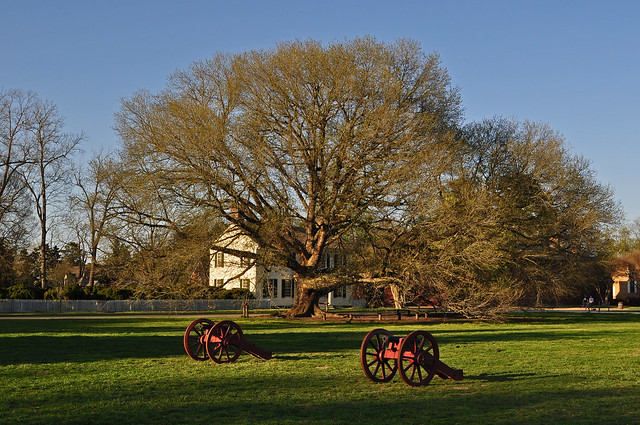
One of my favorite trees in Williamsburg is definitely not an understory tree. The Compton oak (Quercus x comptoniae) is a hybrid between live oak (Q. virginiana) and overcup oak (Q. lyrata). This particular one is huge, and sitting underneath of it is like being in a circus tent. It was planted in 1930, but you might think it was here when Jefferson and Washington walked by.
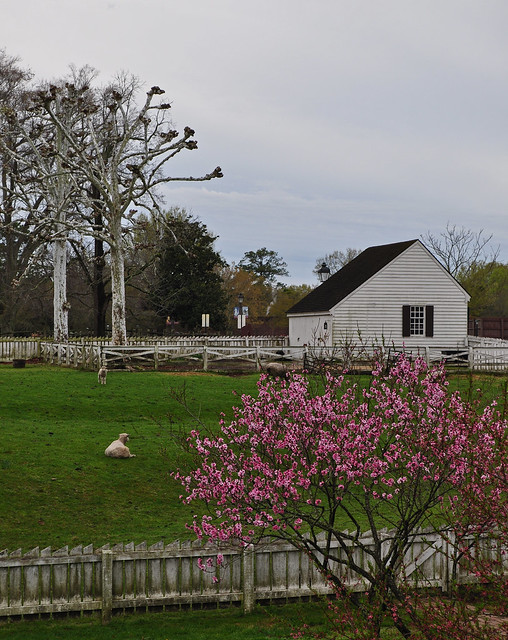
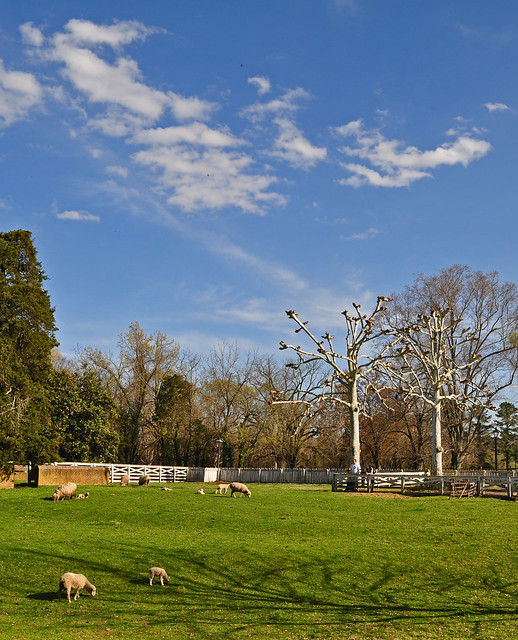
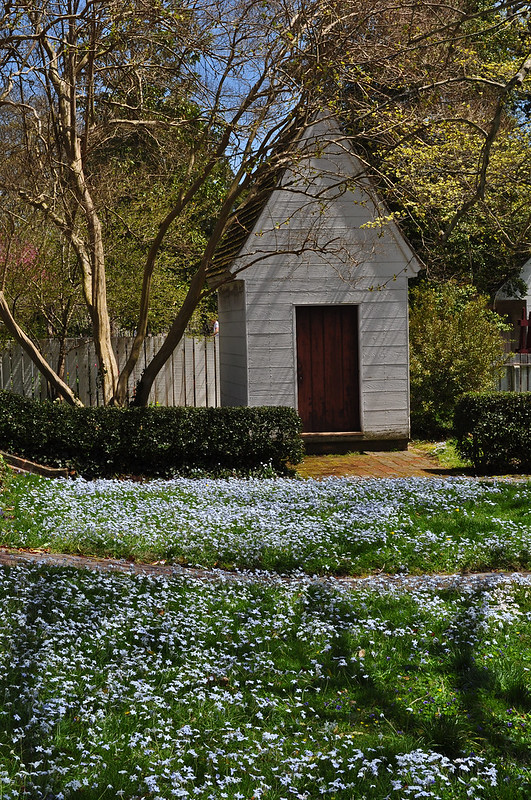
When you think of colonial gardens images of regimentation and symmetry might come to mind, as well as plants clipped with precision. However, even if the lines are tight, the plants are not so much so, and in Williamsburg many are allowed to flow and grow with some wildness, more or less as they please. After all, back in the day there were no string trimmers or power pruners, and sheep were the lawn mowers. I love the contrast between rigid designs and free flowing plants, and one plant that helped blur the lines was Ipheion, which has naturalized in many Williamsburg gardens.
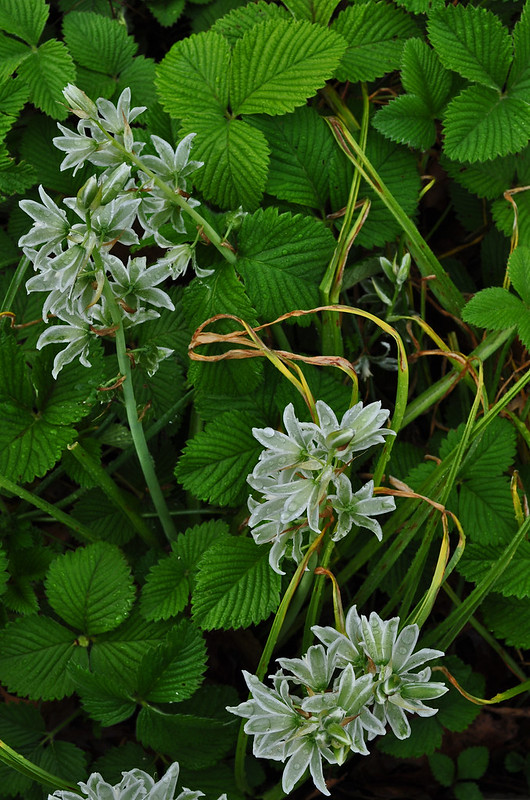
I ran across one plant totally unfamiliar to me. I was initially attracted to its ghostly silver green blooms, and thought I should find out what it was and how I could get some for my own garden. Then when I saw it coming up all over the place without regard, I thought twice. Asking around I found out it was Ornithogalum nutans (nodding or drooping star of Bethlehem). At our first house one of its cousins carpeted our backyard every spring, so I know what this genus is capable of.
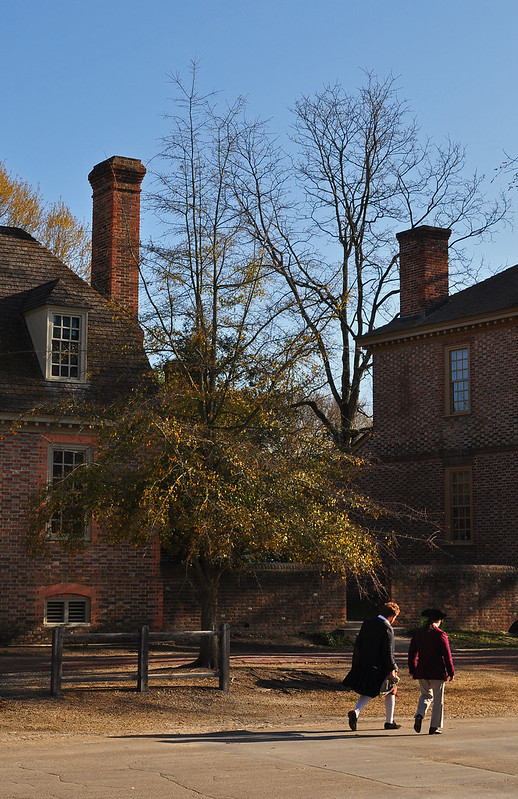
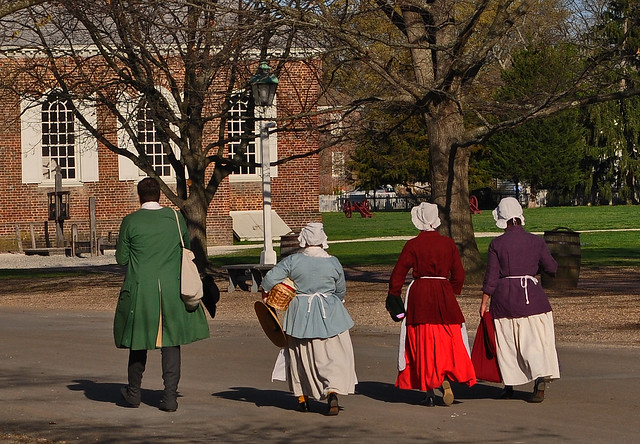
One of the benefits of getting up early was having a chance to see some of Colonial Williamsburg's interpreters begin their day. I overheard snippets of conversation as they walked by ready to assume their roles, and I could have sworn they were speaking in character with each other.
If you want to read more on Colonial Williamsburg's gardens, and the role that the colonial revival movement had in its landscape, here is a very good article on the subject.
The schedule left plenty of time to explore Colonial Williamsburg, which was an easy walk from my hotel. I have always loved this place and visit several times a year, but I have never been able to see it in spring, nor early in the morning before the crowds pour in. Colonial Williamsburg has often been wrongly accused of merely being an American history stage set, but a significant number of its buildings are true restorations, and those that are true recreations have been done so fairly faithfully to what was there. This is not necessarily the case with the gardens in Colonial Williamsburg, most of which were recreated in the colonial revival style, and are a not quite accurate picture of what once was. I am OK with this though. The gardens are beautiful as they are, and most of them and the surrounding buildings have enough of a patina to convince you that you are walking back through time, even if that patina is only 80 years old and not 250.
(Warning: this is a photo-heavy post, you may want to check how much bandwidth is in your boiler before proceeding.)
I ran across one plant totally unfamiliar to me. I was initially attracted to its ghostly silver green blooms, and thought I should find out what it was and how I could get some for my own garden. Then when I saw it coming up all over the place without regard, I thought twice. Asking around I found out it was Ornithogalum nutans (nodding or drooping star of Bethlehem). At our first house one of its cousins carpeted our backyard every spring, so I know what this genus is capable of.
One of the benefits of getting up early was having a chance to see some of Colonial Williamsburg's interpreters begin their day. I overheard snippets of conversation as they walked by ready to assume their roles, and I could have sworn they were speaking in character with each other.
Location:
Williamsburg, VA, USA
September 21, 2014
Hurricane Hugo 1989
Once upon a time, a young man was supposed to meet some friends for a long weekend at a beach house in North Carolina. However, he was given the wrong address, and in those days there were no such things as cell phones, and he had no way to find his friends. So what was the young man to do? He certainly didn't want go back to gray Richmond, rather he headed further south to Charleston, a place that he had always imagined he would like, and indeed he did, so much so, he decided that very weekend to make his home there. He loved Charleston's architecture, the ghosts of its history, its Gothic atmosphere, and its beaches, but he especially loved the Lowcountry. In places he felt that the landscape of palmetto, marsh, and live oaks dripping with Spanish moss still held some of the earth's original magic, and this feeling startled his usually cynical self.
Being an innkeeper by trade, the young man had no trouble finding employment, and as soon as he secured a position, moved himself to one of the sea islands just outside the city. For the next three years he made many good friends, learned the area's stories, grew fat on shrimp, and explored the Carolina countryside. It was a wonderful life. Then a disturbance from the west African coast, later to be named Hugo, appeared on the radar, and he was overcome with a premonition of dread and inevitability. As the storm neared, he and his fellow citizens pleaded with the gods to spare the beautiful city. Perhaps Hugo could take Myrtle Beach instead. The pleas were for naught, and at the last minute he was forced to evacuate his island home, heading inland in a car full of dogs and one brave cat. The night Hugo hit was spent huddling with others in a Columbia hallway as tornadoes swirled outside. It was the longest night of the young man's life. Two days later he and his fellow evacuees made the long drive back to the coast, where it quickly became apparent that the place he had come to love seemed to have been forever changed.
Although the destruction was vast, the young man's home was spared but for minor water damage and the loss of utilities, so he moved back in. He was also fortunate to still have employment, and spent the next few months inspecting hotel rooms, condos, villas and houses for hurricane damage. Despite his good fortune, he couldn't bare looking at what had happened to Charleston and the Lowcountry, and with heavy heart decided to leave the place. He would prefer to keep his memories of the time before, and to not have splintered trunks, missing buildings, and mountains of rubble be constant reminders of the time after. Though given the opportunity, in the years that followed he chose not to return, but in time his now middle aged life found him back again for several visits. It did his heart good to see how the trees had grown, and how the city had not only healed, but was more vibrant than ever. To him it was almost as if the storm had never happened, and was just one more thing the city had survived, another page in its history book to accompany the British siege, the Union bombardment, the great earthquake, the tornadoes, and being discovered by the outside world.
Being an innkeeper by trade, the young man had no trouble finding employment, and as soon as he secured a position, moved himself to one of the sea islands just outside the city. For the next three years he made many good friends, learned the area's stories, grew fat on shrimp, and explored the Carolina countryside. It was a wonderful life. Then a disturbance from the west African coast, later to be named Hugo, appeared on the radar, and he was overcome with a premonition of dread and inevitability. As the storm neared, he and his fellow citizens pleaded with the gods to spare the beautiful city. Perhaps Hugo could take Myrtle Beach instead. The pleas were for naught, and at the last minute he was forced to evacuate his island home, heading inland in a car full of dogs and one brave cat. The night Hugo hit was spent huddling with others in a Columbia hallway as tornadoes swirled outside. It was the longest night of the young man's life. Two days later he and his fellow evacuees made the long drive back to the coast, where it quickly became apparent that the place he had come to love seemed to have been forever changed.
Although the destruction was vast, the young man's home was spared but for minor water damage and the loss of utilities, so he moved back in. He was also fortunate to still have employment, and spent the next few months inspecting hotel rooms, condos, villas and houses for hurricane damage. Despite his good fortune, he couldn't bare looking at what had happened to Charleston and the Lowcountry, and with heavy heart decided to leave the place. He would prefer to keep his memories of the time before, and to not have splintered trunks, missing buildings, and mountains of rubble be constant reminders of the time after. Though given the opportunity, in the years that followed he chose not to return, but in time his now middle aged life found him back again for several visits. It did his heart good to see how the trees had grown, and how the city had not only healed, but was more vibrant than ever. To him it was almost as if the storm had never happened, and was just one more thing the city had survived, another page in its history book to accompany the British siege, the Union bombardment, the great earthquake, the tornadoes, and being discovered by the outside world.
![]() |
| Downtown Charleston |
![]() |
| Near St. Matthews Lutheran Church |
![]() |
| North Market St. |
![]() |
| North Market St. |
![]() |
| 2nd Presbyterian Church |
![]() |
| Churchyard Wall |
![]() |
| Brittlebank Park |
![]() |
| Brittlebank Park |
![]() |
| Hampton Park |
![]() |
| Hampton Park |
![]() |
| James Island |
![]() |
| James Island |
![]() |
| Johns Island |
![]() |
| Iggly Wiggly, Johns Island |
![]() |
| Kiawah Island |
![]() |
| Kiawah Island |
![]() |
| Kiawah Island |
![]() |
| Kiawah Island |
![]() |
| Kiawah Island |
![]() |
| National Guard Troops, Marion Square |
Labels:
Anniversary,
Events,
Fun with Photography,
Off Topic,
South Carolina
Location:
Charleston County, SC, USA
Subscribe to:
Posts (Atom)


.jpg)
.jpg)


.jpg)

.jpg)
.jpg)
.jpg)


.jpg)
.jpg)
.jpg)
.jpg)
.jpg)