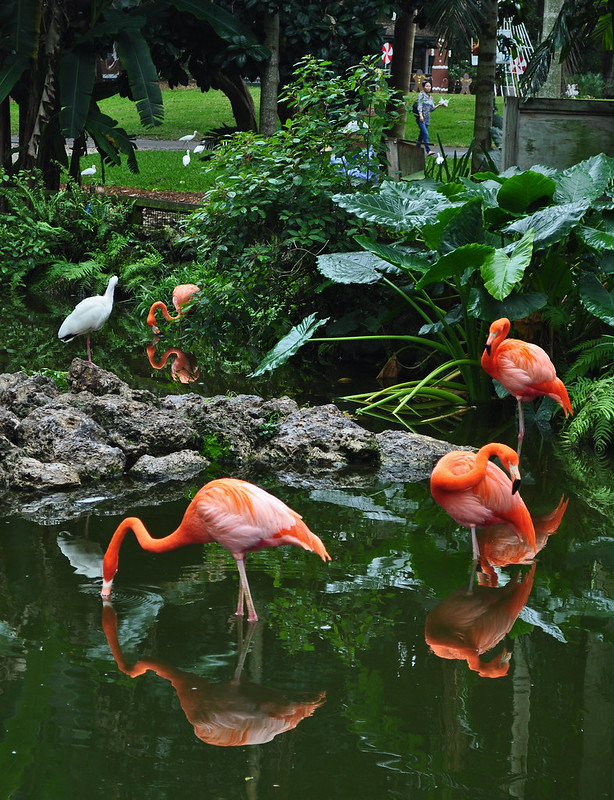
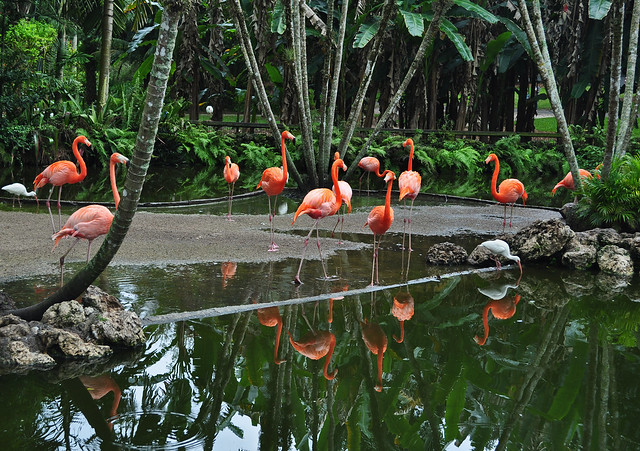
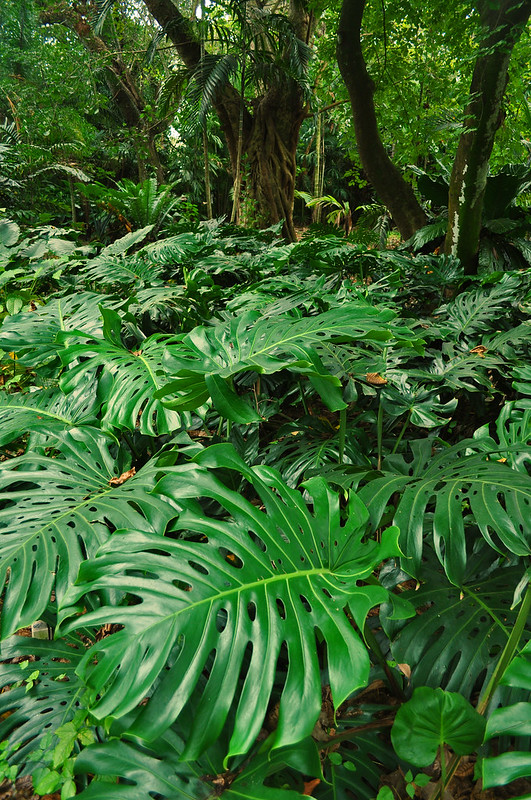
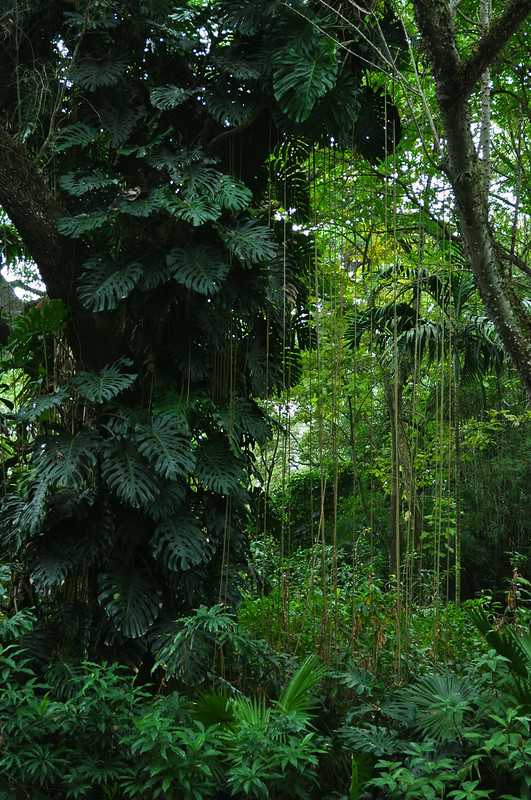
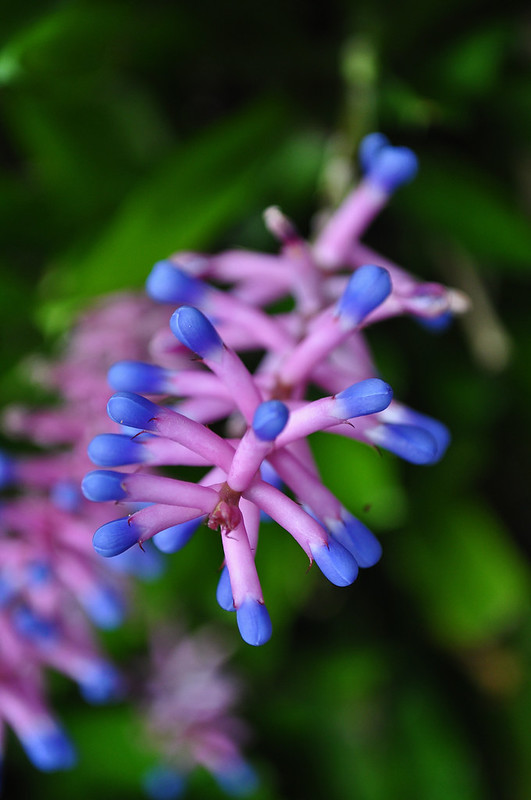
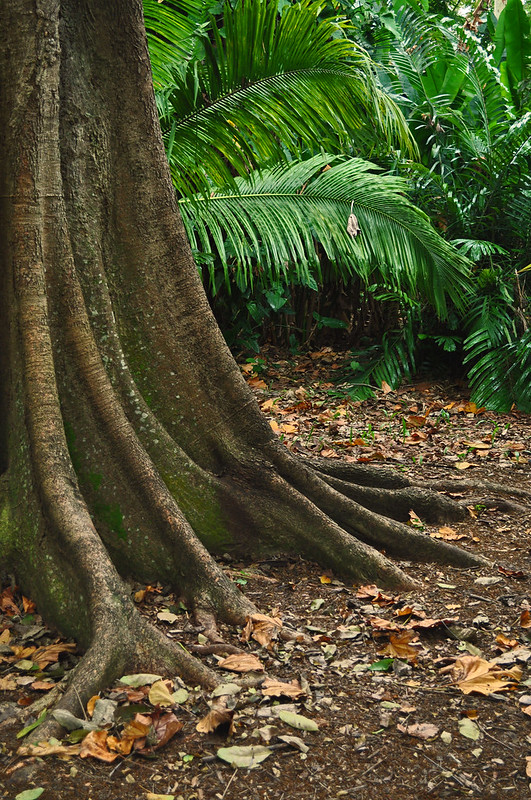
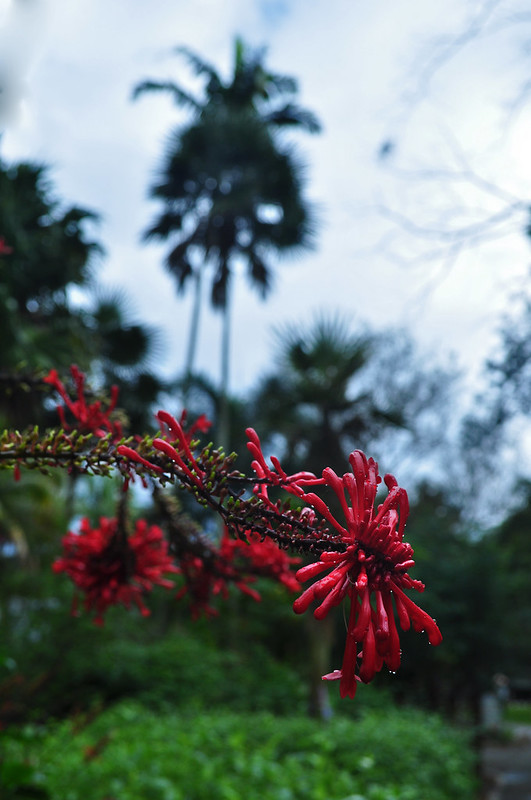
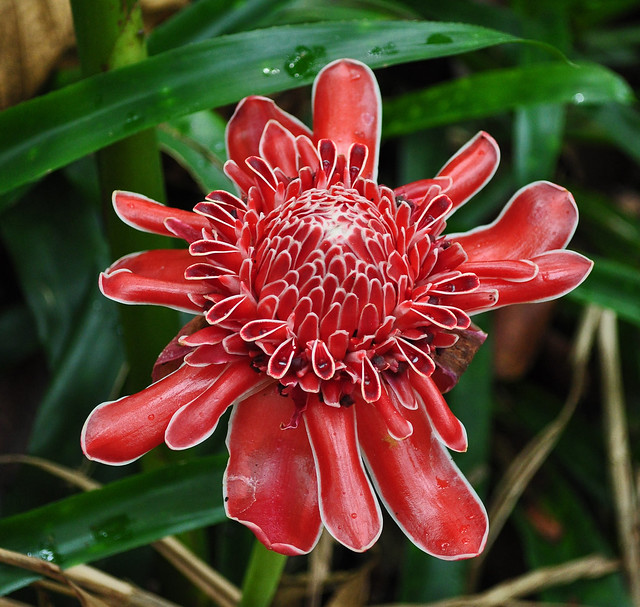
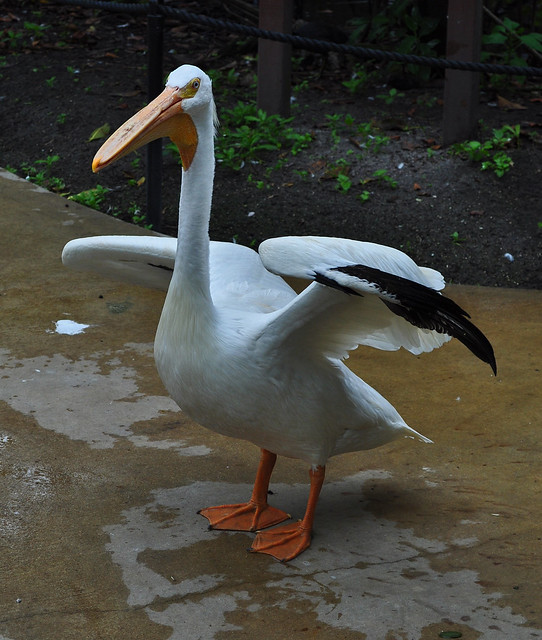
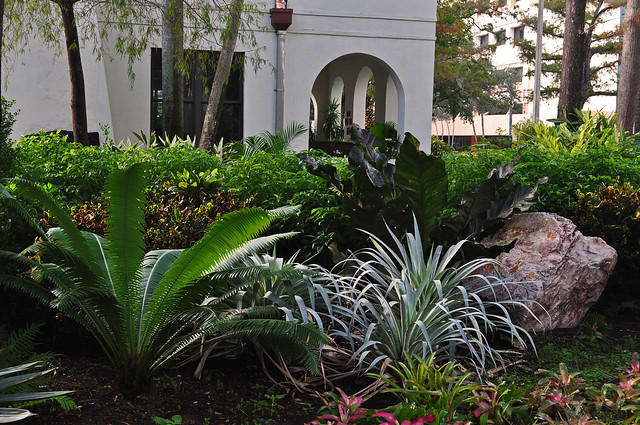
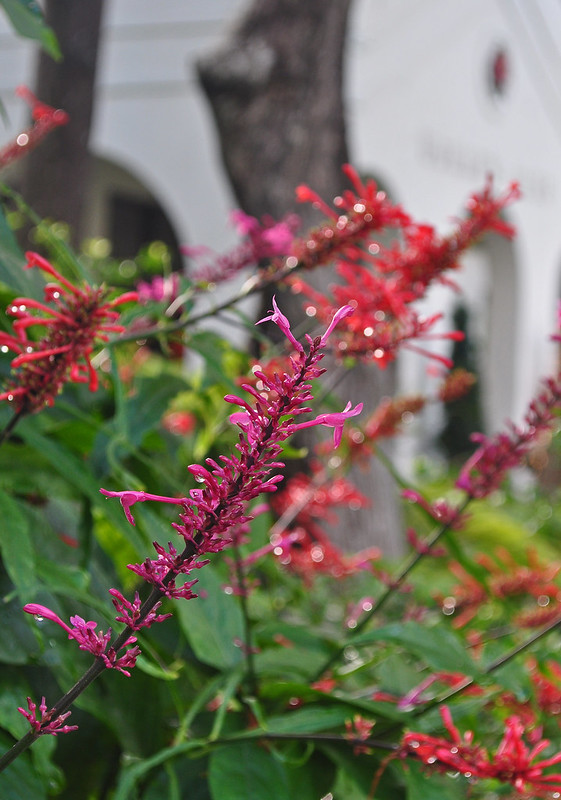
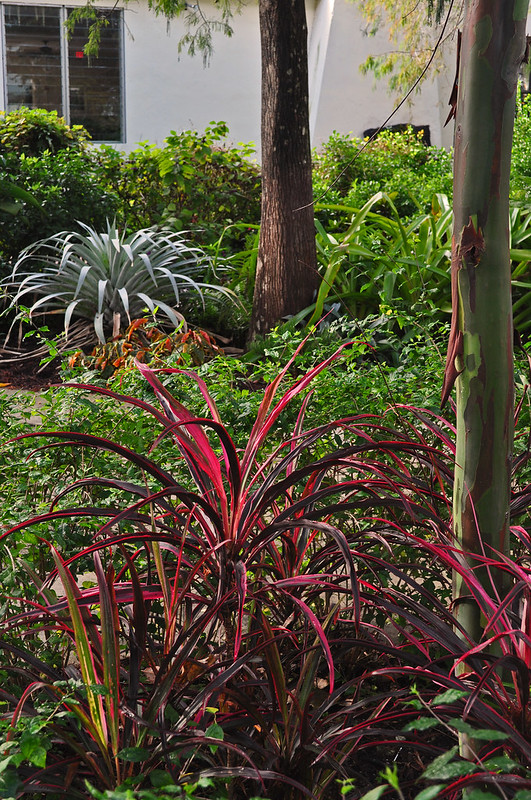
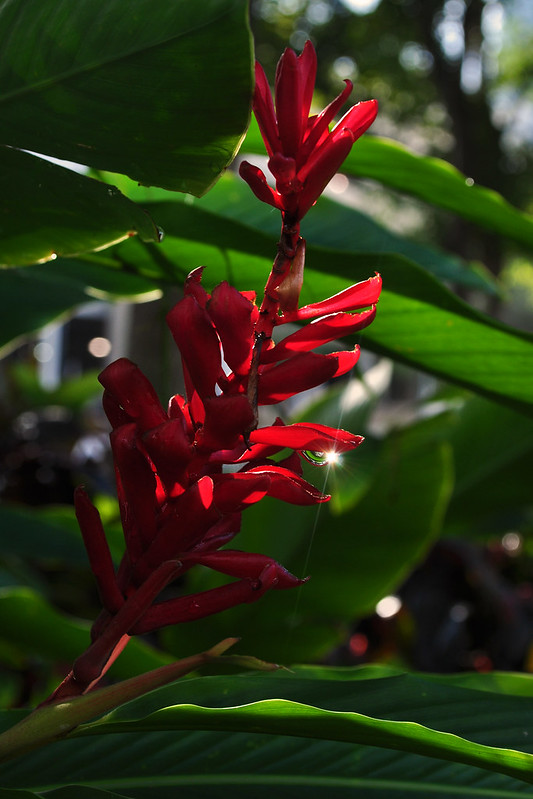
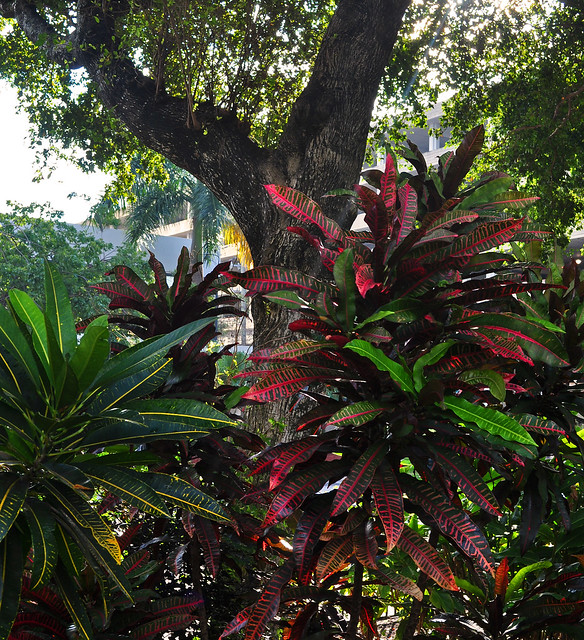
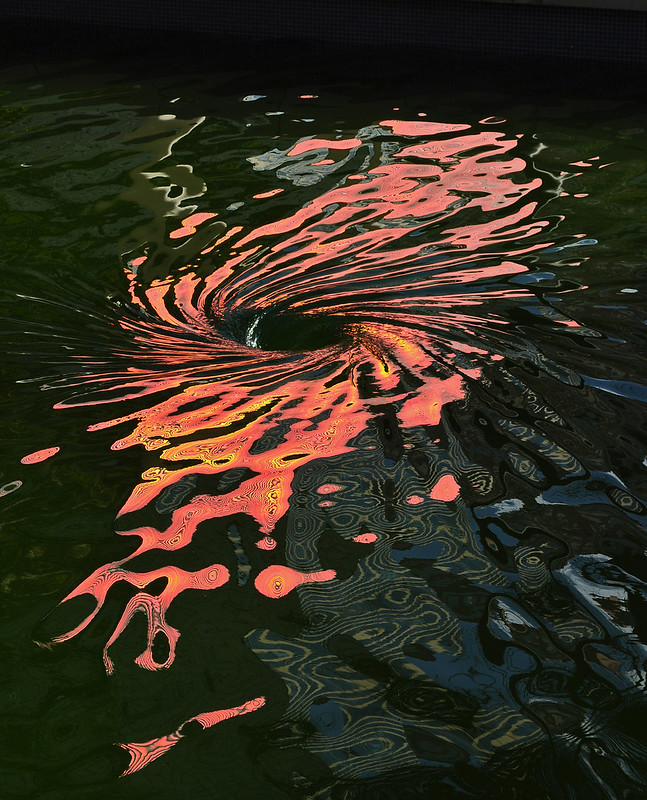
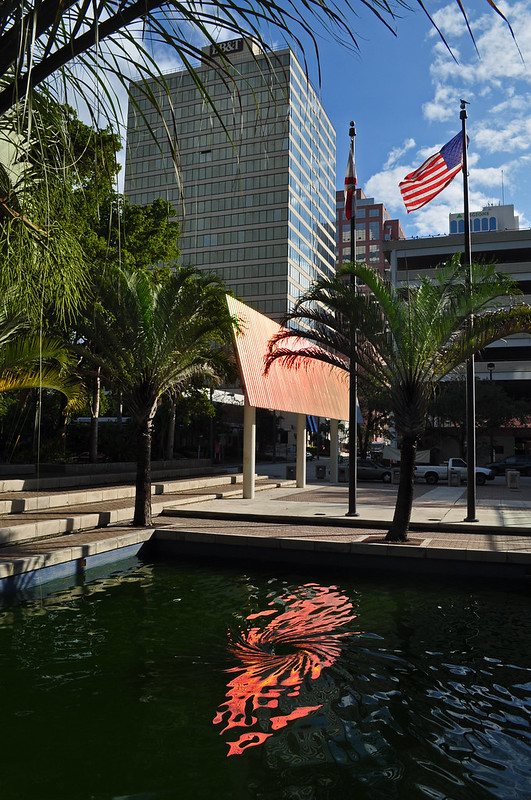
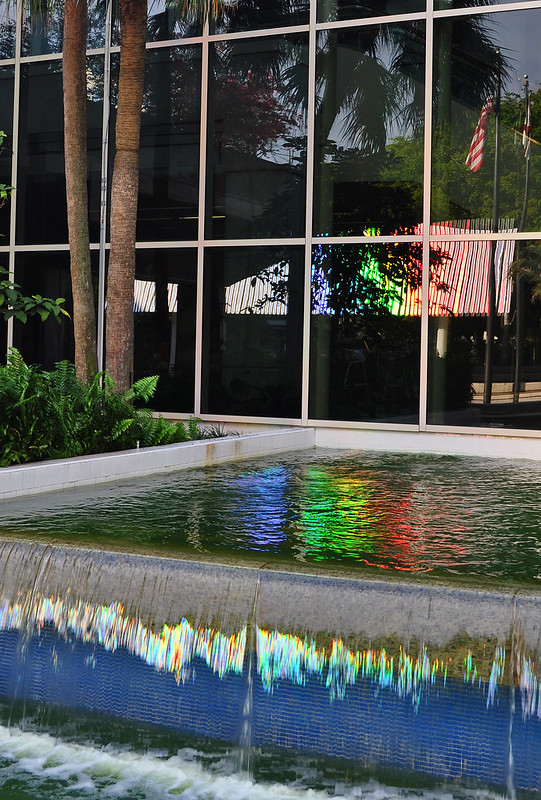
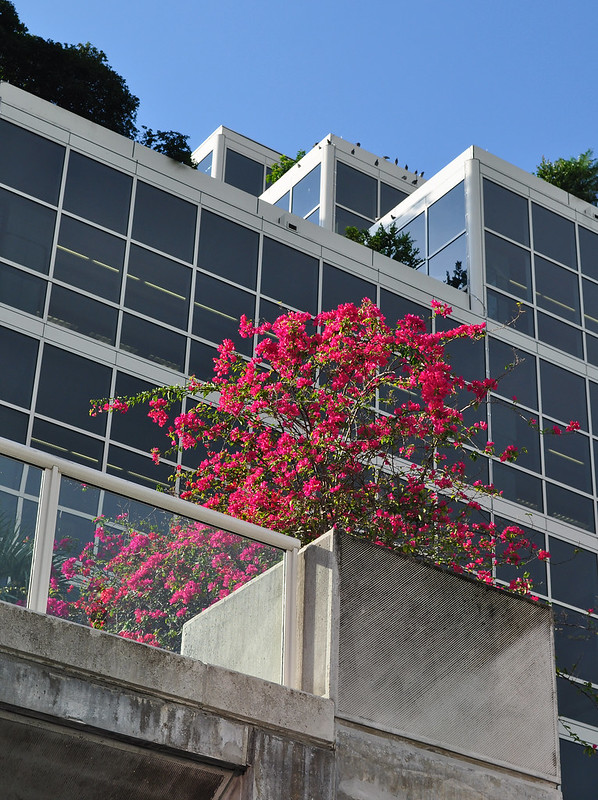
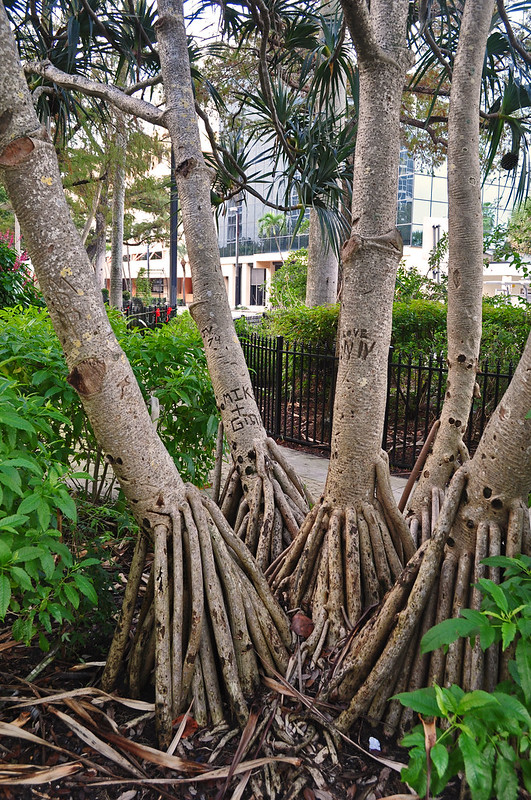
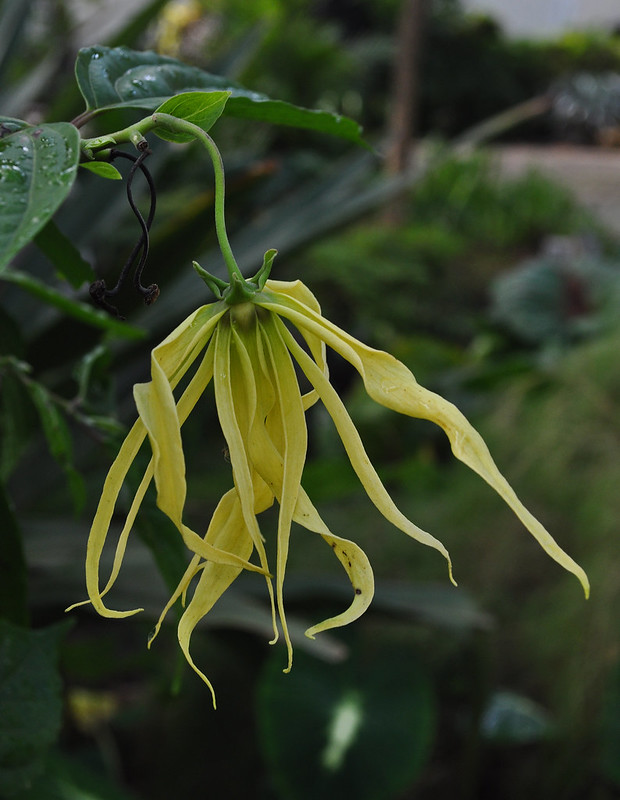
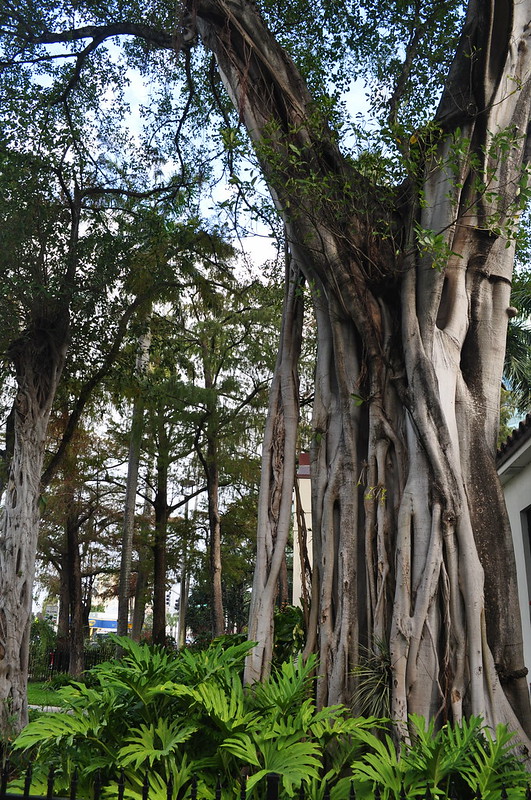
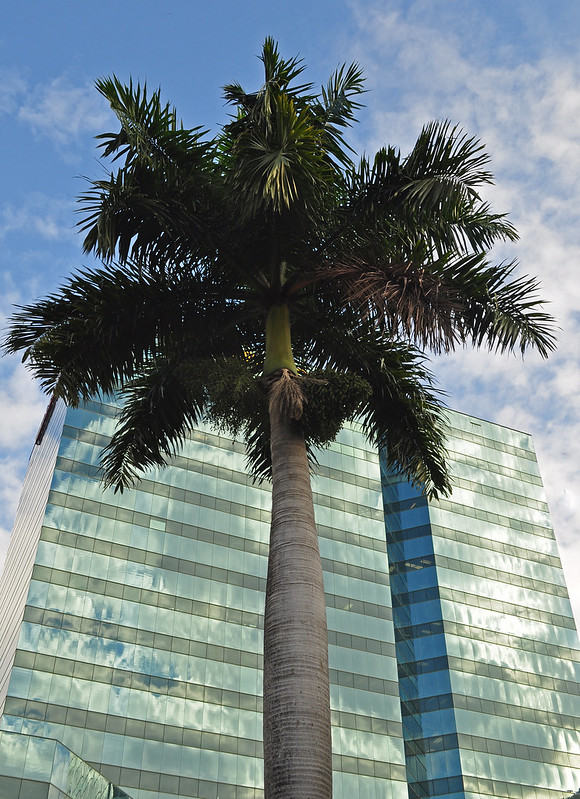
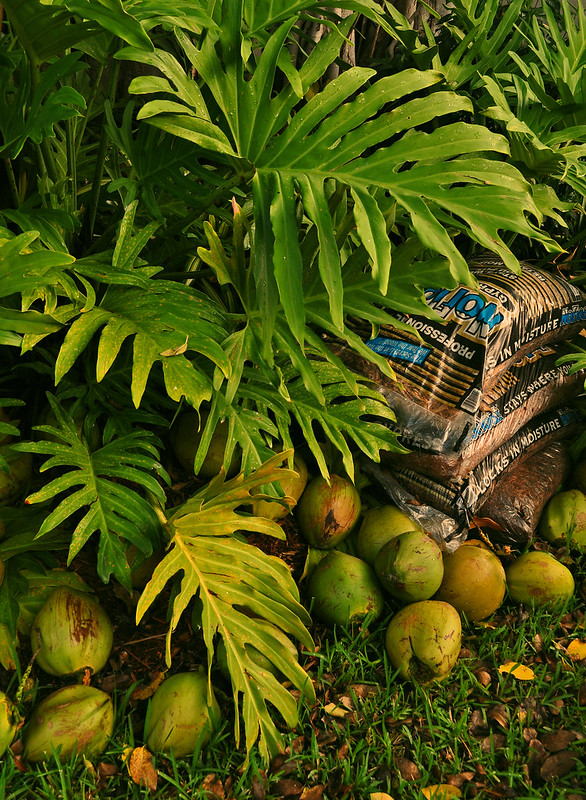
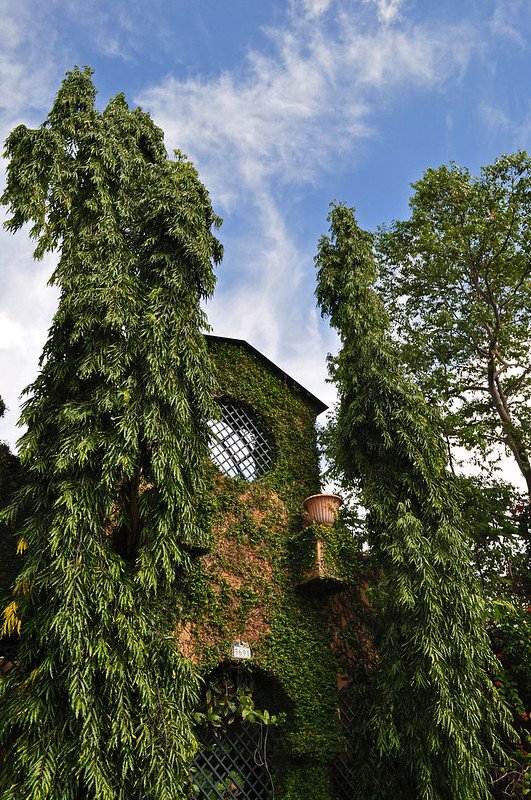
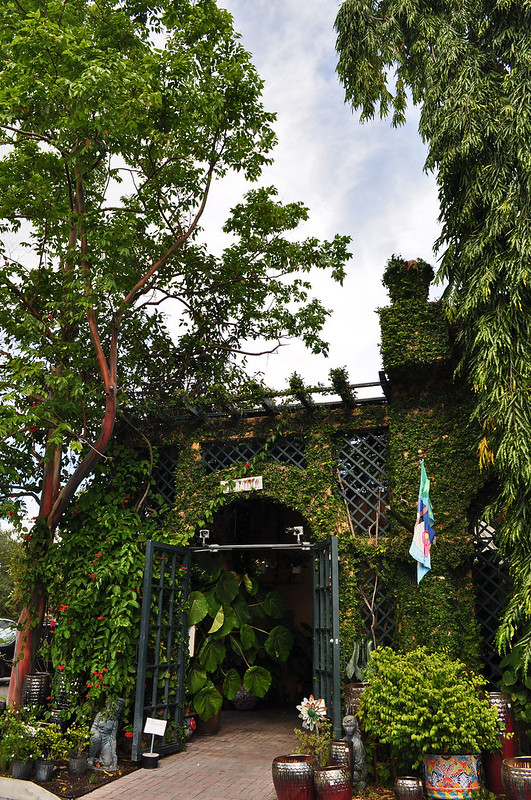
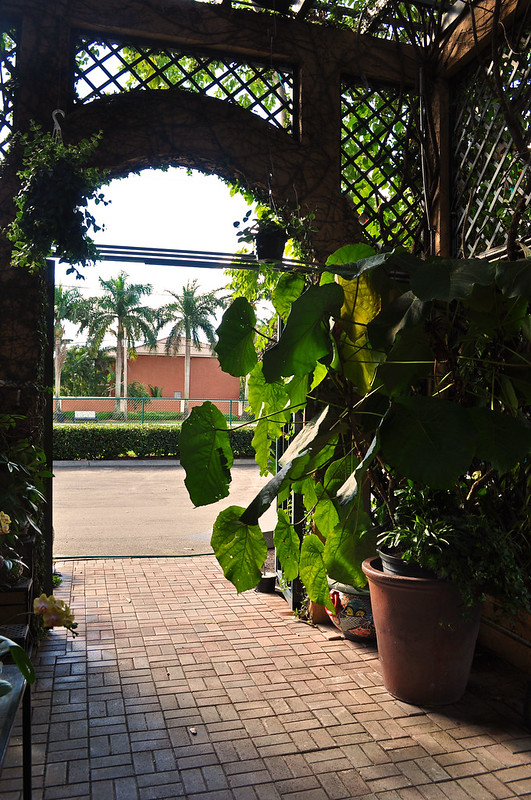
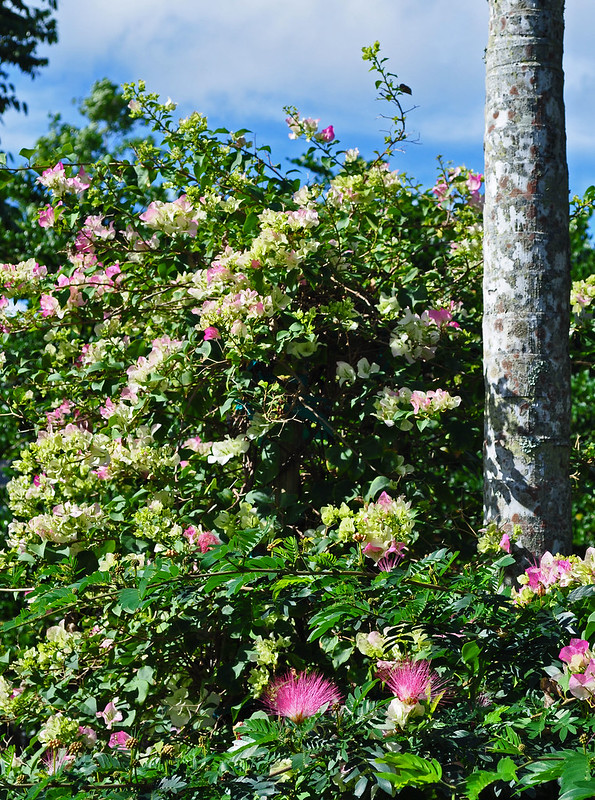
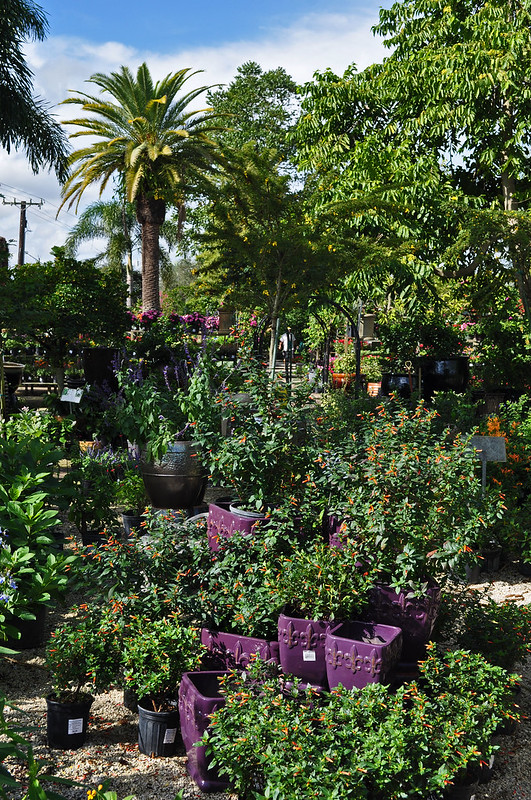
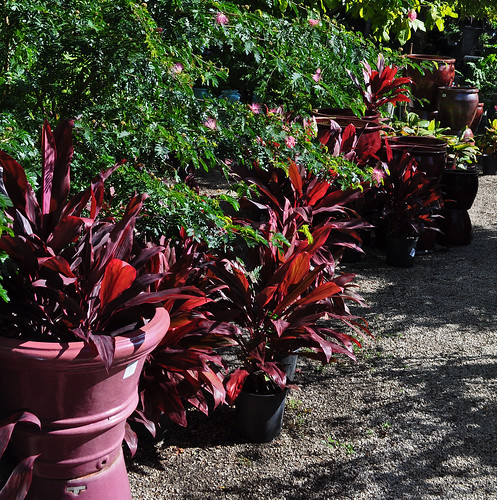
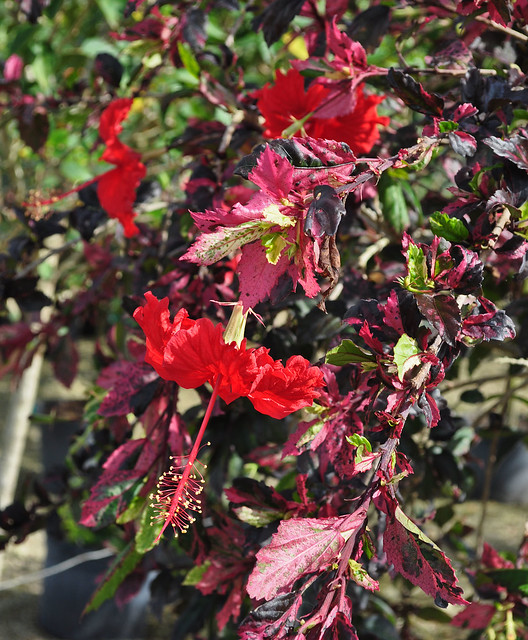
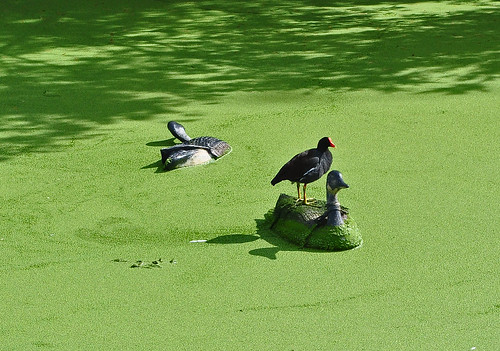
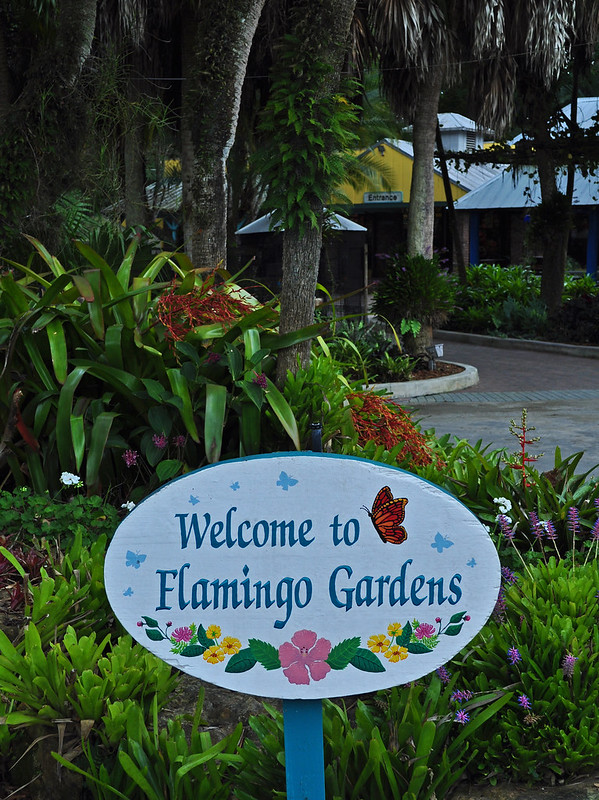
My wife, my brother, and I spent much of New Year's Day at Flamingo Gardens in Davie, Florida. The Wray family started Flamingo Gardens as a citrus farm back in the 1920's on a live oak hammock surrounded by land reclaimed from the Everglades. At one time there were over 2000 acres planted in various types of citrus, including a 20 acre citrus laboratory. Intrigued by other tropical plants, the Wrays amassed quite a collection of fruit-bearing and ornamental trees and shrubs. They began offering tours, and soon the place became one of south Florida's first tourist attractions. Today, Flamingo Gardens has Florida's largest concentration of state champion trees, including the largest tree in the state. Surrounded by all this flora, and the flamingos that were already here, is a sanctuary for native Florida wildlife, that includes panthers, otters, black bears, and a host of reptiles and birds. All of the animals in the sanctuary are either rescues and/or are unable to be released back into the wild. Part of Flamingo Garden's charm is its vintage roadside vibe, but between the birds, the other animals, and the gardens, I'd say it's worth the price of admission, especially considering their overall mission and the fact they are non-profit.
Showing posts with label Florida. Show all posts
February 3, 2015
Another Roadside Attraction
Labels:
Botanic Gardens,
Florida
January 24, 2015
Stranahan Botanical Garden - A Troubled Paradise
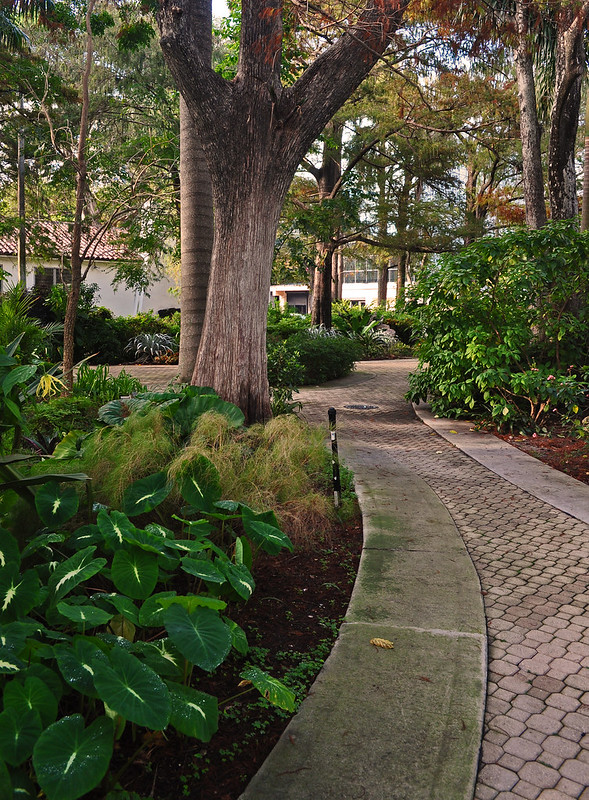
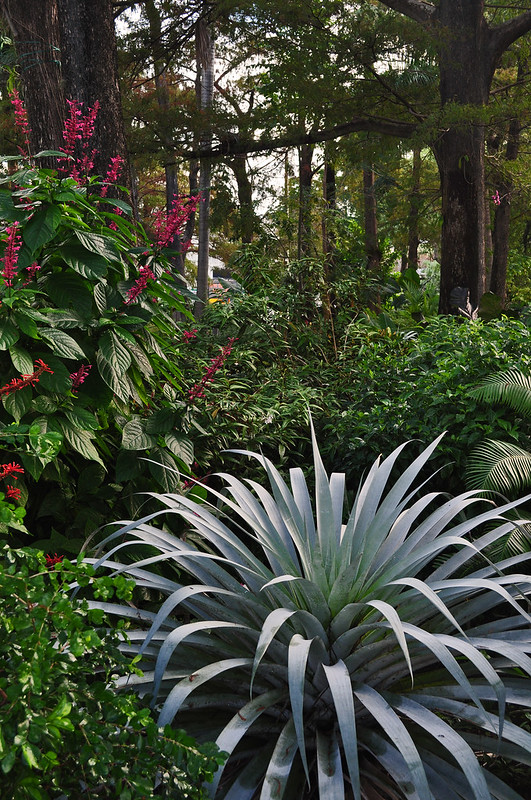
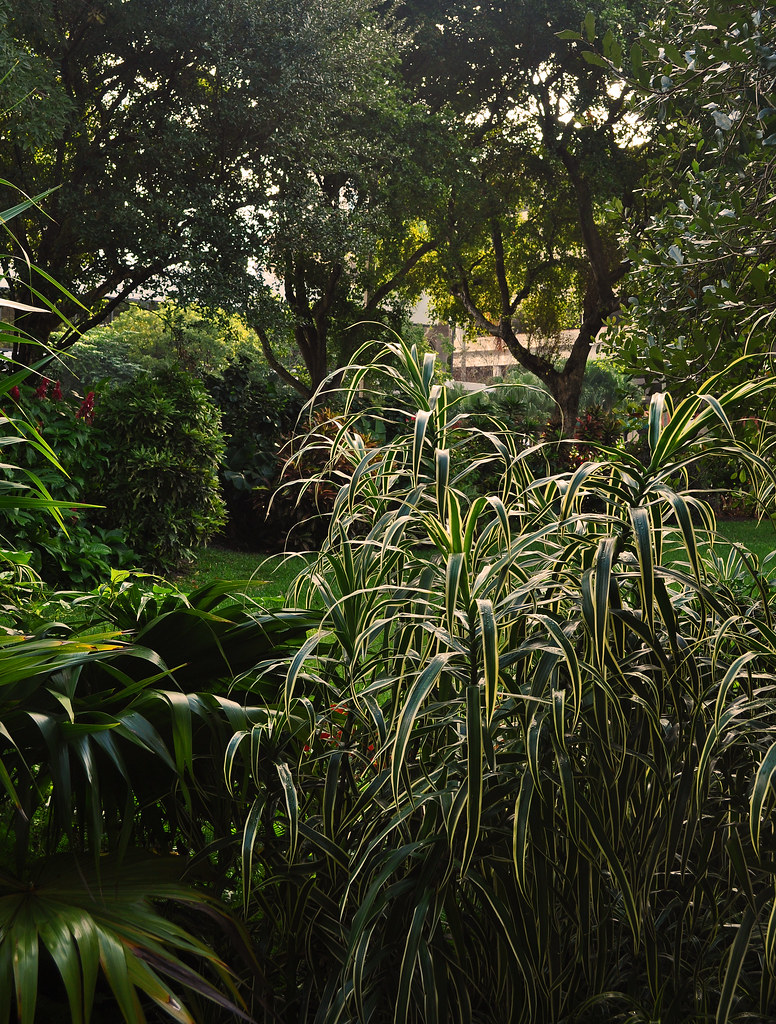
Have you ever traveled to place you enjoyed so much, that once home, your visit prompted you to learn more, and you were surprised by what you found? That was the case for me when I visited the Stranahan Botanical Garden in downtown Fort Lauderdale. Though the garden is planted under a canopy of mature bald cypress (Taxodium distichum), it is only about two years old, and looking at all the lush thick growth, you might have trouble guessing it is so newly planted. As cities go, Fort Lauderdale itself is also young, barely a century. The "mother and father" of Fort Lauderdale, Frank and Ivy Stranahan, deeded what was once a cypress swamp to the city for recreational use, and after it was filled in with soil from Seminole Indian burial mounds, this land became Stranahan Park. Part of the land was also given to the Fort Lauderdale Women's Club, an institution older than the city itself, and one who over the years has championed a number of progressive causes including the rights of women, African Americans, and ironically the Seminole Indians.
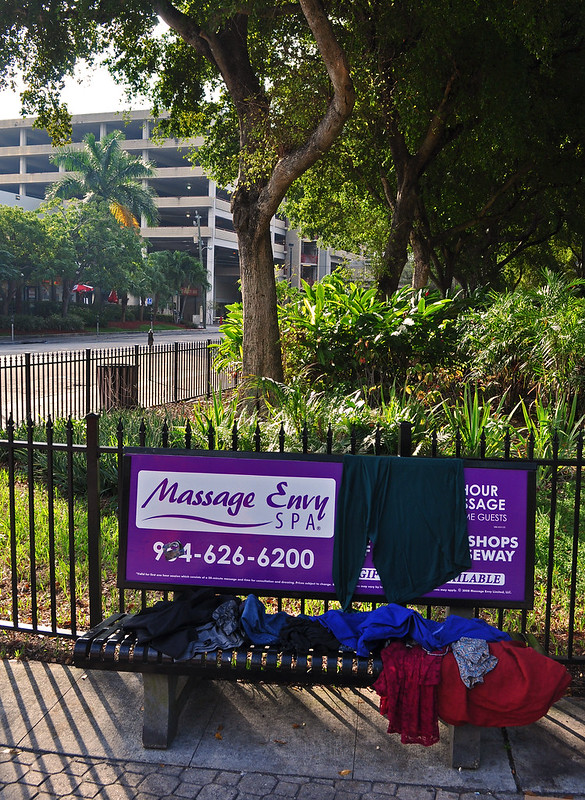
In more recent years, Stranahan Park was made notorious by the many homeless who spent the day here enjoying the shady lawn, and using the services of the adjacent Broward County Main Library. Those of us who are not homeless may take for granted things like restrooms, air conditioning, and access to media and the internet that libraries offer. Many people avoided the park because of the homeless, and it became increasingly difficult for the Women's Club to utilize their facility to its fullest. To resolve this issue, a push was made for transforming the park's shady open lawns into a gated botanical garden. The effort was spearheaded by the Women's Club with complete support from the city, surrounding businesses, and an army of volunteers. The plant geek in me says the resulting garden is spectacular. The rest of me is a little conflicted.
Obviously the issue of homelessness is complicated and joined at the hip with many other issues of our day including substance abuse, mental health, veterans rights, and economic disparity. I don't blame the Women's Club for what has been done in Stranahan Park. I applaud them; it is a beautiful spot, and it did solve their problem with homelessness, but only by pushing it somewhere else.
(I really had to harness the powers of the internets to ID some of these plants. None of them were labeled in the garden, and as I was two zones from home, I am not entirely sure all of the names are correct. I welcome your comments and corrections for anything in need of it. If you would like to see all of my photos from the garden, click here for my Flickr page.)
I might be a little less torn if I knew more about what efforts are being made in the city of Fort Lauderdale to assist the homeless, but with apologies to my readers, I don't know all that is being done. I do know there is lot of homelessness evident, more than I have seen in most cities I've been to. Can you blame the homeless? Given the choice of sleeping on the streets of some cold northern city, or on those in a tropical climate, which would you pick? One thing the city of Fort Lauderdale does do to address homelessness, is to aggressively discourage the homeless from using Stranahan Botanical Garden. In October of 2014 the city commission passed an ordinance restricting locations where the homeless can be fed, requiring aid organizations to get property owner's permission, and to provide portable restrooms. In November two members of the clergy and a 90 year-old activist, Arnold Abbott, were charged with violating this ordinance in Stranahan Botanical Garden, and their effort to provide lunch that day was shut down. Apparently feeding the homeless only encourages homelessness.
(I really had to harness the powers of the internets to ID some of these plants. None of them were labeled in the garden, and as I was two zones from home, I am not entirely sure all of the names are correct. I welcome your comments and corrections for anything in need of it. If you would like to see all of my photos from the garden, click here for my Flickr page.)
Labels:
Botanic Gardens,
Florida,
Good Landscaping,
History,
Off Topic
January 19, 2015
Living Color
Right after Christmas my wife and I drove down to Fort Lauderdale to spend some time with my brother. The last time we visited it was in the summer, when the entire southeast was in the grip of an epic heatwave, but ironically it was actually cooler and more pleasant in south Florida than it was back in Virginia. On this trip we left dreary gray and cold to find what so many migrating snowbirds seek, sun and warmth. However, it's not the weather per se that lures me to Florida; it's the foliage and flowers. This part of the state is USDA zone 10b, and on average, 63" of rain fall annually, so many things grow easily and abundantly here. On top of that, it appears that gardening and landscaping are more of a priority, and few spaces remain unplanted. I don't know if this is due to city ordinance, civic pride, or just for the love of it, but I appreciate it.
On our first morning we rode out to Living Color Garden Center to hunt for something green that could live in a container on my brother's deck. He does not live there year-round, so it had to be something very drought tolerant that could survive on whatever falls from the sky. I was thinking an agave, which we found, and a great price too, but there were so many other things to look at, and I left with serious zone envy.
Near the front door I was stopped by a hug-worthy rainbow eucalyptus (Eucalyptus deglupta) with what I think was Clerodendrum splendens climbing through it.
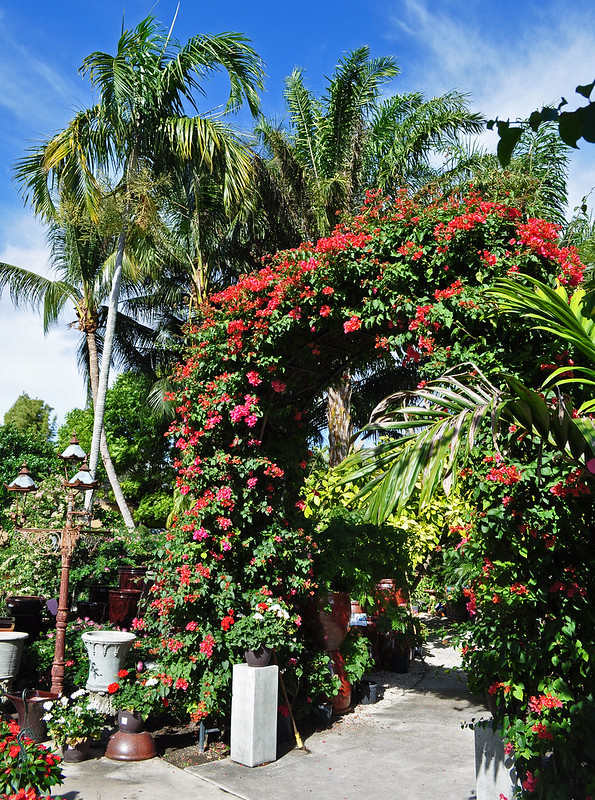
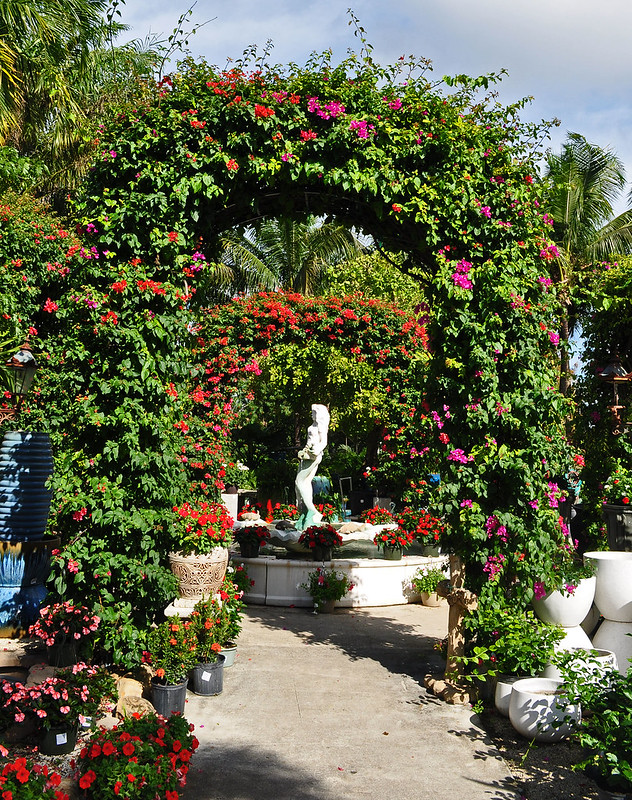
Adjacent to the main building is a large courtyard where plants and pots are displayed. In the center a neckid-lady statue is surrounded by a series of remarkable bougainvillea archways.
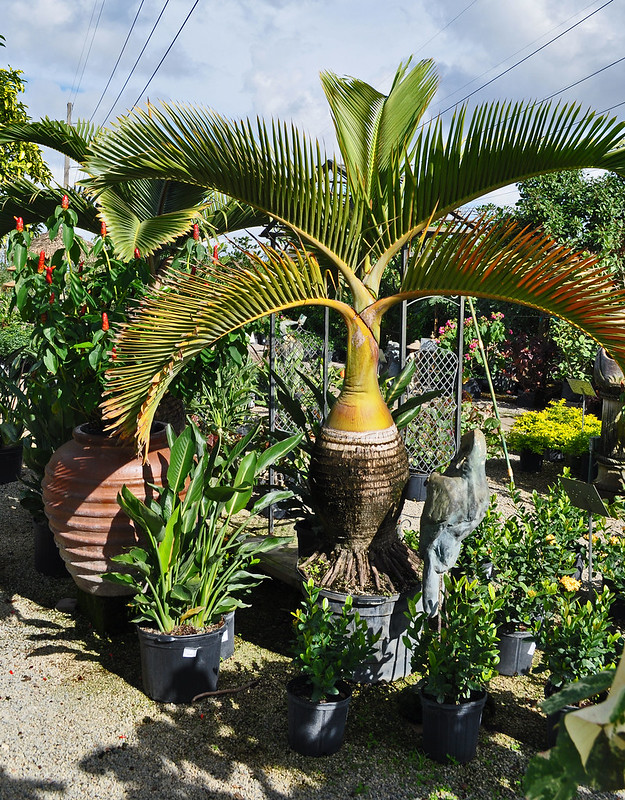
Beyond the courtyard, plants were laid out on the ground in large blocks sorted by type, and interspersed with trees I can't grow, including many palms. I was attracted to the hips on this bottle palm (Hyphorbe lagenicaulis).
I first heard about the golden penda (Xanthostemon chrysanthus) tree from Australian blogger Onslow and Miss B when she highlighted it during my 2013 Winter Walk-Off. The tree below was only about 6', but apparently in their native Queensland they can reach over 40' tall.
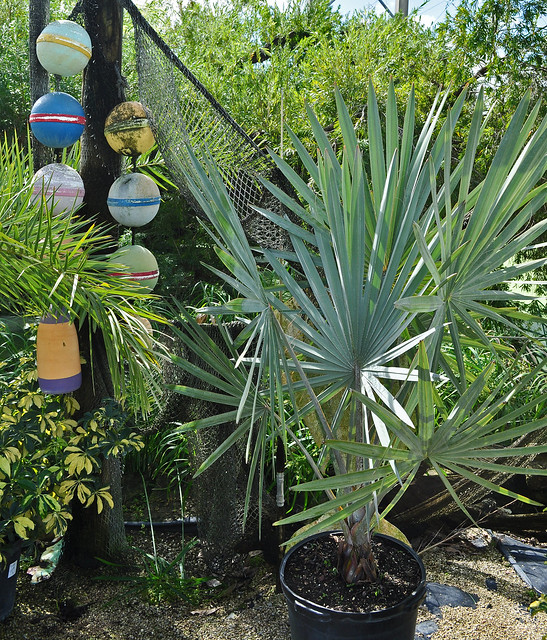
Living Color also sells the species that really aggravates my zone envy, the Bismarck palm (Bismarckia nobilis). You can't really tell from this photo, but this plant will eventually have huge 3-4' wide silvery blue fronds on a very symmetrical plant. When planted in rows, they can give Parris Island graduates pointers on uniformity.
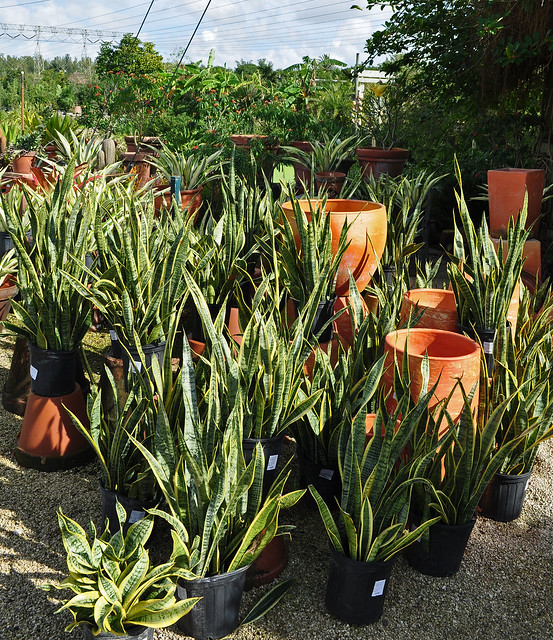
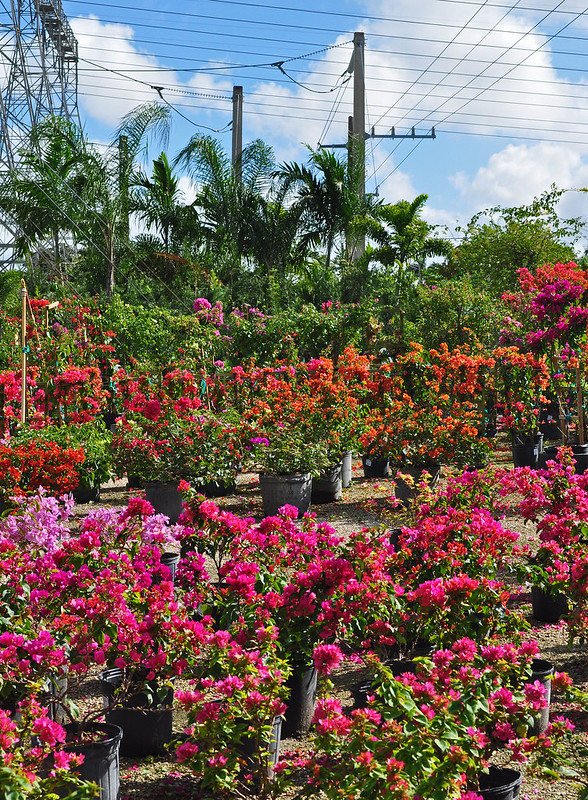
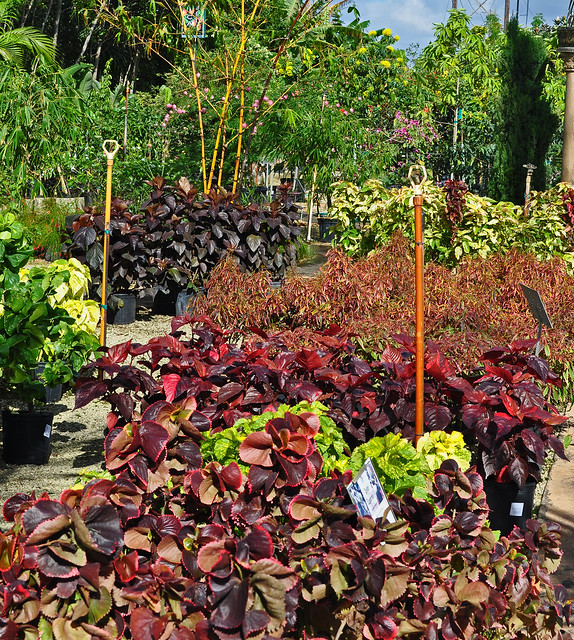
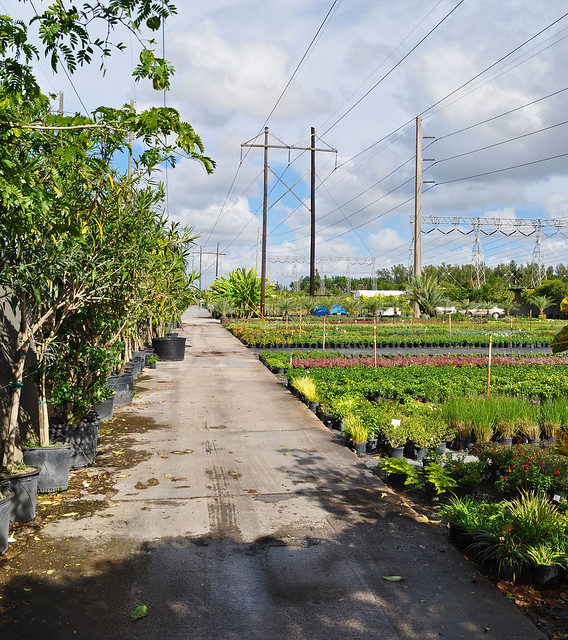
Living Color grows much of what they sell, and the place stretched on forever, to the point I couldn't see where it ended.
On our first morning we rode out to Living Color Garden Center to hunt for something green that could live in a container on my brother's deck. He does not live there year-round, so it had to be something very drought tolerant that could survive on whatever falls from the sky. I was thinking an agave, which we found, and a great price too, but there were so many other things to look at, and I left with serious zone envy.
Near the front door I was stopped by a hug-worthy rainbow eucalyptus (Eucalyptus deglupta) with what I think was Clerodendrum splendens climbing through it.
Adjacent to the main building is a large courtyard where plants and pots are displayed. In the center a neckid-lady statue is surrounded by a series of remarkable bougainvillea archways.
Beyond the courtyard, plants were laid out on the ground in large blocks sorted by type, and interspersed with trees I can't grow, including many palms. I was attracted to the hips on this bottle palm (Hyphorbe lagenicaulis).
I first heard about the golden penda (Xanthostemon chrysanthus) tree from Australian blogger Onslow and Miss B when she highlighted it during my 2013 Winter Walk-Off. The tree below was only about 6', but apparently in their native Queensland they can reach over 40' tall.
Living Color also sells the species that really aggravates my zone envy, the Bismarck palm (Bismarckia nobilis). You can't really tell from this photo, but this plant will eventually have huge 3-4' wide silvery blue fronds on a very symmetrical plant. When planted in rows, they can give Parris Island graduates pointers on uniformity.
Living Color grows much of what they sell, and the place stretched on forever, to the point I couldn't see where it ended.
Labels:
Florida,
Garden Center
Subscribe to:
Posts (Atom)